Why you should know about statelessness
The "invisible problem" of human rights
What if you had no nationality? You are considered an illegal resident in your home country and lack basic human rights. This is the life of a stateless person.
According to The 1948 Universal Declaration of Human Rights, “everyone has the right to a nationality”, and when they are not, people are denied access to healthcare and education.
So why are people stateless?
There are many reasons why someone could be stateless. Many people are born into it. It can be due to the lack of birth registration or can be because of conflict and gaps in nationality laws when born. In some countries, if a child is born in a different country than their parents they may not be eligible for nationality in either.
A large cause of statelessness is discrimination on the basis of race, ethnicity, religion, language and/or gender, according to the United Nations High Commissioner of Refugees (UNHCR). There are various minority groups around the world who have been systemically discriminated against for generations.
This includes the founder of Justice for Refugees, Hassan Jaber - a Kuwaiti-Bidoon. Bidoon is short for Bidoon Jinsiyya, meaning ‘without nationality’ in Arabic.
Before Jaber came to Australia as a refugee, he was stateless.
There are also the Rohingya people, a stateless minority in Myanmar who are a mostly Muslim group known to be discriminated against. Since the 1980s they have experienced decades of prosecution. A recent report by Human Rights Watch reveals further mistreatments of the Rohingya, including a man describing his living conditions as “an open prison without end”.
Rohingya living in ‘open prison’ in Myanmar: Human Rights Watch https://t.co/nin6JcmyQk
— Al Jazeera English (@AJEnglish) October 8, 2020
Gender discrimination can occur when women are unable to pass on their nationality onto their children. Shown below are the 25 countries being impacted worldwide.
Professor Michelle Foster, the director of the Peter McMullin Centre on Statelessness from the University of Melbourne said gender discrimination laws are “deep-seated within that society”, and reflects how that state views women.
“If you think about why a nation would have gender discrimination nationality laws, well it tells you something about their view of women, the role of women, perhaps concerns about sort of maintaining some kind of culture,” she said.
Prof Foster says it is something that “cannot be changed quickly”, but over time when governments understand the wider context of the issue, it can slowly improve. There is reason to be “optimistic”, particularly in the context of Australia previously discriminating women in nationality laws.
“Often [In Australia] when women were married, for example, their citizenship followed that of their husband and they would lose their original citizenship,” Prof Foster added.
Where are the rest of stateless people and how many are there?
The amount of stateless people in the world is hard to pinpoint. The UNHCR has confirmed that there are 4.16 million stateless people around the world since 2019.
It has also been estimated by the UNHCR that the stateless population in the world is 10 million, as well as 15 million stateless people by the Institute of Statelessness and Inclusion.
These stats can show the uncertainty of the stateless population. We might have more, but it is unconfirmed.
But these numbers have come a long way.
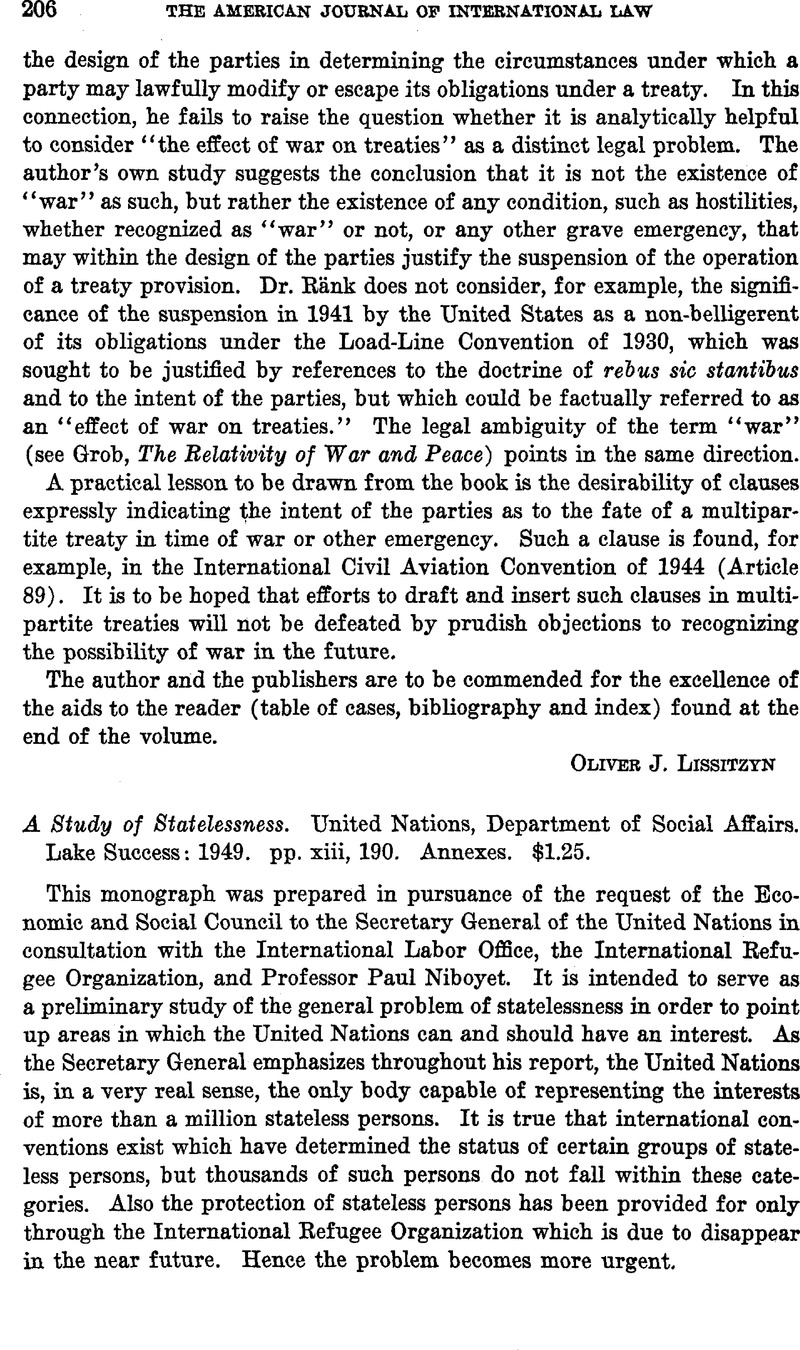
In 1949 - when the discussion of statelessness began, it was considered “impossible to submit statistics concerning the number of stateless persons in need of international legal protection”, according to a 1949 UN statelessness study.
A historic timeline of statelessness across the world further shows the growth of the discussion and why awareness of the issue is important for change.
(Dates about the stateless people includes estimates)
(Timeline was built on information by the UNHCR, RefWorld, Brittanica and Peace Palace Library)
What about Australia and statelessness?
Further awareness is attempting to be addressed in the UNHCR ‘I Belong’ campaign. But we can see more needs to be done, particularly on how Australia treats the issue of statelessness. At least 107 stateless people are in community detention and 1,060 living in Australia are on Bridging Visas, according to the Department of Home Affairs. But there is still no way to determine if someone is 'stateless' in Australia.
“If we look at other figures from other arms of the government, we see, particularly those who are in detention, or those on visas, that they're stateless, but we don't have any further information,” Prof Foster said.
“We need a statelessness determination procedure in Australia.”
Countries like the UK have a “proper system for identifying who stateless people are”. But Australia cannot do much about the issue and the “invisible problem” of statelessness.
"How can you fix the problem if you don't know what the scale of it is or whether it even exists at all?”
Credits:
"The Future of Syria - Birth registration and statelessness" by UNHCR Photo Download is licensed under CC BY-NC 2.0
"The Tank Graveyard" by miskan is licensed under CC BY-NC 2.0
"Myanmar/Burma: Little hope for Rohingya IDPs" by EU Civil Protection and Humanitarian Aid is licensed under CC BY-ND 2.0
"The Future of Syria - Birth registration and statelessness" by UNHCR Photo Download is licensed under CC BY-NC 2.0
"File:Blank World Map circa-1985.png" by PlanespotterA320 is marked with CC0 1.0
"Group of Governments Supports UNHCR’s Campaign to End Statelessness" by US Mission Geneva is licensed under CC BY-ND 2.0
"Map of the World, 2002" by nathanh100 is licensed under CC BY 2.0 Copy GO TO IMAGE'S WEBSITE
"germany-flag" by kylemac is licensed under CC BY-NC 2.0
"Russian flag" by The Clear Communication People is licensed under CC BY-NC-ND 2.0
"Italy-flag" by kylemac is licensed under CC BY-NC 2.0
"Map of the World, 2002" by nathanh100 is licensed under CC BY 2.0 CopyGO TO IMAGE'S WEBSITE
"Group of Governments Supports UNHCR’s Campaign to End Statelessness" by US Mission Geneva is licensed under CC BY-ND 2.0
https://legal.un.org/avl/images/ha/cssp/01-l.jpg
https://image.isu.pub/131121103144-356acc3340691df59f9821b1f5d4b62e/jpg/page_1.jpg
https://live.staticflickr.com/3954/15531247590_4d389dd5d2_z.jpg
