
Cambridge University Endowment Fund
2024 Annual Review
CEO and Chief Investment Officer's Letter
Almost all institutional investors claim to have a long-term perspective. Few, however, invest on behalf of an institution with the history of the University of Cambridge, making the task of investing to support the University for centuries to come a unique responsibility.
Investing with such a timeframe in mind makes having a robust team and portfolio in place especially critical, as well as placing a particular emphasis on the ownership of assets that are truly sustainable. At UCIM, our strategic priorities are, therefore, to build and retain an exceptional team, to develop a portfolio to meet the long-term requirements of our investors, to support our investment activity with best-in-class operations, and to focus on sustainability in all senses of the word, but in particular through the ambition for the CUEF to achieve net zero greenhouse gas emissions by 2038.
The UCIM team has built a strong culture based on our values of accountability, collaboration, intellectual honesty, sustainability, integrity and excellence. The portfolio is supported by an increasingly robust and streamlined operational infrastructure spanning investment operations, reporting, compliance, and risk management. Sustainability is fully integrated across UCIM’s investment process.
The team has collectively built an increasingly high-conviction portfolio of interests in world-class funds, which has increased in value by £1.3 billion since 1st July 2020, having also made distributions of nearly £600 million to unitholders.
For the Financial Year ended 30th June 2024, the CUEF achieved a net return of +9.1%, 2.0% ahead of the long-term investment objective to achieve returns of 5% over the CPI rate of inflation.
While we were pleased with this level of returns on an absolute basis, it proved more difficult to match the performance of broader developed equity markets given the increasing concentration of returns in a very small number of the world’s largest companies.
Nevertheless, we remain very confident in the underlying potential of the CUEF’s portfolio which we believe is largely invested in high-quality public and private companies with attractive growth prospects and low leverage.
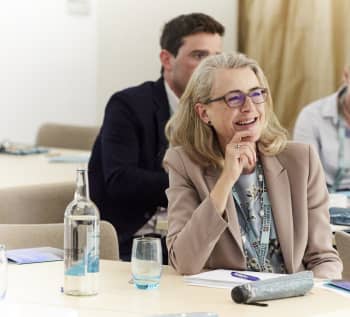
Impact Case Study
The Harding Distinguished Postgraduate Scholar Programme Fadia Bou-Dagher
I went to medical school because I wanted to make a difference to a patient’s life. But I soon realised that, through research, you can make a difference to millions of lives. I lost my father to cancer during my first year of undergraduate studies, an event that really changed my perspective. Cancer is a prevalent disease affecting so many people, and my personal experience drives my passion in this area. Witnessing my father’s journey through the healthcare system, including his participation in a clinical trial, inspired me. Seeing how nurses, surgeons and scientists communicated with him drives me to do the same for other patients.
Cancer affects not only the patient but also their entire family. My experience highlighted the need for improvements, not only in treatments and therapies but also in the overall healthcare system.
My work focuses on DNA damage in the context of cancer. DNA is the genetic material that makes up our bodies, and it can be damaged in different ways – by things like UV rays, chemotherapeutic drugs, or even naturally. It can also be repaired in different ways. In the Jackson Laboratory, we study the differences between how a normal cell repairs DNA versus how a cancer cell does. By understanding these differences, we can develop new classes of therapeutic drugs that specifically target cancer cells.
"Thanks to the Harding Scholarship, I’m able to spend three years studying for a PhD between my medical school years. It has been a game changer, covering research costs for essential equipment like the laptop I use for my analysis. It has also funded my attendance at international conferences, where I have been able to further my career by presenting work."
The Harding scholarship’s interdisciplinary focus encourages us to connect with students and scholars from other research areas. We hold internal seminars twice a term, when we present our work in simple terms to historians, mathematicians, and physicists. The best part is the unexpected feedback. It’s eye-opening and rewarding when people from completely different fields ask insightful questions that make you see your work in new ways.
Established in 2019, thanks to a donation from David and Claudia Harding, the biggest single gift made to a university in the UK by a British philanthropist. This endowed gift has so far funded a total of 167 scholarships in 63 subjects. 49 scholarships were awarded in the 2023-24 academic year.
Investment Strategy
The long-term investment objective is for the Endowment Fund to achieve returns of 5% in excess of inflation (using the Consumer Price Index or “CPI” measure of inflation), net of fees; and to fund distributions to investors of approximately 4% of the net asset value of the fund per year.
To achieve these objectives, UCIM’s investment strategy is to invest through specialist, third-party fund managers to access asset classes and geographies that it believes will outperform passive investments over time. A benefit of this model is that it enables UCIM, on behalf of the CUEF, to access what we believe
are “best-in-class” investors, obtaining the benefits of diversification, while minimising overhead costs.
Within this strategy, the CUEF operates an “unconstrained”, global portfolio, allowing it to invest in any appropriate regions, sectors and asset classes. The Fund is diversified over five broad asset classes: public equity, private equity, absolute return and credit, real assets, cash/fixed income.
UCIM seeks to select fund management partners with differentiated insights, disciplined processes and high integrity, whose interests and incentives are aligned with those of our stakeholders.
Further information on UCIM’s investment process and manager selection is provided on page 26 in the section on Sustainable Investment.
Consistent with the requirement to steward capital for the University, Colleges and Trusts for future generations, the CUEF has a very long-term investment horizon; and seeks to build durable
relationships with its investment partners.
The CUEF has minimal direct investments in securities and usually only takes such positions in order to “rebalance” the portfolio in the short term.
Performance
|
Financial Year to 30 June 2024 |
Since 1 July 2020 (cumulative) |
Trailing 10 Years since 1 July 2014 (cumulative) |
|
|---|---|---|---|
|
CUEF |
+9.1% |
+8.8% |
+9.2% |
|
UK CPI +5% |
+7.1% |
+10.7% |
+8.1% |
|
"65:35" Passive Portfolio |
+13.7% |
+7.0% |
+8.0% |
|
MSCI ACWI ex. fossil fuels |
+20.9% |
+12.5% |
+12.1% |
Data sources:
CPI data from the Office for National Statistics (“ONS”), CUEF returns calculated based on CUEF Net Asset Value, other data sourced from Bloomberg and UCIM internal reporting.
Notes:
- 1st July 2020 is the date at which various material changes to UCIM’s general portfolio approach (and risk limits) were formally incepted by the UCIM Board.
- The purpose of the “65:35” passive portfolio is to provide an illustrative measure, over the long term, of the return that might be achieved were the CUEF to be managed on a passive basis. The composition of the “65:35” passive portfolio is provided on page 4 of the full annual review
- MCSI ACWI ex. fossil fuels data from 1st July 2020 onwards.
- CUEF returns are net of fees. All index returns in £ Sterling unless stated.
Past performance is not indicative of future returns.
Sustainability
UCIM is committed to working with the University, its community of investment partners and all stakeholders to achieve the ambition for the Endowment Fund to be net zero of greenhouse gas emissions by 2038.
UCIM believes that climate change poses an existential threat to the planet and society. The focus of its sustainable investment strategy is therefore on reducing greenhouse gas emissions from the CUEF portfolio and using our influence with partners to do the same in the wider economy.
The strategy to achieve the ambition for the CUEF to be net zero of greenhouse gas emissions
by 2038 is formed of three components:
- Investing in renewable energy development and divesting from meaningful* exposure to
fossil fuels by 2030; - Engaging with core fund management partners to support and hold them to
account on reducing carbon emissions in their portfolios - Reporting with transparency and accountability to stakeholders
*Meaningful is defined as exposure of 0.5% of the total net asset value of the CUEF or above.
Engaging to decarbonise the real economy
The strategy of investing “indirectly” with third party fund managers means that, to achieve the CUEF’s sustainability objectives, UCIM’s primary lever for change is to influence these partners so that they, in turn, engage with the underlying companies in their portfolios.
As such, UCIM actively encourages partners to be responsible investors, understand the risks and opportunities from climate change, and ultimately, to reduce the emissions in their portfolios. UCIM has close relationships and holds regular meetings with its fund
management partners. Sustainability is included as a standing agenda item in all full-length meetings.
UCIM’s investment team has developed tailored plans for specific fund managers within each asset class to implement this engagement in a focused and targeted manner. In the 12 months to 30th June 2024, the investment team held 146 engagement meetings with core partners, of which 76 included specific conversations on sustainability.
A key part of UCIM’s engagement strategy is to provide partners with frameworks and tools to decarbonise their portfolios through a dedicated executive education programme. UCIM provides this bespoke programme in partnership with the Cambridge Institute for Sustainability Leadership (“CISL”), leveraging the depth of climate and sustainability expertise at the University.
The fourth cohort of the programme was completed in the spring of 2024.
In total, 26 firms have now taken part, representing, in aggregate, approximately $250 billion of assets under management.

Sidney Sussex College
Sidney Sussex College

Net Zero by 2038 Executive Education Programme
Net Zero by 2038 Executive Education Programme
UCIM Team at Sidney Sussex College, October 2024
Q&A with Akshay Patel,
Senior Investment Analyst
When did you first consider investment as a career path?
I first considered a career in investment during the final year of my degree at the London School of Economics after reading some books on long-term investing. I then started investing small amounts of money that I had saved from my internship and part-time job.
How did you go about looking for your first role?
Searching online, I quickly realised there is a wide range of avenues and opportunities. I was not entirely sure which path was right for me, so I spent a lot of time reaching out to people, politely asking for a chat, to understand what they did and what they enjoyed about their job. I was then fortunate to spot the role at UCIM through a recruiter in 2020.
What was the recruitment process like?
The recruitment process was thorough and enjoyable. At every stage, there was contact with a UCIM team member, and I was encouraged to meet everyone in the team.
Can you describe your main responsibilities as an investment analyst?
It is a wide-ranging role, which includes sourcing new investment managers, undertaking due diligence, writing investment memos and actively monitoring the existing managers in the portfolio. I often lead engagement with managers on sustainability and in the last couple of years have been involved in recruitment and mentoring our summer interns. I work with the other analysts and operations team to improve our processes and systems, such as the customer relationship management and portfolio monitoring tools.
What have you enjoyed most about your time at UCIM so far?
I have most enjoyed being part of an ambitious team, who are all committed to creating an excellent portfolio that delivers great returns and is sustainable for the world. Learning the investment approaches of some of the most talented fund managers in the world is very rewarding. I have also been able to pursue further education by completing CFA qualifications, which UCIM sponsored.
Why should a graduate consider a career in investment?
A career in investment is really stimulating. It offers a dynamic work environment, with the opportunity to learn about lots of sectors of the economy. It also fosters a diverse set of skills, such as analytical thinking and effective communication.
What are the advantages of working at a University Endowment Fund?
Having met investors at lots of firms, I think the main difference to other
parts of the investment world is the culture. You work in a smaller team
with some of the most talented people in the industry. The organisation is
focused on long-term performance, which contributes meaningfully to
an important institution, such as the University of Cambridge.

Akshay Patel, Senior Investment Analyst
Akshay Patel, Senior Investment Analyst
Important Information
This Annual Review has been prepared and approved for information purposes only by University of Cambridge Investment Management Limited (“UCIM”), the investment manager of the Cambridge University Endowment Fund. UCIM is a private limited company incorporated in England and Wales, which is wholly owned by the University of Cambridge (the “University”).
UCIM is authorised and regulated by the Financial Conduct Authority, under firm reference number 515843. Its registered company number is 0697395 and its registered office is at The Old Schools, Trinity Lane, Cambridge, CB2 1TN.
The information contained in this Annual Review is considered by UCIM to be reliable, however, no warranty or representation is given as to its accuracy or completeness.
The use of any data of Bloomberg, MSCI, LSE Group (FTSE), Cambridge Associates, or their affiliates (“herein referred to as index providers”) and the use of relevant index names herein, do not constitute a sponsorship, endorsement, recommendation, or promotion of UCIM or CUEF by these index providers. The data is believed to come from reliable sources, but no index provider guarantees the timeliness, accurateness or completeness of any data or information relating to the indices referenced and neither is liable in any way to UCIM, CUEF or other third parties with respect to the use or accuracy of the indices or any data included therein. No information or opinions herein constitutes a solicitation of the purchase or sale of securities or commodities.
The Fund is an unregulated collective investment scheme as defined in section 235 of the Financial Services and Markets Act. The Fund is not available for investment by the general public and this document does not constitute an offer or solicitation to purchase or sell investments in the Fund or otherwise, and does not contain investment, legal or tax advice. The value of investments may go down as well as up and there is no assurance that the Fund’s performance will meet the investment objective and past performance is not indicative of future results.
This Annual Review is not to be reproduced either whole or in part without the written consent of UCIM.