
WHY IT MATTERS THAT EAST LANSING ALMOST CRIMINALIZED HOMELESSNESS
East Lansing’s public camping ban was struck down. But in a city wracked by existing hostile legislation, cultural stigma and a crumbling infrastructure to support unhoused citizens, this isn't the victory it appears to be.
What it can take
Khadja Erickson became unhoused for the first time at 17. It took her over a decade and time across several states to find a home again.
During that time, Erickson found many ways to keep a roof over her head. She spent time doing sex work and squatting in a student housing complex at the "scam" university she attended in California. She joined a religious cult while trying to get sober. There was a former partner who helped her gain her first foothold to housing stabilization, and the later months she spent "car homeless," while her kids lived with her mother nearby.
“[Being homeless] not a moral failing. Anyone can become unhoused at any point. I know I’m just one or two paychecks away from that at any given time.”
Erickson reached full stabilization after buying a home with her now-husband about five years ago. They live in Lansing with their kids as a blended family of seven.
Now, more than aware of how common her story is (and how rare its ending), Erickson works as the executive director of the Mid-Michigan Tenant Resource Center (TRC). The organization focuses on empowering those on their own journeys to housing stabilization, including tenant's rights navigation, survival kit supply distribution, litigation education support and more.
"What I have learned in my very little time here on Earth is that nobody gets anywhere without help from someone," she said. "If you're hurting, I want to know, and I want to help you. ... I don't want to be in a society where we're having to give each other permission to exist."
A welcome sign for the TRC. | Photo by Jasmine C. Snow
A welcome sign for the TRC. | Photo by Jasmine C. Snow
A balloon banner at the TRC. | Photo by Jasmine C. Snow
A balloon banner at the TRC. | Photo by Jasmine C. Snow
A First Aid kit and vintage print at the TRC. | Photo by Jasmine C. Snow
A First Aid kit and vintage print at the TRC. | Photo by Jasmine C. Snow
A bookshelf in the children's play area at the TRC. | Photo by Jasmine C. Snow
A bookshelf in the children's play area at the TRC. | Photo by Jasmine C. Snow
A table full of local resources and support at the TRC. | Photo by Jasmine C. Snow
A table full of local resources and support at the TRC. | Photo by Jasmine C. Snow
A child's play area at the TRC. | Photo by Jasmine C. Snow
A child's play area at the TRC. | Photo by Jasmine C. Snow
The transition to the other side of the resource system she once stumbled through alone was difficult for Erickson. She and the TRC quickly found themselves joining a skeleton crew of local support pillars available to support unhoused neighbors and those seeking housing justice between Lansing and East Lansing.
The path to housing stability and empowerment in Mid-Michigan was already fraught. Erickson, other advocates and unhoused residents describe the reality of a difficult situation made worse by scarce resources, hostile politics and a culture more inclined to stigmatize and penalize homelessness than to make systemic change.
And then, late last year, the East Lansing City Council joined countless cities across the US in proposing a move towards what community members and experts often refer to as "criminalizing" homelessness. And Erickson had to gear up for yet another fight to work herself out of.
How do you "criminalize" homelessness?
CONTENT WARNING
The following video was provided by a community who wished to remain anonymous. It contains a violent detention of an unhoused resident by police officers.
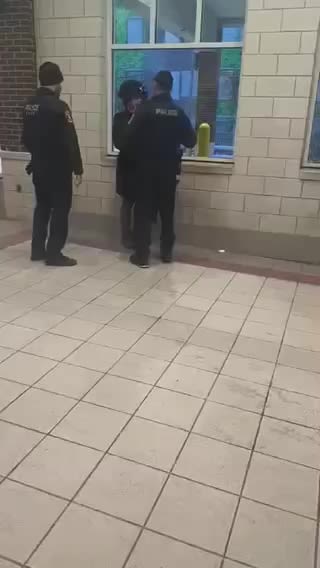
“I’m here because it’s cold outside. I have nowhere to go. Nothing. I have nothing.”
A life legislated
Ordinance 1560 was first introduced by the East Lansing City Council in December 2025 as part of a broader set of recommendations aimed at addressing public safety concerns in the city’s downtown area. The proposal emerged from a committee led by East Lansing Police Chief Jennifer Brown, which cited increased concerns about crime and safety in public spaces as justification for expanding restrictions.
The ordinance sought to prohibit camping in nearly all public areas, extending existing restrictions that already banned sleeping in places like parking structures and restrooms.
Police Chief Jennifer Brown said the ordinance would create a clearer process for addressing prolonged activity in public spaces and help point individuals to services after first offenses.
But, the common refrain from advocates and unhoused residents alike became, point them where?
Erickson cared about the East Lansing ordinance first and foremost because she cares about her neighbors. As a resource-based advocate, she had a stark understanding of what city ordinances criminalizing common lifestyle practices of unhoused people without creating new resources for them really means.
When paired with a rise in unaffordable housing-driven homelessness and encampment crackdowns, these kinds of legislation can be directly responsible for ejecting swathes homeless people from their communities. Unhoused residents then tend to be pushed onto the local social support system (of which East Lansing has virtually none) or through the traumatic — and often violent — rigamarole of the justice system where vulnerabilities only increase.
Top of Erickson's mind were the ways in which unhoused people are commonly edged into surrounding areas — ones typically already struggling to support their existing unhoused populations.
"[The city council has] a lot of power," Erickson said in an interview. "They decide their agenda, right? So at any point in time, they could have ended the misery of every service provider, of every unhoused person who understood what was to come upon passage of a camping ban like that."
“When survival becomes illegal, we no longer live in the land of the free."
It didn't take an expert to understand that reality. Multiple city council meetings ended up packed with concerned residents and advocates. Extensive public comment periods delayed final voting on 1560 multiple times between February and early March. Critics spoke for nearly two hours during public comment, arguing the ordinance would criminalize homelessness.
East Lansing's public camping ban is nothing new. The city already had restrictions on sleeping in certain public and private spaces, but Ordinance 1560 expanded how broadly those rules could be enforced.
Bans like these and other legislation have long targeted unhoused populations and have existed for decades across the United States, often justified through concerns about public safety and sanitation. Supporters of such laws have recently been given a leg up.
Last year, the U.S. Supreme Court found that such ordinances do not violate Eighth Amendment Rights, regardless of a lack of local shelter space. This has cleared the way for the subsequent spike in cities across the country to adopt similar bans, or make existing ones more strict.
Another speaker, Kara Trimbach Shirley, during public comment, asked a simpler question: “Where are unhoused people to go when they cannot be in East Lansing?”
For a city like East Lansing, where advocates say there is no fully developed shelter system, the ordinance highlighted a broader issue. Policies like camping bans do not exist in isolation. They function within systems that are already strained, where access to basic support is limited and resources are often at capacity. Restricting where people can sleep does not eliminate homelessness.
Instead, it displaces it.
Individuals are pushed into surrounding areas, further from the resources, communities, and support systems they rely on. Advocates say this displacement can make it more difficult to achieve stability, while also shifting the burden onto neighboring communities. It may also increase interactions with law enforcement, bringing greater oversight to activities tied to daily survival.
Measures like this are becoming more common across the country. A recent Supreme Court ruling made it easier for local governments to enforce restrictions on public camping, even in places with limited shelter access.
As a result, decisions like the one proposed in East Lansing are not only local, but part of a broader national trend. Still, many who spoke at the meeting returned to the same concern:
The issue was never just about where people sleep.
It was about whether the systems meant to support them actually exist, and whether they are accessible in the first place.
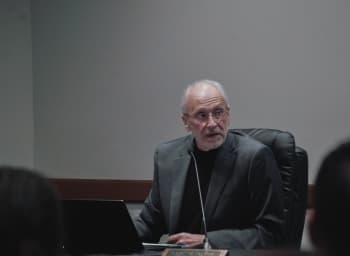
Erickson is one of tens millions of Americans who has experienced homelessness at some point in their lifetime. In Michigan, more than 33,000 people experienced homelessness in 2023, according to statewide data.
“Anyone can become unhoused at any point,” Erickson said. “Most of us are one or two paychecks away from that.”
In the Lansing area, the issue is just as visible.
In 2023, an estimated 2,371 people in Lansing experienced homelessness, with 41% of them being families with children.
These numbers, however, are widely considered undercounts. People experiencing homelessness are often missed in official data, particularly those who are couch surfing, living in cars, or staying temporarily with others.
And for many, the conditions are getting harder.
This winter brought temperatures significantly below average, increasing the risk of cold-related illness and death for people without stable shelter.
Resources exist across the region, but access to them is not always straightforward. Across Lansing and East Lansing, shelters, food banks, and resource centers are spread throughout the area.
But where those resources are located, and how accessible they are, plays a significant role in who is able to use them.
Graphic by Edvige Spizzirri
Graphic by Edvige Spizzirri
Safety net full of holes
Even when resources exist, access to them is not guaranteed.
Legislation like Ordinance 1560 does not necessarily help unhoused people, even though it includes provisions to direct individuals toward resources after a first offense.
In practice, officers would point people toward local shelters, coordinated entry systems, or service organizations such as Advent House and other area providers, systems that are already limited in capacity and not always accessible.
When communities are pushed to the margins by legal frameworks and restrictions on public space, especially when access to basic rights and resources is limited, community-based infrastructures historically arise to fill those gaps.
These have included soup kitchens, informal encampments, mutual aid networks, and organized programs like the Black Panther Party’s free breakfast programs, efforts that developed in response to needs not met by formal systems.
But across social issues, these infrastructures are typically underfunded and under constant pressure.
There are programs, agencies, and steps to follow, but even getting into those systems can be complicated.
People have to complete assessments, provide documentation, and wait to be placed. In Ingham County, more than 700 households are on the coordinated entry list at a time, waiting for housing opportunities to open.
For many, the process is not immediate and can take months to move forward.
“If you talk to people, you hear, ‘I’ve been on a waitlist for nine months,’ ‘they never called me back,’ ‘I wasn’t eligible,’” Ava Anderson said during the Feb. 3, 2026 City Council meeting.

Labeled storage bins containing linens and household items are organized on shelves at Haven House on Feb. 27, 2026. Supplies are distributed to families as they transition through temporary housing. | Photo by Edvige Spizzirri
Labeled storage bins containing linens and household items are organized on shelves at Haven House on Feb. 27, 2026. Supplies are distributed to families as they transition through temporary housing. | Photo by Edvige Spizzirri
A bed inside a room housing a family of five is shown at Haven House on Feb. 27, 2026. Families share temporary living spaces while working with case managers to secure permanent housing. | Photo by Edvige Spizzirri
A bed inside a room housing a family of five is shown at Haven House on Feb. 27, 2026. Families share temporary living spaces while working with case managers to secure permanent housing. | Photo by Edvige Spizzirri
GED preparation books, employment guides and informational materials are arranged on a table at Advent House Ministries on March 20, 2026. Educational and workforce resources are available to support guests pursuing long-term stability. | Photo by Edvige Spizzirri
GED preparation books, employment guides and informational materials are arranged on a table at Advent House Ministries on March 20, 2026. Educational and workforce resources are available to support guests pursuing long-term stability. | Photo by Edvige Spizzirri
Stuffed animals sit on a bed inside Haven House on Feb. 27, 2026. Personal belongings and comfort items help create a sense of familiarity for children living in temporary shelter. | Photo by Edvige Spizzirri
Stuffed animals sit on a bed inside Haven House on Feb. 27, 2026. Personal belongings and comfort items help create a sense of familiarity for children living in temporary shelter. | Photo by Edvige Spizzirri
Personal stories from individuals who have experienced homelessness are displayed on a wall at Advent House Ministries on March 20, 2026. The exhibit shows the varied and often complex paths that lead to and out of housing instability. | Photo by Edvige Spizzirri
Personal stories from individuals who have experienced homelessness are displayed on a wall at Advent House Ministries on March 20, 2026. The exhibit shows the varied and often complex paths that lead to and out of housing instability. | Photo by Edvige Spizzirri
Capital Area Transportation Authority route schedules are posted at Advent House Ministries on March 20, 2026. Reliable transportation can determine whether individuals are able to attend work, appointments and access essential services. | Photo by Edvige Spizzirri
Capital Area Transportation Authority route schedules are posted at Advent House Ministries on March 20, 2026. Reliable transportation can determine whether individuals are able to attend work, appointments and access essential services. | Photo by Edvige Spizzirri
Pet food and related supplies are stored at Advent House Ministries on March 20, 2026. Resources like these allow individuals experiencing homelessness to continue caring for their animals. | Photo by Edvige Spizzirri
Pet food and related supplies are stored at Advent House Ministries on March 20, 2026. Resources like these allow individuals experiencing homelessness to continue caring for their animals. | Photo by Edvige Spizzirri
Typically, programs require documentation, including a state ID, a birth certificate and a Social Security card. Without them, it's nearly impossible to apply for housing vouchers, enter shelters or qualify for rapid rehousing programs.
Getting those documents is not simple. For some, it can take weeks, and for others, months. Advocates say that in certain cases, people end up relying on institutions like the criminal justice system just to regain access to identification. In response, organizations have begun helping individuals secure documents directly, covering costs and guiding them through the process step by step.
But documentation is only one barrier.
Even for those who are able to navigate the system, housing itself can remain out of reach. In Lansing, shelter space is limited. At Haven House, only seven families can stay at a time, while multiple families call each day looking for help.
For those trying to rent, the requirements can be just as restrictive. Many landlords require tenants to earn three times the monthly rent, maintain strong credit and pass background checks. According to local providers, these standards can disqualify individuals even when they have income or are actively working toward stability.
“There’s simply no housing,” one provider said.

Graphic by Edvige Spizzirri
Graphic by Edvige Spizzirri
However, even after navigating parts of that side of the system, new barriers tend to emerge.
A criminal record, even from years earlier, can make it significantly harder to secure housing. Applicants are often denied based on past charges, regardless of how long ago they occurred or whether they reflect their current situation. A system meant to provide access can end up reinforcing the same barriers people are trying to escape.
To be considered for housing support, individuals must first go through a centralized intake system known as the Housing Assessment and Resource Agency, or HARA. In Ingham County, HARA serves as the entry point into nearly all housing assistance programs, determining who qualifies, who is prioritized and who is placed on waitlists for support.
The process is structured and rigid.
Individuals must complete an assessment before being placed on a coordinated entry list, where they are prioritized based on vulnerability.
Graphic by Edvige Spizzirri
Graphic by Edvige Spizzirri
That process requires precision
Applications must be completed within a specific timeframe, and every detail must be verified. Missing information or incomplete paperwork can delay a case or remove someone from consideration altogether, and not every situation qualifies. Staying in a hotel, couch surfing or facing eviction may not meet the system’s definition of homelessness, leaving some people without access to support even when their housing is unstable.
In Ingham County, 700 households can be waiting for housing opportunities to open through the coordinated entry system at the same time.
“Those resources are limited…. and they go quickly.”
Even when a housing opportunity becomes available, approval is not guaranteed.
Applicants must still meet screening requirements set by landlords, which can include credit history, background checks and income thresholds. According to local providers, those requirements can disqualify people even after they have successfully navigated the system.
In one case, a man in his 60s was rejected by a landlord because of a charge tied to sex work from more than 30 years ago.
Even when someone is approved for housing assistance, the barriers remain.
Applicants can reach the final stages of the process and still lose the opportunity because they cannot afford a security deposit or moving costs. In those cases, providers say, vouchers can expire before they are ever used.
For those trying to move forward, navigating the system is a sustained effort, accomplished through intentional help.
Case managers across Lansing describe their work as constant coordination — helping people complete applications, gather documents, follow up with landlords and stay on track with deadlines that can determine whether they receive housing at all. At places like Haven House, families meet with staff daily, building housing plans, making calls and searching for rentals in real time.
Even then, progress is not guaranteed.
The process demands time, access and consistency — resources that many people experiencing homelessness do not have. Missing a call, lacking transportation or losing access to a phone can mean starting over.


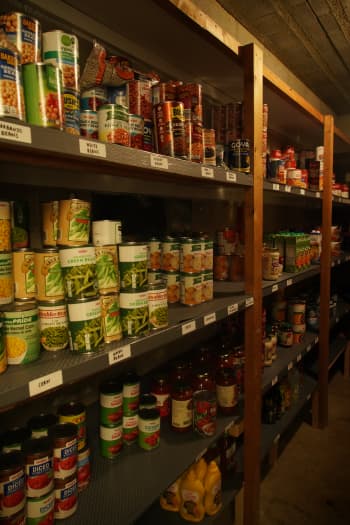
Some resources do exist across Lansing.
But many resources are concentrated in specific areas of the city, often requiring individuals to travel in order to access support when not near these clusters.
Outside these areas, options become more limited, making access more difficult without reliable transportation.
For people already navigating housing insecurity, even small distances then become significant barriers that compound with disability, mental health, and/or distance from an established community.
Graphic by Edvige Spizzirri.
Graphic by Edvige Spizzirri.
For individuals and families who are able to move through the system and secure housing, stability is not immediate.
For many people, daily life is built around securing what others rarely have to think about: a place to shower, a way to charge a phone or clean clothes for the next day.
At Advent House Ministries, those needs surface constantly. Staff help coordinate meals, distribute supplies and connect individuals to resources, but much of the responsibility still falls on the people trying to navigate it.
“We take for granted being able to turn on our lights, get a hot shower, clean our clothes. Every single one of our people has to fight through that every day.”
Without reliable access to basic necessities, tasks like finding a job, maintaining a schedule or following up on housing applications is difficult. Something as simple as a dead phone or lack of transportation can interrupt progress entirely.
Specifically, for families, the experience takes on a different form.
At Haven House, parents continue working, searching for housing and caring for their children while living in temporary space. Case managers meet with families daily, helping them build routines and work toward stability, even as that stability remains uncertain.
Children still go to school, meals are shared and routines are rebuilt where they can be, but the underlying reality does not change.


Shelves containing hygiene products, paper goods and cleaning supplies are shown at Haven House on Feb. 27, 2026. These items support the daily needs of families staying in the shelter. | Photo by Edvige Spizzirri
Shelves containing hygiene products, paper goods and cleaning supplies are shown at Haven House on Feb. 27, 2026. These items support the daily needs of families staying in the shelter. | Photo by Edvige Spizzirri
A sign marks the entrance to Haven House on Feb. 27, 2026. The organization provides temporary housing and case management services for families in the Greater Lansing area. | Photo by Edvige Spizzirri
A sign marks the entrance to Haven House on Feb. 27, 2026. The organization provides temporary housing and case management services for families in the Greater Lansing area. | Photo by Edvige Spizzirri
Cleaning products are stored on shelves at Haven House on Feb. 27, 2026. Maintaining shared living spaces is part of the shelter’s daily operations. | Photo by Edvige Spizzirri
Cleaning products are stored on shelves at Haven House on Feb. 27, 2026. Maintaining shared living spaces is part of the shelter’s daily operations. | Photo by Edvige Spizzirri
Washers and dryers are shown in a laundry room at Haven House on Feb. 27, 2026. Access to laundry facilities allows families to maintain clean clothing and bedding during their stay. | Photo by Edvige Spizzirri
Washers and dryers are shown in a laundry room at Haven House on Feb. 27, 2026. Access to laundry facilities allows families to maintain clean clothing and bedding during their stay. | Photo by Edvige Spizzirri
Diapers and baby supplies are stored at Haven House on Feb. 27, 2026. Items like these are distributed to families with young children and help meet immediate needs during their stay in temporary housing. | Photo by Edvige Spizzirri
Diapers and baby supplies are stored at Haven House on Feb. 27, 2026. Items like these are distributed to families with young children and help meet immediate needs during their stay in temporary housing. | Photo by Edvige Spizzirri
Blankets, towels and linens are stacked in storage at Haven House on Feb. 27, 2026. Donated items are distributed to families as they move through the shelter system. | Photo by Edvige Spizzirri
Blankets, towels and linens are stacked in storage at Haven House on Feb. 27, 2026. Donated items are distributed to families as they move through the shelter system. | Photo by Edvige Spizzirri
A playground sits outside Haven House on Feb. 27, 2026. Outdoor space provides children with an opportunity to play and maintain routine while living in temporary housing. | Photo by Edvige Spizzirri
A playground sits outside Haven House on Feb. 27, 2026. Outdoor space provides children with an opportunity to play and maintain routine while living in temporary housing. | Photo by Edvige Spizzirri
A bulletin board focused on parenting and child development is displayed at Haven House on Feb. 27, 2026. Materials like these are part of the shelter’s broader support system, offering guidance to parents as they navigate housing instability with children. | Photo by Edvige Spizzirri
A bulletin board focused on parenting and child development is displayed at Haven House on Feb. 27, 2026. Materials like these are part of the shelter’s broader support system, offering guidance to parents as they navigate housing instability with children. | Photo by Edvige Spizzirri
What now
While 1560 failed, East Lansing still has a camping ban, as well as a culture and infrastructure that made a more restrictive one both possible and ruinous.
Still dealing with daily threats of encampment sweeps and mass evictions around two cities, there is some pride Erickson feels for the community members who showed up for their neighbors. There is some relief at some chaos avoided.
But she's not throwing the confetti just yet.
"We only succeeded because we had the energy to filibuster long enough," Erickson said. "It's a choice right to hate the poor, to hate the unhoused, right? So like at any time, [Councilwoman Singh] could have flippantly said, what if we just kill it, you know. And then you don't have these conversations or upheaval in your community, and you create like a more like trustworthy pathway to work together."

Khadja Erickson stands with her hands crossed at an East Lansing City Council meeting. | Photo by Sarah Sholte
Khadja Erickson stands with her hands crossed at an East Lansing City Council meeting. | Photo by Sarah Sholte
If you or someone you know is experiencing housing insecurity, resources are available through local organizations.
