

The Town Musicians of Bremen
Background
The fairy tale “Die Bremer Stadtmusikanten” (English: “The Town Musicians of Bremen”) was first published by the Brothers Grimm in 1819. It belongs to the genre of folk tales and reflects common motifs of early 19th-century peasant life, such as aging, labor, and social marginalization. The story takes place in Germany and follows four animals—a donkey, a dog, a cat, and a rooster—who, after being abandoned by their masters, decide to seek a better life as musicians in the town of Bremen.
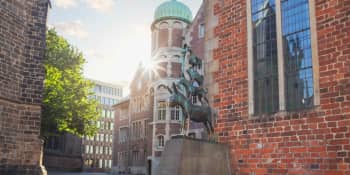
1. The Donkey’s Departure
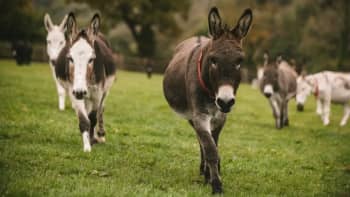
The story begins with an old donkey who has spent many years carrying sacks to the mill. As he grows weak and unable to work, his master plans to get rid of him. Realizing the danger, the donkey runs away. He decides to travel to Bremen, where he hopes to become a town musician.
2. The Dog Joins the Journey
On his way, the donkey meets an old hunting dog lying by the road. The dog explains that he has become too old to hunt, and his master wanted to kill him. The donkey suggests that the dog should join him and become a musician as well. The dog agrees, and they continue their journey together.
3. The Cat Becomes a Companion
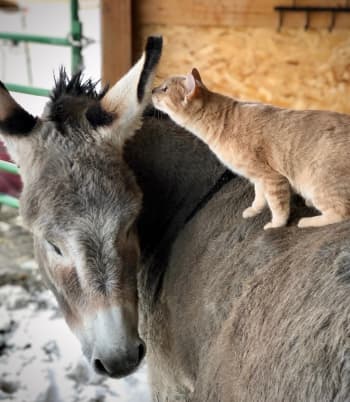
Soon, they encounter a cat sitting sadly by the road. The cat explains that her teeth have become dull, and she can no longer catch mice. Her mistress wanted to drown her. The donkey invites her to join them on their way to Bremen to make “night music.” The cat accepts, and the group grows.
4. The Rooster’s Escape
Later, they find a rooster crying loudly on a gate. He tells them that his mistress plans to cook him for Sunday dinner. The donkey advises him to escape and come along to Bremen, promising that his strong voice would be useful in their musical group. The rooster happily agrees, and the four animals set off together.
5. The Night in the Forest
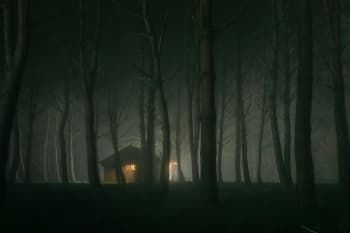
As they cannot reach Bremen in one day, the animals spend the night in a forest. The rooster, sitting high in a tree, spots a small light in the distance. Thinking it might be a house, the animals decide to go there to find shelter and food.
6. The Robbers’ House
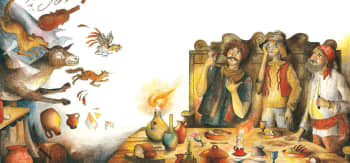
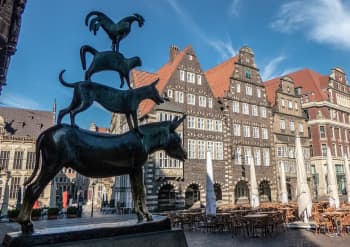
When they approach the house, they see it belongs to a group of robbers enjoying a feast. The animals come up with a clever plan to frighten the robbers away. The donkey stands by the window, the dog climbs onto his back, the cat climbs on the dog, and the rooster perches on top. At a signal, they all begin to make terrible “music”: the donkey brays, the dog barks, the cat meows, and the rooster crows. Then they break through the window, shattering the glass. The robbers, terrified by the noise and the sight, think ghosts have entered and flee into the forest.
7. A New Home
The four animals enjoy the meal left behind and then choose comfortable sleeping places for the night. At midnight, one of the robbers returns to investigate. Mistaking the cat’s glowing eyes for coals, he tries to light a match and is attacked by her. Then the dog bites his leg, the donkey kicks him, and the rooster screams from above. The robber runs back to his comrades, terrified, describing what he believes to be witches and monsters. The robbers never return, and the four friends stay in the house permanently.



Meaning and Interpretation
The tale “Die Bremer Stadtmusikanten” conveys a message about solidarity, resilience, and the value of cooperation. Each animal is old and useless in the eyes of humans, but together they form a strong and self-sufficient group. Their success lies in unity and intelligence rather than physical strength.
Symbolically, the story can be read as a critique of a society that discards those who are no longer economically productive. By helping one another and using their individual skills creatively, the animals find dignity and security outside of traditional social structures.
Bremen itself represents hope and freedom—a place of self-determined life, even if they never actually reach it.
Conent based on Die Bremer Stadtmusikanten by the Brüder Grimm and developed by ChatGPT on the 3rd of November 2025.
Story created by Lilli Walter as part of the Teaching Workshop: Theories, Techniques, Tools for Cultural Communication of the Università degli Studi di Milano.
