
The invisible transition
Young adults with chronic illnesses are facing challenges when transitioning from pediatric to adult care.
For most, turning 18 means freedom: freedom from parental controls, freedom to cast a ballot and freedom to join the military. For Emma Sides, one with ongoing medical conditions, turning 18 meant fear. Fear that after seven years of symptoms and treatment, she would still have to wait for a doctor to take care of her.
In some pediatric specialities, patients can stay on until they are 28 years old or until 10 years of remission have passed. In other pediatric specialities, you are forced out at 18.
“Once I turned 18, many of my specialists and doctors basically tossed me aside, not wanting to continue managing my care because my case was so complicated and I had such high needs,” Sides said. “They didn’t make any effort to find someone competent enough to take over, which made the transition feel abrupt and isolating. It was a very difficult experience having to advocate for myself without much support during such a critical time.”
It’s also financial.
When someone turns 18, Medicaid coverage stops. Some young adults are even financially independent, isolated from their parents.
And it’s even atmospheric.
“Yeah, one thing I would say is, like, when you, like, go from like, [pediatric hospital], it's like colors and windows and lights and just pretty murals, like, all over the wall,” a local nurse who made this healthcare transition said. “When you go next door to [adult hospitals], it's like, dark, dark colors. And I feel like that really affects the environment a lot.”
In 2015, Sides, 11 at the time, started to notice symptoms of anemia. She experienced fatigue, dizziness and weakness. After prenatal pills failed to increase her iron, doctors prescribed Sides IV iron infusions, which she would get every other month.
Over the course of the next three years, Sides was told numerous times her extraneous symptoms were just a stomach bug.
By the time she was 15, Sides was dancing 40 hours per week. While she was gaining muscle from her training, she was losing fat. That fat loss caused her celiac artery to become compressed. That caused her superior mesenteric artery to crush her intestines. The mesenteric artery delivers blood to the intestines. The crushing made it so that nothing could move through her intestines.
“I was living on anti-nausea meds, like, so much so that I was almost incapacitated because some of them make you, like, super drowsy,” Sides said. “I was trying all the diets. I went gluten-free, dairy-free and I cut out methylated folic acid. Like, my doctors were at the point where they were recommending me drink camel milk to see if something was going to make something happen.”
Eventually, it was hard for Sides to keep even water down. Doctors thought it was an eating disorder and anxiety. GI tests would reveal it was Superior Mesenteric Artery Syndrome.
“I was skin and bone and genuinely couldn't support myself throughout the day,” Sides said. “The radiologist was actually the one who was like, I just read about this. I think this is what it is.”
Sides was 15 when she started tube feedings.
Tube feeds involve the supply of nutrients through a feeding tube, which can be inserted into various parts of the body. The most common place is through the nasal cavity and can be placed at the bedside of the patient. Other feeding tubes include gastrostomy tubes, jejunostomy tubes, and gastrostomy buttons. These tubes are often used for long-term use.
“TPN was what helped me manage my electrolytes, get the right amount of fluid, the nutrition I needed, and like helped me start to restore a little bit of weight,” Sides said. “The initial treatment for SMAS is weight gain. Because sometimes, if you gain the weight back, the fat pad that holds the artery will come back.”
Sides’s never did.

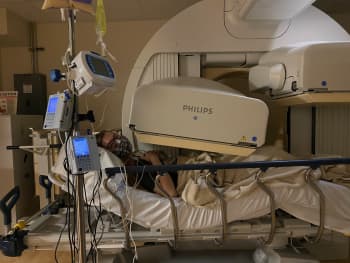
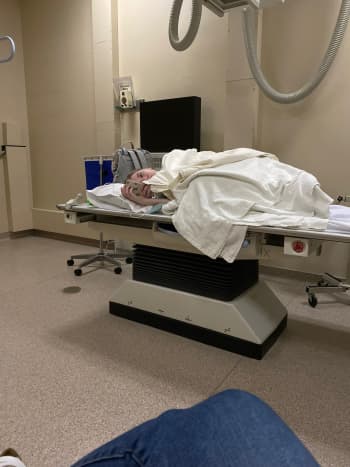
It wasn’t until college that doctors started to test for other compression syndromes.
“In doing that, we figured out my celiac artery was over 77% compressed, which is bad,” Sides said. “So, my intestines were receiving about 23% of what they should have been.”
She had Median Arcuate Ligament Syndrome (MALS).
Sides needed surgery to have your median arcuate ligament cut, the celiac ganglion nerve complex resected, and some of her intestines removed. She was 17, but eventually convinced a non-pediatric surgeon to do the operation.
“It was kind of a battle to get him to hear us out,” Sides said. “I’m 17. I’m practically adult-sized, and we need help because I can’t travel for this. I can’t go anywhere. I am not okay. He was still kind of super hesitant, and I’m still the youngest patient he’s ever taken on. But we were finally able to set up an appointment with him.” After Sides’s surgery, her surgeon told her that she was the worst case he had seen.
After her surgery, she turned 18. For Sides, turning 18 meant uncertainty: uncertainty about where she would be receiving care, uncertainty about how she would find that care and uncertainty if anyone would be competent enough to take her case.
“I literally spent a year and a half on a waiting list for my GI, but halfway through, I figured out they labeled me under the wrong thing,” Sides said. “So then I had to wait extra because there was a mistake.”
In the meantime, her surgeon continued to oversee her case as she got off treatments.
“That is not his job. He was doing what he could for me, but that wasn’t his job,” Sides said.
Sides was doing well. That was until she reached the second semester of her freshman year of college, when she started having more pain and difficulties keeping food down.
She contacted her surgeon again to have him look at her scans, and she had to have another tube placed.
It wasn’t until a full year after that surgery that she was finally able to see a GI specialist.
According to an article in the American Journal of Preventative Medicine, about one in four young adults go without healthcare for a year.
“I think we lose about 10% of patients per year,” a local nurse practitioner said. She wishes to remain anonymous as she does not want her employer known to the public. “That list we had, it was like 150 patients, yeah, that were missing for loss to follow up for various reasons, and we saw 1,100 patients last year, and I think we have about 100-ish that we lose per year.”
Often, young adults like Sides have been getting care from speciality clinics and doctors who specialize in one condition.
“One of the most difficult things in pediatric specialties is the transition of care, because in a lot of ways, some pediatric diseases are totally different than what adult doctors talk about,” a local doctor said. He also wishes to remain anonymous so the public would not know his employer. “The example can be as simple as, say, cardiology. Most pediatric cardiologic problems that you have are totally different than what adult cardiology is. Coronary artery disease, heart failure from heart attacks, and pediatric cardiologists deal with congenital heart problems, so the specialty doesn't really overlap a lot.” He said it also comes down to a lack of primary care physicians and sub-specialists for the growing population.

Waiting that long is more common than one may think. The map shows the percentage of adults with no personal doctor in 2023. Map courtesy of Shadac.
Waiting that long is more common than one may think. The map shows the percentage of adults with no personal doctor in 2023. Map courtesy of Shadac.

Photo courtesy of Emma Sides
Photo courtesy of Emma Sides

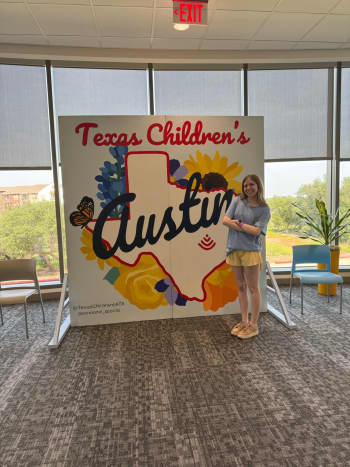
Photo courtesy of Emma Sides
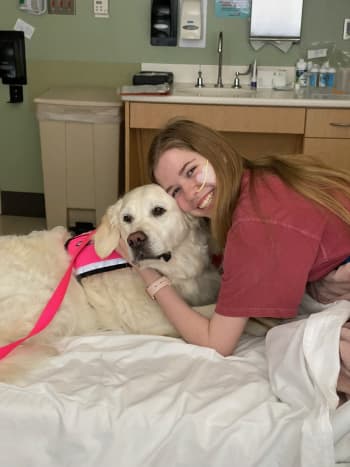
Photo courtesy of Emma Sides
Some hospitals have programs that prepare their pediatric patients for their transition to adult care. Some of those hospitals include Texas Children's, Rady Children's, Children’s Health, Children’s Hospital Los Angeles, Boston Children's, Connecticut Children's, Children’s Mercy, and Children’s Hospital Philadelphia.
A local social worker at a hospital said the program she works with is for everyone, not just higher-risk patients.
“For our low-risk, low-need kiddos, it's relatively simple. The biggest challenge is just making sure for those patients that they're equipped with the information they need to provide to their adult doctor, like, here's my history, here's it, any extra tests that I need that are kind of outside of the norm for our like more higher-need or higher-risk patients,” the social worker said.
That program starts to prepare its patients when they turn 16. Patients set up their own appointments so they can be accountable for their health.
“I think in general, our team is really intentional about making sure there's a lot of space to ask questions when you're with our primary team,” the social worker said.
The program also keeps a list of specialists who understand complex medical conditions.
While not all hospitals have these kinds of programs, Got Transition is a free resource to those who are struggling with their healthcare transition. The website has numerous tabs that provide information for parents, patients, physicians, and researchers.
When looking at the future of Got Transition, the co-directors, Peggy McManus and Patience White, have three goals:
- “Increase the use of a structured Health Care Transition process such as the Six Core Elements, as outlined in the updated 2023 AAP, AAFP, ACP clinical report.
- “Increased consumer demand for HCT support from their providers.
- “Policy leaders paying more attention to quality and payment for excellent HCT services in health systems,” McManus and White wrote in an email.
For patients, the website outlines what a healthcare transition is, provides a quiz to test for transition readiness, and an FAQ of common questions that patients ask. The same format is provided for parents of patients about to make the transition from pediatric to adult care. For physicians, the website outlines the six core elements that make a good transition.
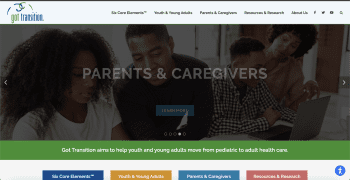
Video courtesy of Got Transition
Video courtesy of Got Transition
A local doctor said he wants more educational policies.
“I think that there should be some addition to social determinants of health about transition plans and making sure that everyone has the, actually has guidelines for this to start preparing people for that,” he said. “Does it happen? Not nearly as much as it should. But, you know, try to make those connections, to make it as seamless as possible, but it's jarring.”
Sides said she agrees that policies outlining this transition would be beneficial.
“Policies to improve the transition from pediatric to adult care should include a flexible transition period where patients can continue seeing pediatric providers beyond age 18 or start seeing adult providers before that age. This would allow for a gradual shift rather than an abrupt change, giving patients time to build trust with new providers and ensure continuity. Additionally, there should be a structured collaboration process where pediatric and adult doctors work closely together with the patient to identify and connect with adult providers who have expertise in managing complex, multi-condition cases. This team-based approach would help ensure that providers understand how different conditions interact and avoid conflicting treatments, ultimately supporting safer, more personalized care during the transition.”
Sides has had multiple surgeries during her time in college and is doing well, under the care of a specialist. She continues to share her story and is studying to become a nurse. She said she hopes to help children who are going through some of the same things she did as a child and show them that they can accomplish anything.
“To anyone going through the transition from pediatric to adult care, it’s important to know that feeling overwhelmed and scared is completely normal, and it’s okay to make mistakes along the way. You are not alone in this process. Remember that you are the expert in your own body and the best person to understand how your conditions affect you. Take the time to learn about your treatments, ask questions, and advocate for yourself; your voice matters now more than ever. Try to establish a relationship with an adult provider who listens and understands your whole health picture. If you don’t find the right doctor at first, it’s perfectly okay to try again until you find someone who truly supports you. Your health is a lifelong journey, and this transition is just one important step toward taking control of your care. Don’t hesitate to ask for support from family, friends, or patient advocates as you navigate this change.”

Photo courtesy of Emma Sides
Photo courtesy of Emma Sides
Grammarly and Caleb Gottry looked over this article.
