
‘Incel alert’: How social media fuels a violent subculture of misogynistic men
Trolling and shitposting are native to Discord, Reddit and TikTok. But what happens when they’re hijacked by a hate movement to normalise its ideology and recruit impressionable minds?
When will toxic cybercultures be taken seriously?
Warning: This article includes explicit language and mentions of violent misogyny, sexual assault, rape acceptance, racism, mass violence, body dysmorphia, depression and self-harm, which may be distressing to readers.
“For the last eight years of my life, I've been forced to endure an existence of loneliness, rejection, and unfulfilled desires all because girls have never been attracted to me. But I will punish you all for it. It's an injustice, a crime...” said 22-year-old Elliot Rodger in his last YouTube video in 2014—before killing six people, injuring 14 others and fatally shooting himself in Isla Vista, California.
A decade later, “supreme gentleman” Rodger continues to be canonised by one of the most alarming yet unchecked communities in the manosphere. While Rodger’s face is often edited onto Christian icons, his 137-page manifesto—in which he graphically penned his struggle with depression and hatred of women and ethnic minorities—is listed as essential reading for members of the incel subculture.
Rodger went from 'misfit mass murderer' to ‘saint’ within the community
Incels, or involuntary celibates, are individuals characterised by their inability to find romantic partners. But what kicked off as a digital haven founded by a queer woman for sexually inactive people has devolved into a toxic echo chamber for sexually frustrated men to share dehumanising theories about women, alongside narratives of sexual entitlement.
Rodger’s posthumous influence signalled a new age of inceldom following 2014, one that translated grievances into violence backed by a nihilistic ‘blackpill’ ideology. In 2018, former military recruit Alek Minassian went on a deadly rampage in Toronto minutes after praising Rodger. Between 2019 and 2020, a self-described incel stalked and harassed women with death and rape threats through social media. In 2023, an inquest heard that Plymouth shooter Jake Davison had referenced several perpetrators of gender-based violence celebrated in the incel community.
Although most of these offenders had their own grievances, they were all united in leaving disturbing digital footprints on incel forums—which functioned as their primary social circle.
“It's almost like a cult,” says Vandal*, a former incel who was initiated into the community when he was 13 years old. “I was already in an anti-feminist mindset when I entered high school, but after becoming more active on social media like Reddit and 4chan, I started leaning more into being an outright incel.”
Vandal was experiencing poor mental health when he began submerging himself in the rhetoric. “I was so happy when I met a group of people who experienced the same hopelessness, seemed to ‘understand’ my troubles and had answers for why I felt the way I did. That’s where it all started.”
34-year-old John*, on the other hand, was ‘redpilled’ into the manosphere at the age of 18. “I started identifying as an incel around 25,” he says. “I’ve now grown past it, but Reddit was the main space where I found such content.”
While dedicated incel forums, including PUAHate and r/incels, have been banned for content violations, subreddits like r/ForeverAlone—which was frequented by Rodger—thrive with revised rules against incel posts and references. An ideology once confined to fringe right-wing websites like 4chan is now infiltrating major social media platforms, including Discord and TikTok, in the guise of trolling and shitposting.
The intersection of age-old misogynistic tropes and new media ‘algospeak’ also fosters a grey area of regulations that continues to recruit impressionable minds into one of the most toxic cybercultures today.
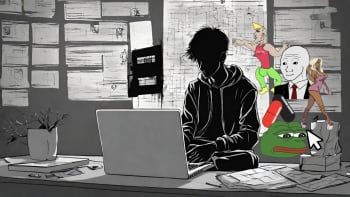

In a 2024 study, the Commission for Countering Extremism (CCE) found that incels spent most of their time on anonymous and registered social media, followed closely by Discord. “These three methods also led to engagement with a greater number of incels and greater exposure to radical people and content,” the report noted.
Discord currently hosts over 250 ‘incel’-tagged servers that market themselves as Terms of Service (ToS) compliant hubs for the subculture. While “extreme activity” is glorified in server descriptions, participation is encouraged by placing minimum daily word counts in the chat. It’s also common to see self-described incels with Rodger and Minassian as their profile pictures routinely raid other servers to spread baseless theories of male supremacy.
According to reformed incel Pingu*, most hubs on platforms like Discord exhibit a lack of camaraderie despite labelling themselves as “safe spaces” for members. “So many posts on self-harm have replies telling the user to do it, shaming them and livestreaming it,” he says.
Servers ensuring ToS compliance to users
Servers ensuring ToS compliance to users
'Chat or banned' conditions guarantee participation
'Chat or banned' conditions guarantee participation
Most servers take a solution-oriented approach to their marketing
Most servers take a solution-oriented approach to their marketing
Servers ironically marketing 'safe spaces' with 'extreme activity'
Servers ironically marketing 'safe spaces' with 'extreme activity'
In TikTok’s case, it’s only a matter of minutes before a new user is served a diet of misogynistic content as the domino effect of interacting with motivational podcasts. Choppy CapCut edits of David Goggins quickly mutate into Andrew and Tristan Tate preaching male victimhood-induced stoicism and hustle culture as “wake-up calls” to young men. With Joe Rogan thrown in the mix, the algorithm spirals into a pseudo-scientific, anti-feminist hellscape that can aid extreme radicalisation.
Blackpill and lookism content thrive on TikTok. Graphics by Malavika Pradeep
Blackpill and lookism content thrive on TikTok. Graphics by Malavika Pradeep
“Manosphere influencers, who claim to know what women want, are the biggest issue for incels,” says Arielle, who regularly receives graphic threats due to her participation in anti-incel forums. “These influencers later sell courses to help men become ‘alpha males’ for a pretty penny, but they’re just making money off vulnerable people with low self-esteem.”
Then comes dedicated blackpill and lookism accounts with millions of views on videos that repackage various incel ideologies for average TikTok users. A quick scroll will overstimulate you with native brain rot trends like mogging, mewing, edgemaxxing, canthal tilt and bone smashing.
Although there’s little evidence of people applying blunt force trauma to reshape their bones, ‘softmaxxing’ trends like mewing have gathered a cult following on TikTok and Instagram.
At their core, such practices amplify insecurities, broaden cultural pressures and place viewers a click away from the incel rabbit hole. “I have also run into many incel-esque TikTok Lives before,” Arielle adds.
Between April 2021 and March 2023, Prevent—the UK government’s counter-terrorism programme—recorded a total of 146 referrals made for incel-related concerns. Of these referrals, 36 have been adopted by the safeguarding programme Channel to assess further vulnerabilities and “provide a tailored package of support.”
However, incels were only added as a category in the years since 2020. As of March 2024, the Metropolitan Police stated that there’s “no way to currently identify [incelism] as hate in itself.” Although this is unsurprising, given the challenges in designating misogyny as a hate crime, it’s important to understand the incentives for labelling something as ‘terrorism’.
“If it’s because we believe that by doing so, we are showing that we take the issue seriously, then I’m not certain that’s correct as there are other paths to achieve that,” says Dr Tim Squirrell, Director of Communications and Editorial at the Institute for Strategic Dialogue (ISD). Dr Squirrell, who has previously worked as a senior advisor on counter-terrorism to the British government, states that incelism should be understood as terrorism if it’s ideologically motivated violence with the aim of intimidating the public or changing government policy.
“It’s substantially murkier if an individual, who happens to consume incel material, engages in violence without a clear indication that they have an ideological motivation for doing so,” he says.
Incels were only added as a category in the years since 2020. Charts by Malavika Pradeep
At the same time, mainstream social media platforms are feeding into the societal integration and normalisation of the incel discourse. When more people start validating such worldviews, the situation births technology-amplified societal consequences, dubbed ‘generative harm’. But it’s worth noting how media platforms are making it harder to estimate the reach of this harm by obscuring audience information available to the public.
For instance, TikTok started removing the number of views from hashtags in February 2024 as a huge step back from transparency. The Center for Countering Digital Hate (CCDH) writes that the move came shortly after researchers leveraged such insights to criticise the platform’s failing content moderation policies.
“Under the EU Digital Services Act (DSA), there’s an obligation for Very Large Online Platforms (VLOPs) to enforce their own ToS, and it’s concerning that this is not happening in some instances,” Dr Squirrell says. According to the expert, all incel content may not fall foul of existing regulations, but they can still fuel a culture whose underpinnings are hateful.
“It’s crucial for platforms to proactively monitor these types of material to ensure they’re not crossing the line and linking out to communities that are more explicitly hateful or violent,” he continues.
Despite the Online Safety Act (OSA) 2023 promising to address gendered harm in digital spaces, the UK’s online safety regulator Ofcom currently does not hold any correspondence or guidance with Discord relating to the moderation of misogynistic content on its platform.
“In order for this content to be regulated better within the confines of the OSA, you would either have to reopen the debate about ‘legal but harmful’ content—which would be a real can of worms—or potentially have to update hate crime legislation to include misogyny under its aegis,” Dr Squirrell says. “Until the government moves in one of these directions, it’s unlikely that platforms can be leveraged to deal with this material.”
Dr Squirrell also highlights how Discord, a platform with a minimum age requirement of 13, has fewer reporting obligations—considering that it’s not designated as a VLOP under the DSA.
As part of the moderation efforts, Arielle advocates the implementation of fact check tags across platforms. “Incels have a knack for spreading misinformation, and a lot of ‘sources’ that they’ve sent me to ‘prove their points’ typically had small sample sizes, multiple biases, non-academic citations and studies that have since been disproven or discredited,” she says.
“People are going to believe what they want, but I think proper labelling of biases and misinformation would make a big difference.”
Meanwhile, Vandal calls for better access to mental health resources to mitigate the “damages” being caused by incels. “Young boys are extremely vulnerable to radical thoughts and beliefs. I would know, as that's roughly when I became an incel,” he says. “I think the issue is more of a societal problem. A lack of healthy male role models is definitely a factor, so something like an ‘anti-Andrew Tate’ would do some good,” he continues.
“Healthy masculinity needs a spokesperson, but I don't see it happening anytime soon”
The incelosphere’s affiliation with reactionary trolls not only counters the hopes of serious regulations but also overshadows the concerning rise of ‘young, broke and alone’ men. Instead of receiving due support, these vulnerable people are fed a diet of rage and despair that leads to incentivised self-harm.
“In 2023, I had a pretty severe mental breakdown that almost ended in my suicide. But thankfully, I was forced to enter therapy by my command,” Vandal shares, adding that his beliefs began to crumble after seeking professional help. “I started putting in a conscious effort to change my mindset after I realised that it had never made me feel good.”
“Anyone can fall victim to these types of groups,” Arielle says. “For someone who’s vulnerable, I'd suggest talking with a trusted adult who can give them more perspective and help their worldview.”
Dr Squirrell also believes it’s essential for parents, particularly those under the age of 13, to be aware of their children’s online consumption. “This doesn’t mean watching their every move,” he says. “It’s crucial to allow space for self-exploration and self-expression, but there are communities that can nudge you towards some really dark material and beliefs, and parents should be aware of this risk and have open conversations with their children about the spaces they inhabit.”
Responses collected from interviewees. Visual by Malavika Pradeep
The internet has undoubtedly aided the digital mobilisation of incels, a community otherwise characterised by its anti-social beliefs. Until platforms and policymakers step in, the subculture will continue its cat-and-mouse game with moderators to find new saints with distressing manifestos. “That’s exactly why early intervention is key to this situation,” Arielle states.
*Names have been changed to protect the privacy of some individuals
Glossary
Algospeak: Code words, emojis and phrases used to bypass content moderation filters. For example, 'SA' for 'sexual assault', 'seggs' instead of 'sex' and corn emoji for 'porn'
Alpha males: They form part of the sociosexual hierarchy and are considered to be leaders, risk takers and most attractive to women
Blackpill: Hinges on the belief that women choose their sexual partners based solely on physical features and dictates that no amount of self-improvement will boost an incel’s ‘pull game’
Bone Smashing: Asserts that you can cause bone growth by exposing them to repeated blunt trauma
Canthal tilt: The angle between the lateral canthus (outside corner of the eye) and the medial canthus (inside corner of the eye). Having a positive canthal tilt (higher lateral canthus) supposedly makes you more attractive to women
Edgemaxxing: Part of the looksmaxxing trend where members withhold climax to boost testosterone and improve their appearance
Foid: A portmanteau of 'female' and 'humanoid' used as a derogatory term for women. It suggests that females are not fully human.
Going ER: Also problematically stylised as 'pulling an ER', it refers to mass killings inspired by Elliott Rodger
Looksmaxxing: The broader practice of improving one's physical appearance to climb the sociosexual hierarchy
Manosphere: A heterogeneous network united in male supremacist beliefs that blame women and feminism for the adoption of a gynocentric society. It includes Men’s Rights Activists (MRAs), Incels, Men Going Their Own Way (MGTOW) and Pick-Up Artists (PUAs)
Mewing: Pioneered by British orthodontist Mike Mew, the method involves applying pressure on the roof of one's mouth with the tongue to try and change the shape of the face
Mogging: Refer to someone being more good-looking or superior to another
PUA: 'Pick up artists', previously used to describe members of the seduction community. Now, it refers to a group of fraudulent men who sell dating advice to sexually inexperienced people
Redpill: Includes a patriarchal view of gender roles alongside the worldview that women are predisposed to be attracted to certain body types, skin tones and facial structures
Softmaxxing: As opposed to hardmaxxing, it involves affordable and temporary enhancements made to one's appearance
