It takes two to tango
But it will take all of society to end domestic violence
Story by Piper Jackson, Callum Pull, Hayley Ratcliffe, Alexandra Rees, Jordan Regnis and Giorgia Wilson
Emerald Wardle was bright, bubbly and considerate, a ‘lovely girl’ who was adored by those around her.
She grew up in Belmont and moved to Metford with her boyfriend Jordan Miller.
On June 20, 2020, Jordan strangled Emerald to death.
“I put my hands around her neck,” he told police. “I’m a murderer.”
Jordan admitted to killing Emerald, but his barrister argued he experienced chronic schizophrenia that was exacerbated by drug use. Jordan said he thought Emerald was a ‘demon’. The Crown rejected this argument.
In October 2022, he was sentenced to 20 years in prison, with a non-parole period of 13 years. He will be eligible for release in 2033, at age 33.
In a victim impact statement to the Supreme Court, Emerald’s mother, Tania Simshauser said: “She was not a demon; she was an innocent young woman."
“I know my beautiful, little girl who was growing into a confident, happy young woman died absolutely terrified. She was terrified because the person she trusted was a monster. As a mother, I know my baby girl died feeling terrified and alone and THAT is a demon that will stay with me forever.
"Emerald has paid the ultimate price… The young man she loved most took her life.”
On 25 March, 2022, 21-year-old Mackenzie Anderson, a mother to toddler Eli, died on the lawn outside her Mayfield home.
Her ex-boyfriend, Tyrone Thompson, is accused of her murder. It is alleged he stabbed her more than 20 times. At the time of publication he was yet to face court.
Mackenzie had feared for her life. She had pleaded for protection. She had taken out an apprehended violence order against the alleged perpetrator. And, she had made social media videos screaming #metoo.
Her distraught friend said Mackenzie was “genuinely living in fear, right up until she died”. On the night of her death, she had called her friends and called police in fear of her life.
A police source told the media that Mackenzie was clinging to life when officers arrived. A friend believes she “was holding out to make sure her baby was going to be okay”.
Mackenzie’s mother, Tabitha Acret, has always fought for women’s rights. Now it runs deeper.
“I think if we really want change, we need to have compassion for men,” Ms Acret said.
“What is wrong with men? Why are some of them so violent? Why are they doing this? Where are we failing them?”
Ms Acret has demanded a place in the national conversation about violence against women. She has pursued NSW Attorney-General Mark Speakman and Police Commissioner Karen Webb to investigate the circumstances of Mackenzie’s death.
“It’s not just reactive measures that we need, but preventative too,” Ms Acret said. “Because if we really want change, we need to get to the root of the problem.”

Photo: The Newcastle Herald.
Photo: The Newcastle Herald.

Photo: The Newcastle Herald.
Photo: The Newcastle Herald.

Photo: The Newcastle Herald.
Photo: The Newcastle Herald.
A community rallies
Newcastle, as a community, is standing up against domestic violence.
Among the first of three rallies this year was the March to End Domestic Violence on March 29.
Participants dressed in orange and purple marched from Newcastle Museum to Nobbys Beach to protest against gendered violence; driven by the devastating statistic that every 10 days in Australia, a woman is killed by a current or former partner.
The march sought to gain the attention of politicians all the way up to the then Prime Minister, Scott Morrison.
In the second march on July 23, hundreds of protestors gathered at Newcastle Museum for the What Were You Wearing rally.
Spearheaded by Sarah Williams, who founded What Were You Wearing, the rally shouted a resounding ‘no’ to domestic violence.
The catalyst was the death of Mackenzie Anderson, whose former partner Tyrone Thompson, has been charged with her murder.
The What Were You Wearing rally put pressure on government and community leaders to properly fund domestic violence shelters and support organisations.
Ms Williams said the justice system was not working for domestic violence victims.
“A band-aid fix saying, 'lock your door' or 'block so-and-so' isn't enough. The stats show that,” Ms Williams said.
Ms Williams named the organisation she founded What Were You Wearing because of personal experience.
"In 2021, I was sexually assaulted three times by three different perpetrators. On multiple occasions by different police and family members I was asked, what were you wearing," she said.
"And at the time I was also doing a university assignment on the What Were You Wearing exhibition over in America. It made me passionate and angry at the same time so I worked with the team in America for three months and we brought it over."
Ms Williams hopes the organisation will influence all sectors of society from preschool educators to universities to politicians.
"It makes you really think that change can be made from people who aren't in positions of power," she said.
"I do definitely believe that Newcastle ... can be one of the first cities to really make change."
In the third community event on October 16, Got Your Back Sister organised ‘I Run for Her’ to raise awareness and funds to help women and children rebuild their lives after domestic abuse.
Got Your Back Sister founder Melissa Histon and run coordinator Annette Huber recruited high-profile figures in support.
Neighbours’ actress Madeleine West was one.
“This is an epidemic within our society that currently runs riot in silence, creating fear and shame,” she said.
“Education and awareness are key, not just for victims but for the perpetrators to find better ways to manage their own fear, aggression and insecurity.”
Madeleine West said ‘I Run for Her’ gave women a way to stand united.
“When we share stories and we share conversations, we don’t just better understand our own situation, we better understand how to prevent it happening to others,” she said.
Celebrity psychic Jackie Gillies was another who supported the run. She said focusing on respectful relationships and self-worth was integral in stopping violence.
“It’s leaving a legacy for the next generation, and we have to show our boys how to treat women,” she said.
“If we want to usher in a strong brave future and we want a better world for our children we need to be part of the change now.”
Two more protests will be held in Newcastle this year, both starting in Hamilton's Gregson Park.
The Newcastle Domestic Violence Task Force will host the 2022 Reclaim the Night march on October 28, from 5.30pm.
What Were You Wearing will hold a March to End Domestic and Sexual Violence on November 29, from 6pm, marching from the park to Onwards Gallery.

What is intimate partner violence?
One in six women has experienced physical or sexual violence with an intimate partner since age 15.
Women are three times more likely to experience violence from an intimate partner than men, and in four out of five domestic assaults, the perpetrators are men.
More than one-third of perpetrators are repeat offenders.
Violence against women and children costs Australia $26 billion annually, and victim-survivors bear half of that cost.
In Australia, one woman is killed every 10 days by domestic violence.
These are shocking statistics.
The term intimate partner violence is now used to describe abuse or aggression with current, former, and dating partners.
It encompasses a range of physical and sexual violence, stalking behaviours and psychological aggression.
According to the Australian Bureau of Statistics (ABS) Personal Safety Survey (PSS) (2016), 3.4 million women aged 18 and over have experienced physical or sexual violence since the age of 15, with one in six women being a victim of intimate partner violence.
132,000 Australian women experienced violence in the past 12 months from their current or previous partner.
The same survey revealed that one-quarter of women in Australia had experienced at least one incident since the age of 15.
Counsellor and group facilitator at Central Coast Woman's Health Centre
Counsellor and group facilitator at Central Coast Woman's Health Centre
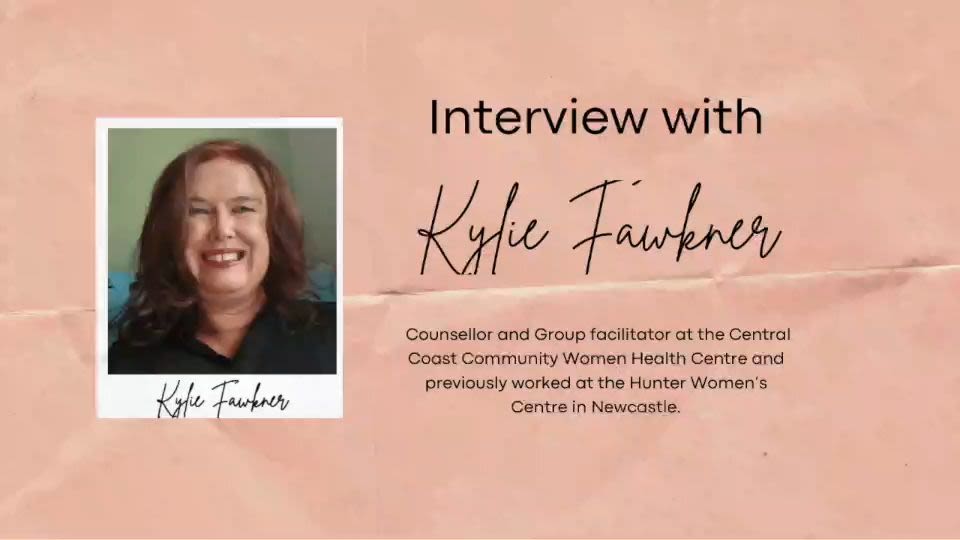
Kylie Fawkner, a counsellor at Central Coast Community Women Health Centre, says intimate partner violence affects women from all sectors of society.
“40% of my clients have experienced intimate partner violence in the last 12 months and 70% of my clients have experienced domestic violence at some stage in their lifetime,” she says.
“Prior to there being a physical assault, there usually is a history of physiological and emotional abuse and coercive control. The mental and emotional affects are lifelong.”
Impacts of intimate partner violence include post-traumatic stress disorder, severe anxiety and suicidal thoughts and attempts.
Ms Fawkner says victims are often terrified of speaking about their violence because they’re fearful.
“There are so many barriers to leaving,” she says. “And that can be a very dangerous time for them if they do decide to speak out.”
Barriers include not being believed, being judged and blamed, financial instability, and fear of further violence.
“When I see shows like Married at First Sight and some of the behaviours that are normalised on these shows it sends a message to the wider community that this is okay,” Ms Fawkner says.
Despite prevention strategies and laws to address domestic violence, more needs to be done to highlight intimate partner violence.
Ms Fawkner says there should be more training for health professionals to recognise symptoms and educational conversations for children and adults.
“So, that way we can have some generational change.”


Central Coast Community Women Health Centre (CCCWH) at Wyong.
Central Coast Community Women Health Centre (CCCWH) at Wyong.

Central Coast Community Women Health Centre (CCCWH) at Wyong.
Central Coast Community Women Health Centre (CCCWH) at Wyong.
What is coercive control?
Coercive control has become a prevalent form of domestic abuse centred around limiting a person’s independence and autonomy, restricting the decisions they make about their life.
This can leave someone feeling isolated and threatened, causing larger psychological problems such as depression and anxiety.
While coercive control doesn’t involve physical violence, it can be just as harmful, primarily because of the rise of digital technologies.
Newcastle lawyer Joplin Higgins says: “In the 1980s, if you upped and left for Brisbane, they wouldn’t know you were in Brisbane.
"The internet has made it much easier to track people down.”
The ability to hold multiple social media accounts and the existence of spoofing apps can make it harder for a perpetrator to be identified.
One example of coercive control is harassment in the form of continuous text messages, phone calls and emails.
Additionally, surveillance and tracking systems can be used to limit a person’s independence.
Another form of abuse is ‘revenge porn’, or image based sexual abuse.
A perpetrator has the potential to post disinformation or intimate photos of a partner or former partner on social media, which can damage their reputation and life opportunities.
In addition to sharing private images, a perpetrator might edit an image to change how someone looks. They might place the face of someone onto a body that is not their own, which can cause humiliation and harm to the victim.
Technology also enables people to abuse their partners financially, mainly through online banking, which allows money to be transferred quickly and efficiently.
Joplin Higgins says it is not uncommon for working women who visit her legal practice to have lost access to their money.
“When women leave, they have nothing. Nothing’s in their name, particularly the car, so they’ve got no way to travel."


What are we doing about it?
The NSW Government has acknowledged the connection between coercive control and domestic violence, with NSW Attorney-General Mark Speakman saying on October 12: “Coercive control is a proven red flag for domestic violence homicide.”
After two and a half years of research and consultation, the Perrottet Government has introduced a bill to Parliament which makes coercive control a criminal offence, with a maximum penalty sentence of seven years’ imprisonment.
"This will make it an offence to intentionally carry out abusive behaviours repeatedly or continuously towards a current or former intimate partner,” Mr Speakman said.
If passed, the bill would make NSW the first Australian state or territory to have a dedicated stand-alone offence of coercive control.
The bill only covers intimate partner relationships, but the Attorney-General has promised a review in three years to consider expanding to other relationships.
Critics of the bill include Domestic Violence NSW CEO Renata Field, who was not satisfied with the standard of proof in the bill.
“You have to show that someone intended to cause that harm,” Ms Field said.
“But in intimate relationships, there can be misguided beliefs… someone may feel they have a right to control finances for example… but they don’t believe that intentionally causes harm.”
In an opinion piece in The Australian, Mr Speakman acknowledged that “coercive control is difficult to identify, difficult to legislate and difficult to prosecute. But these challenges are no excuse for not acting.”
Mr Speakman said the bill was calibrated to avoid overreach by capturing only very serious actions deserving of criminal sanction.
NSW Labor is likely to support the bill, but the Greens have said they will put up a “fight."
Greens MP Abigail Boyd has said the Government should delay criminalisation until next year, after the definition of coercive control has been perfected.
Support by Labor would mean the reforms would be passed before the March 2023 state election.

Mark Speakman MP. Photo: Parliament of NSW.
Mark Speakman MP. Photo: Parliament of NSW.

Renata Field. Photo: Sydney Criminal Lawyers.
Renata Field. Photo: Sydney Criminal Lawyers.

Abigail Boyd MLC. Photo: Parliament of NSW.
Abigail Boyd MLC. Photo: Parliament of NSW.
Understanding perpetrator behaviour
Understanding why people commit acts of intimate partner violence is key to being able stop it, and crucial to this is understanding what makes a person more likely to commit intimate partner violence and what they aim to gain from it
Forensic psychologist Dr Rebecca Smith.
Forensic psychologist Dr Rebecca Smith.
According to forensic psychologist Dr Rebecca Smith, parenting is the most important factor.
“We are taught as children how to respond to our environment, and our emotions,” Dr Smith said.
As well as what we learn from our parents, the social environments people grow up in play an important part in their likelihood to commit acts of intimate partner violence.
“When a child witnesses adults using violence to manage their emotions, it becomes a learning experience for the child to carry into adulthood,” Dr Smith said.
When it comes to what perpetrators gain, the answer is simple – control over their partner.
According to Dr Smith, perpetrators often have poorly regulated emotional management, meaning that when they encounter behaviour from their partner that they dislike they have few healthy ways to deal with it.
According to a 2014 report published in the National Library of Medicine, the most common reasons provided by men for perpetrating intimate partner violence were “power/control, pent up anger, and desire for control”.
Perpetrators tend to have few good role models to learn how to control their emotions, so when they face unwanted behaviour they fall back on violence.
They then discover that it is very effective at controlling their partners and satisfying their own needs, so they continue.
The vast majority of intimate partner violence cases start small and get gradually worse.
Managing perpetrators and reoffending

Sher Campbell. Photo: The Newcastle Herald.
Sher Campbell. Photo: The Newcastle Herald.
The statistics show that most domestic violence incited deaths are a result of perpetrators reoffending. Laws, therefore, focus on holding domestic violence offenders to account and changing the course of their behaviour through a range of targeted initiatives. These include:
Enhancing the supervision of offenders managed by Community Corrections to ensure offenders are receiving the right intervention;
Increasing access to behaviour change programs in both the custodial and community settings to reduce the risk of future abusive behaviour;
Having strengthened sentencing laws so that more domestic violence offenders will be referred to Community Corrections for assessment and then supervised at a level appropriate to their risk;
Strengthening police capacity to identify and target serious repeat offenders; and
Introducing new strategies to ensure people comply with Apprehended Domestic Violence Orders.
Women's lawyer and retired University of Newcastle law lecturer Sher Campbell has conducted extensive research into managing perpetrators of domestic violence and has devised ways of supporting them toward rehabilitation.
Mrs Campbell said the problem with our current management of domestic violence perpetrators is that offenders do not understand what has happened in court.
"The information they are fronted with is not retained because the experience is overwhelming," she said.
"In addition to this, lawyers have very little time, if any, with defendants and more often than not they don't even understand their Apprehended Domestic Violence Order."
After identifying these issues, Mrs Campbell drafted a solution in the form of a digital application that can be accessed on a phone.
"The prototype includes features that reminds the defendant of their legal advice; informs the defendant of the conditions of their Apprehended Domestic Violence Order and explains the consequences of breaching the orders," Mrs Campbell said.
Further to this, Mrs Campbell believes the digital application should be provided to all defendants of domestic violence in court as part of legal advice and proceedings.
Help to change behaviour
Changing the behaviour of perpetrators is vital and according to Newcastle lawyer Joplin Higgins, there are three main areas of focus: early intervention, mandating behaviour programs for offenders, and strengthening those programs.
Not only is teen dating violence extremely prevalent, but relationship standards set during teen years heavily influence what people are willing to accept in adulthood.
According to the Australian Institute of Health and Wellbeing, one in six Australian women have been subjected, since the age of 15, to physical and/or sexual violence by a current or previous partner.
Higgins said that talking about intimate partner violence with young people is incredibly important.
“Preventive conversations is how you get on top of this; it’s probably more important than the perpetrator programs,” Higgins said.
“I think that isn’t a conversation you start having with your daughters at 20, it’s a conversation you start having with your daughters at seven.”
Australian courts rarely mandate people who have been convicted of intimate partner violence to attend rehabilitation programs, and those programs will only accept people who admit to having a problem and being abusive on arrival.
“The majority of programs only take them if they take accountability for what they have perpetrated,” Mrs Higgins said.
“You’re getting people that actually want to go there, and they say the wrong thing and then they don’t get accepted into the program.”
By comparison, courts in Australia do mandate that people go to drug and alcohol rehab, and those people do not need to admit that they have a problem to be let in.
Mrs Higgins said perpetrator programs could be improved by increasing the length that programs run for and focusing much more on a psychological and therapeutic approach to rehabilitation.
Mrs Higgins said programs should be at least 32 weeks and preferably 52 weeks and should involve small group and individual sessions.
“You can’t change behaviour in one-hour sessions in six weeks,” she said.
“You can’t make them accountable. You can’t make them aware in six weeks. You’re only starting at peeling back the first layer of potential trauma or cognitive beliefs at that point.
“There’s so much more to be done with a perpetrator.”
Mrs Higgins said programs should also include a focus on parenting as “a lot of these perpetrators didn’t have that positive role model in their life”.
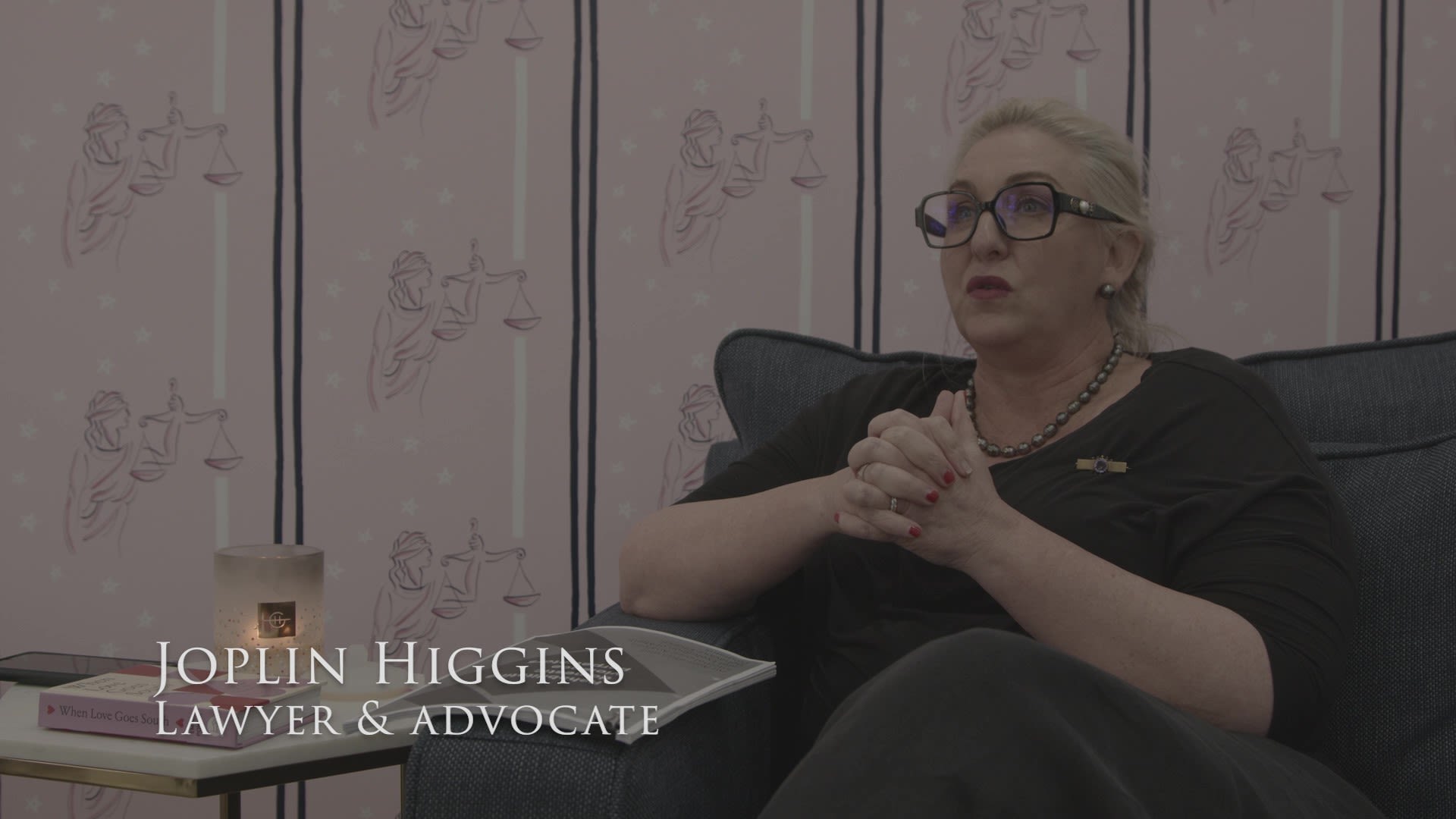

Newcastle based lawyer, Joplin Higgins.
Newcastle based lawyer, Joplin Higgins.
Stop It At The Start

Children involved in the Bankstown Respect project.
Children involved in the Bankstown Respect project.
The Stop It At The Start campaign was funded by the Australian, state and territory governments as part of the National Plan to Reduce Violence against Women and Their Children
It is aimed at 10- to 17-year-olds and seeks to intercept behaviour and attitudes that could lead to gender based violence.
Stop It At The Start, establishes a clear link between violence towards women and attitudes of disrespect and gender inequality.
The campaign encourages adults, such as family members, teachers, coaches, and employers, to reflect and engage in conversations with young people about respect and gender equality.
It is informed by the Reducing Violence against Women and their Children Report, which identified that disrespectful male behaviour towards females begins early in life.
The report found that adults could perpetuate the narrative, using responses to violence such as ‘it takes two to tango’ or ‘boys will be boys’, and leading young women to blame themselves when boys or men act disrespectfully, rather than questioning male behaviour.
Former Federal Minister for Women, Kelly O’Dwyer, said “throwaway comments like this make young people think disrespect is a normal part of growing up. We need to ask ourselves – is that what we meant?”
The National Plan to Reduce Violence against Women and Their Children also identifies that collective action, awareness, and education about respectful relationships for the next generation can bring about major positive change to the story of gendered violence.
“Stop it at the Start shows that small steps, together, can make a difference,” Ms O’Dwyer said.
An example of the approach in action is Port Adelaide football club’s program to educate high school students about violence against women.
Those involved in Port Adelaide Football Club's program.
Those involved in Port Adelaide Football Club's program.
Their program, Power to End Violence against Women, emphasises the importance of respectful relationships and how youth can help prevent violence.
The boys from the Bankstown Respect project.
The boys from the Bankstown Respect project.
Similarly in Bankstown, NSW, the Respect project is using music to teach young boys respectful relationships.
An additional facet of the campaign was the recent competition for young Australians aged 10 to 14 to submit a story, poem, or illustration to show what respect means to them.
Assistant Minister for Social Services and the Prevention of Family Violence Justine Elliot said the Respect Stories were an integral part of continuing the conversation of respect to reduce violence against women and children.
A national plan
On October 17, 2022, Australian federal, state and territory governments launched a new joint strategy seeking to end violence against women and children ‘within a generation’.
The commitment is at the centre of a new 10-year national strategy, approved by all state and territory cabinets, which outlines the need for improvements and increased investment across four key areas of prevention, early intervention, response, and recovery and healing.
Federal Social Services Minister Amanda Rishworth described the blueprint as a clear commitment that we need to end domestic violence.
“Our commitment is to say that we don’t want our children or our children’s children to be dealing with the same issues,” Ms Rishworth said.
However, much like the coercive control legislation set to be adopted in NSW, the federal plan has been criticised for being too narrow in scope.
Anastasia Powell, an Associate Professor in Criminology and Justice Studies at RMIT University, said that other forms of violence that disproportionately affect women – such as online harassment, labour exploitation, sexual exploitation, and abuse of children – receive little attention in the plan.
“The plan makes little mention of the challenges faced in the Federal Court and family law in responding to domestic, family and sexual violence,” she said.
The previous national plan, introduced by the Gillard Government in 2010, failed to achieve its key goal of reducing violence against women and children, but Ms Rishworth remained optimistic about the opportunities in the new plan, which builds on the “learnings” from the previous one.
The Australian Human Rights Commission welcomed the plan and said that it “looks forward to supporting its implementation”, while calling on all Australian governments to commit necessary resources toward ensuring the plan succeeds.
Ms Rishworth said: “It shouldn’t be left to the victim-survivors to explain or feel shame when it comes to violence against women and children.”
“It is about working with men and boys. It is about working on respectful relationships. It is about ensuring that businesses, community groups, sporting groups, everyone in the community has a role.
"We do need to promote more respectful relationships. We do need to increase gender equality. All of these things play a role in actually addressing violence against women and children."

Amanda Rishworth MP. Photo: Australian Labor Party.
Amanda Rishworth MP. Photo: Australian Labor Party.
If this story has raised issues for you, or if you’re concerned about someone you know, call 1800 RESPECT on 1800 737 732.
In immediate danger, call 000.
MensLine Australia is a telephone and online counselling service offering support for Australian men anywhere, anytime.
Visit mensline.org.au or call 1300 78 99 78.
Story by University of Newcastle journalism students.
Research and writing: Piper Jackson, Callum Pull, Hayley Ratcliffe, Alexandra Rees, Jordan Regnis and Giorgia Wilson.
Video: Piper Jackson, Alexandra Rees and Jordan Regnis.
Audio and graphics: Hayley Ratcliffe.
Production: Jordan Regnis.
We are grateful for the help of Sarah Williams, Kylie Fawkner, Joplin Higgins, Rebecca Smith and Sher Campbell.
We acknowledge the victim-survivors of domestic violence and the many people working to end intimate partner abuse.