
Choked up in Mumbai
with no end in sight
As air pollution in the city worsens, Mumbai’s residents complain of worsening coughs and colds. But tomorrow, the impact could be much worse as The WHO has linked air pollution to cancer, Alzheimer’s, Dementia, diabetes and more.
With multiple real estate and infrastructural projects underway, little effort is being made to mitigate the air pollution they cause.
The fate of Mumbai and its residents now hangs by a fragile thread.
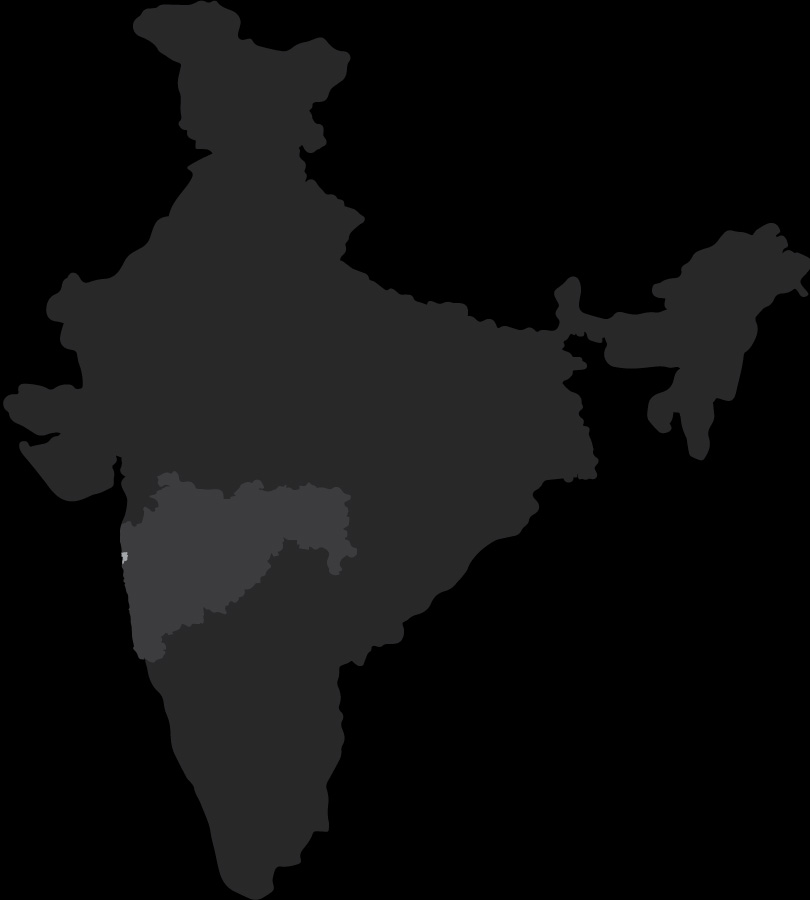
Mumbai, India’s financial, commercial and entertainment capital is a constantly growing city. A hub for opportunity, it attracts populations from all over the country, with the current urban population estimated to be over 22 million.
In a space of around 603 km, the city must find ways to accommodate its many inhabitants. People are brought to a complete halt due to the dug up roads, the work-in-progress infrastructure and a new residential complex on every corner.
Stuck in traffic for hours, or once again stuck at home nursing an infection, the construction is a daily hindrance to citizens.
Dust and debris from construction activity and machinery has meant pollution levels that have caused the city to record an AQI upwards of 300 on several days. The Air Quality Index (AQI) tells you how clean or polluted the air is, and what associated health effects might be a concern for people in the area.
This article breaks down the reasons behind Mumbai’s excessive air pollution, and just how dangerous it can be for the health of its citizens.
Chapter 1 | The Source
Progress at a Price: Mumbai's Construction Boom and the Consequent Rise in Pollution
A prime reason for the country’s economic growth is its investment in infrastructure.
Mumbai a big contributor to this, currently struggles under the burden of over 5 major infrastructural projects:
Note: “Infrastructure Corridor means an area for the establishment of infrastructure relating to roads, public transport or the transportation, movement, transmission or flow of anything, including for example, goods, material, substances.”
This growing infrastructure along with the city’s ever expanding population, has made the real estate market extremely lucrative. In 2021, the government slashed real estate premiums by half to make up for losses during the pandemic. This caused an already overcrowded real estate market to bloom further.
These projects, along with routine maintenance of existing infrastructure added up to a total of 11,125 construction sites in March of 2023.
Based on a graphic by The Hindustan Times [click image to view article]
Based on a graphic by The Hindustan Times [click image to view article]
Contributing to this construction and pollution, are cement or debris trucks and RMC (Ready-mix Concrete) plants. As per criteria of the Maharashtra Pollution Control Board, RMC plants must maintain a buffer zone of approximately 100 m distance from human habitation of 1000 or more people.
Graphic made from visuals showing land cover change derived from Landsat images over the years in Mumbai. Figure was uploaded by Shahfahad [click image to view report]
Graphic made from visuals showing land cover change derived from Landsat images over the years in Mumbai. Figure was uploaded by Shahfahad [click image to view report]
And with more and more green cover being replaced by highways, the city’s ability to fight air pollution is weakened.
Chapter 2 | The Impact
The Science Connecting Pollution and Disease

The size of the Particulate Matter (PM) determines the degree to which they impact the body.
PM 10 - Large
“If the particles are large, they will stay in the nose. the smaller the particles, the deeper it will go.” says Dr Mahesh.
PM 2.5 - Small
The smaller pollutants get past the defence of the nose and airways to reach the lungs where they are able to disrupt the exchange of carbon dioxide and oxygen and prevent our body from using the oxygen efficiently.
PM 1 - Smallest
Some particles which are very very small can even go into the blood, and from their go to all parts of the body including the brain... The smallest pollutant particles that reach the brain have then been known to cause “early degeneration, dementia, early Alzheimer’s, Parkinson’s, all sorts of diseases”, adds Dr Mahesh.
These pollutants too small to see with the naked eye, could cause serious and irreparable damage, and for some, their life may be cut short.
A global review found that consistent exposure to air pollution can impact every organ and worsen existing conditions. The WHO reports outdoor air pollution as contributing to around 4.2 million premature deaths globally, largely focused in South-East Asia.
Some of the well documented diseases and conditions are:
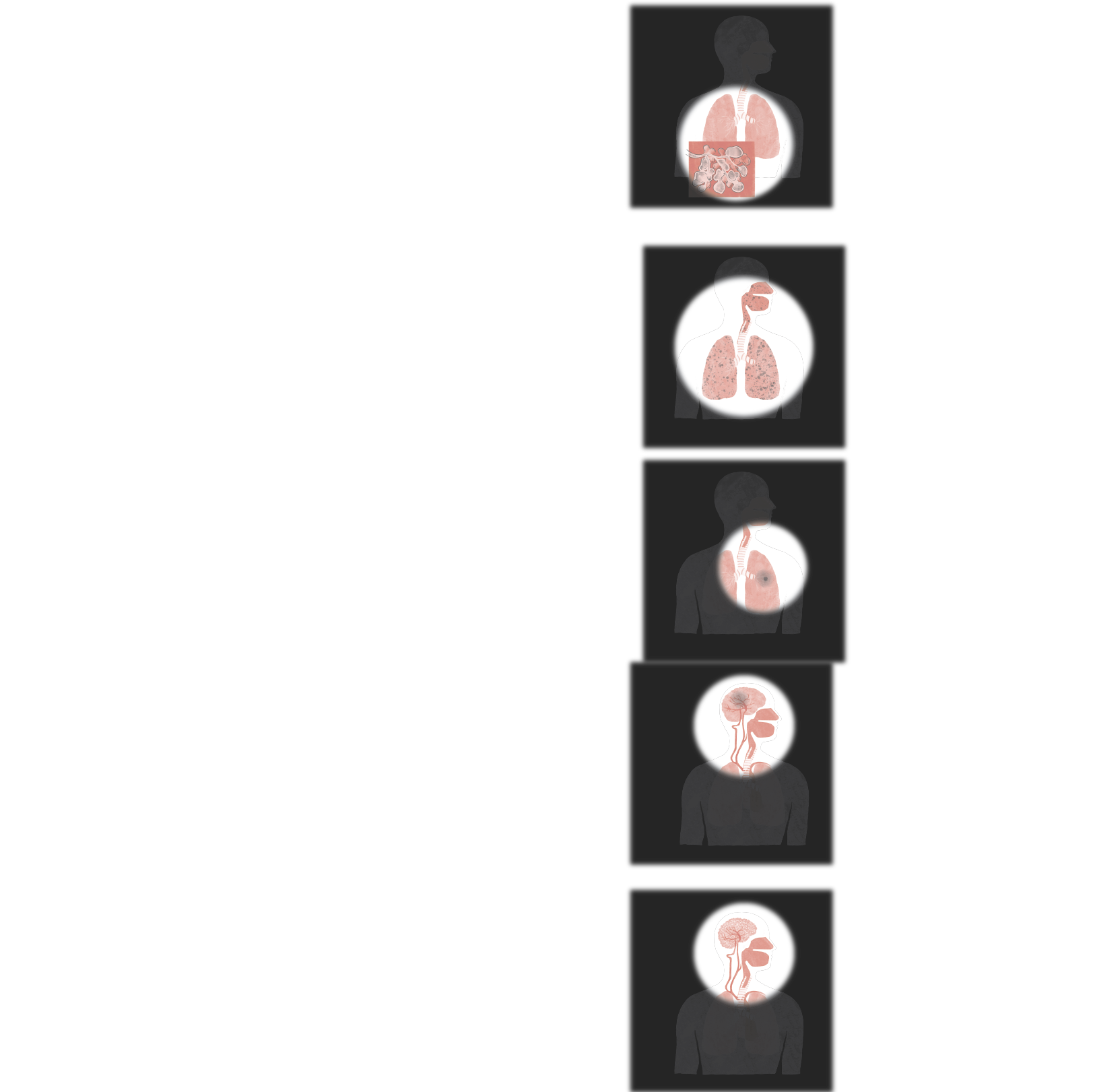
Asthma and COPD
(Chronic Obstructive
Pulmonary Disorder)
Damage in the lungs or airways, making it harder to breathe and with symptoms including shortness of breath, wheezing, chest tightness or pain.
Slicosis and Lung Fibrosis
Silica, commonly found in a variety of construction materials, gets collected in the lung and causes scarring of the tissue around the air sacs in the lung. This makes it harder for oxygen to pass into the bloodstream, leading to shortness of breath, persistent cough, weakness.
Lung cancer
The International Agency for Research on Cancer has classified air pollution, in particular PM2.5, as a leading cause of cancer.
Stroke
By hardening arteries and thickening the blood, and increasing blood pressure, air pollution increases the chances of a clot developing in the brain. The blood supply to the brain gets cut off and can have severe and sometimes fatal impacts.
Dementia, Alzheimer's
and Parkinsons
Dementia and Alzheimer’s cause impairment related to memory, thinking, decision making and more. Parkinson's causes shaking tremors, impaired movement and stiffness.
Chapter 3 | The Affected
The Human Cost of Mumbai's Pollution
As construction dust poisons the air, a survey identifies 85% residents attributing their sore throats, burning eyes and congestion to the pollution.
Parents with young children must be additionally cautious. A case in the UK was the first of its kind to attribute outdoor air pollution to the death of a young girl.


These dangers are present for all residents. Remaining indoors and in high rises, still provides a large number of citizens some distance from the pollution. However for many citizens this is not their reality.
Many people in the city are required to spend large amounts of time outdoors during the day such as delivery people, auto, bus and lorry drivers, and poorer communities forced to live close to construction sites in slums or on the road. The impact on their health is far worse as a result.
To combat the growing pollution, the Brihanmumbai Corporation (BMC) – the body responsible for the civic infrastructure and administration of the city – released the Mumbai Air Pollution Mitigation Plan in March 2023. This provided guidelines including regular washing of roads, covering cement and debris trucks, instructing builders to install sprinklers and fogging machines, “stop-work notices” to sites that didn’t follow the regulations, and more.
However a division bench of the high court hearing a motion on the poor air conditions said, ““...Theoretically on paper looks like everything is in place but on ground, nothing is done,”. A CAG report highlighted a “lack of transparency”, “ poor planning, and careless use of funds” by the BMC. An investigative report also revealed that while stop-work notices had been issued, there was no follow up on construction having stopped or further penalties for repeat offenders.
Additionally, the proposed plan also brings up concerns. The water used for washing depletes the resources of neighbouring towns and puts pressure on the system in the drier areas.
To cope with the growing pollution, air purifier sales in the city have surged. And while wealthier populations can afford this and other forms of protection, this is not the reality for most of the city's population. Without proper government intervention the impact on their wellbeing could be devastating.
Credits:
Writing, Research, Illustrations: Ranjani Tavargeri
Supervision: Sharron Lovel
My illustrations are all based on well-sourced and verifiable evidence. Sources are credited alongside the illustrations, and any additional online resources that informed my reporting are linked directly within the illustration or listed in the reference section.
Explaining the process:
- Reporting and Sources: Reporting was conducted in February - March 2024. Health information is based on interviews with respiratory specialists Dr. Mahesh P.A., Dr. U. Mabalirajan, and Dr. Neeraj Gupta. In addition, phone interviews were conducted with environmental advocate Adv. Godfrey Pimenta, auto driver Mr. Ramesh Devade, and cook Ms. Seema Devade. Additional insights came from people via this Google Form
- Illustrations: The illustrations of experts are based on photographs. However all other illustrations of people are purely representational. including those who responded via the Google Form. Reference image for the construction illustration.
- Photos and Videos: Footage from Mumbai was provided by Saurabh Dhope, Jahnavi Amarnani, and Shreya Naik. (all images subject to copyright)
Creative Commons infrastructural project photos: Mumbai metro, Trans Harbour Link, Navi Mumbai Airport, Mumbai-Ahmedabad Bullet Train


