They helped stop the pandemic. The fight isn’t over.
When it feels like the whole world is against you, how do you keep going?
Dr. Dan Barouch's office in Beth Israel Deaconess Medical Center appears like any other middle-aged professional's might—besides the framed articles on the wall, all about him.
One in particular stands out among the rest. The headline reads: "414 days at work, zero days off: Dan Barouch and the race to develop the Johnson & Johnson vaccine." It's from the Boston Globe, when he was named one of the Bostonians of the year — the second time.
Barouch is among the many scientists, researchers, and doctors whose work was called into question, despite the record-breaking feat of sending a vaccine out into the world a year after the first reported case of illness. However, he denies this ever causing him to feel bogged down or discouraged.
"I've never felt powerless or cynical," he said. "I just think that there's major problems that need to be solved."
Skeptics have doubted both the efficacy and safety of the COVID-19 vaccine due to the speed of its development. Despite going through several phases of clinical trials and various testing, naysayers pointed to the expedited timeline as evidence of its faultiness and untrustworthiness—specifically, for Johnson and Johnson.
Barouch’s COVID vaccine research made the J&J shot the most widely distributed one in Africa—over Pfizer and Moderna—because it was the only non-mRNA one. Non-mRNA vaccines don’t require the kind of ultra-freezing required for mRNA that some regions don’t have access to. The shot is credited for saving millions of lives in the developing world, though it was pulled off the market in the United States due to the connection to a rare risk of a blood-clotting disorder.
Though many believe the pandemic to be a done deal, such is not the case for Barouch and his team. Between ongoing COVID research and attempts to treat long COVID, their work is far from over. Since the vaccine rollout, his team has spent the last few years looking at responses to herd immunity and the responses to each booster, as well as the immune evasion properties, or the ability of a disease to go undetected in the host’s immune system and cause further illness.
And yet, vaccine skepticism continues to grow in the years since the pandemic. In July, the Center for Infectious Disease Research and Policy found that 28% of survey respondents blamed COVID-19 vaccines for thousands of deaths, a number that is up 7% from June 2021. Further, the survey found that 22% of Americans believe it's less risky to get infected with COVID-19 than to get the vaccine, more than double the original 10% who shared that belief following vaccine rollout in 2021.
Many experts point the finger at President Donald Trump.
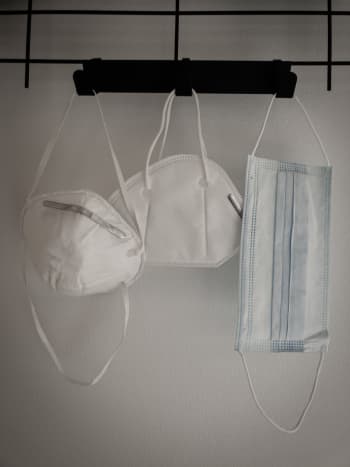
Photo by Hakan Nural on Unsplash
Photo by Hakan Nural on Unsplash
“I can’t give up on that, and I don’t think anyone else should either."
Between stoking the fires of misinformation and failing to support what the experts were recommending, a sizable portion of Americans blame Trump for compounding the existing difficulties of the pandemic, not mitigating them. At the height of the pandemic in April 2020, more than two-thirds of Americans thought Trump’s response to the pandemic was “too slow,” according to Pew Research.
An individual who had a front-row seat to this mishandling was Dr. Ashish Jha, the Dean of Public Health for Brown University. Jha was appointed the COVID-19 Response Coordinator for President Joe Biden’s administration, a team who was by-and-large tasked with undoing what Trump did. Previously working in the Harvard Medical School and Harvard Global Health Institute, Jha was frequently cited and called on during the pandemic for his expertise in public health.
“This is the kind of thing that happens in crises, it gives opportunities for people who want to spread bad information. It gives them much more of an audience to do so,” Jha said.
|
|
|---|
As such, Jha feels strongly about how influential public health officials are in either extinguishing—or fanning—the flames of polarization.
“If you listen to our Health Secretary [Robert Kennedy Jr.], all he does is talk about how most doctors are corrupt,” Jha said. “That stuff takes a toll, if you hear it enough times, people start worrying and wondering, ‘Are doctors corrupt?’”
Jha also attested to the need for self-accountability; he said a lot of mistakes that only stoked the fires of fear were made by the public health officials who the public were being asked to trust with their lives.
“A lot of people in public health communicated with a level of certainty that did not exist,” Jha said. He said that people were afraid to admit mistakes in policy recommendations and communication, but “admitting mistakes is a really important part of retaining trust.”
And it’s in the pursuit of this that keeps him motivated. This is driven by his deep-seated belief in the importance of communicating “openly and clearly” to Americans the need for science-based policies.
“I can’t give up on that, and I don’t think anyone else should either,” Jha said. “The best thing all of us can be doing is [communicating] good information, because if we cede the information landscape to people who are only spreading bad information, things will only get worse.”
“These forces are very powerful."
To both Jha and Barouch, this is the fatal flaw in not just the government, but every public-facing actor instrumental in COVID-19 vaccine rollout and overall pandemic mitigation: lack of investment in social science. According to Barouch, scientists and physicians “naively” assumed that rigorous research and successful trial phases alone would communicate the safety and efficacy of the mRNA vaccine. To Jha, a lot of scientists and doctors were unprepared for the impact of non-scientific forces like actors like influencers and media personalities.
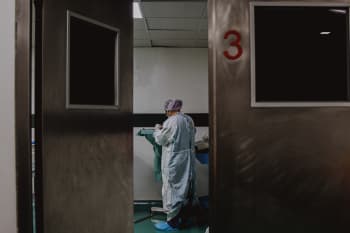
Photo by Jonathan Ruvalcaba on Unsplash
Photo by Jonathan Ruvalcaba on Unsplash
“It's clear that these forces are very powerful, and they can make or break a vaccine campaign, as well as public trust. And we really don't fully understand them yet,” Jha said. “Like most things, they're complicated. It's not simply a bunch of crazy people making up stuff ... sometimes it's rooted in reality.”
Some of the seeds of skepticism were sown by the very same health officials the public looked to for guidance, according to Jha and Barouch. Early on, public health officials, including CDC Director Dr. Rochelle Walensky, made the argument that everyone should get the vaccine, claiming it would prevent infection and further transmission. This claim launched both a House Oversight Committee hearing and national backlash from Americans who felt lied to when they started getting sick, despite being vaccinated.
Barouch said at various points, he advised the CDC, FDA, and White House not to use that language or make false promises, but rather to concentrate on the prevention of severe disease and death. Barouch said he felt responsibility needed to be taken for that.
He said that his pleas to lobby public health officials to be more careful of their messaging proved futile sticks in his mind to this day, saying that the messaging should have been more focused on the vaccine’s prevention of severe illness and death.
“The public health messaging was very strong to get the vaccine, so you don't get infected. And I said, ‘I think that's actually scientifically wrong,’ ” said Barouch. “That severely impacted public trust."
“There wasn’t a single day I was not in person and exhausted for years.:
Photo by Mufid Majnun on Unsplash
Photo by Mufid Majnun on Unsplash
Photo by Mufid Majnun on Unsplash
Photo by Mufid Majnun on Unsplash
Photo by Marcelo Leal on Unsplash
Photo by Marcelo Leal on Unsplash
Photo by Erik Mclean on Unsplash
Photo by Erik Mclean on Unsplash
Another researcher within BIDMC, Dr. Sizun Jiang, recognizes the waning of public trust, but remains hopeful that the state of trust in public health isn’t a lost cause, but is rather at a crossroads. He said the direction it takes will rely on how well scientific professionals communicate what they are doing, and not just saying “trust me.”
Jiang heads a research laboratory at Beth Israel whose main area of focus is viral pathogenesis, or the process by which viruses produce disease in their hosts.
While his lab wasn’t originally focused on COVID-19 research, it was the first group to discover the initial infection site of the COVID-19 virus—the nose.
Jiang said that one way this trust can be repaired in the future is more intentionality in messaging, which he said is usually—regrettably—top-down and sophisticated. He referenced a trip he took to the countryside of South Africa to speak about HIV, a huge problem that impacts lower-income communities in the area. He talked about how influential it was for him to see the impact of speaking to people in their native tongue—not just literally in Afrikaans, but weaving in local customs, traditions, and turns of phrase.
This lesson, Jiang said, applies to how scientists can better communicate to Americans, too. Rather than talking down to them, try to approach the conversation from a “door-to-door,” or community-to-community point of view, he said. He added that if he could go back, he would have recommended localizing the approach to communication around COVID-19 in rural America more, especially because the region, research shows, houses more people who are less trusting of the government.
One exemplary case of this personalized approach is an obstetrician and gynecologist at Beth Israel who studies vaccines and infectious diseases in pregnancy, and gestational immune function Dr. Ai-ris Collier recounted working on the inpatient floors of BIDMC, like labor and delivery, during the pandemic, and enrolling participants on the fly to provide biological specimens for COVID-19 research.
As she talked through what her day to day looked like at the time, she remembered seeing that pregnant people were grossly underrepresented in the research necessary for developing the vaccines. Collier was instrumental in ensuring pregnant people were represented in research and clinical trials during COVID. She was asked to run a hospital-wide COVID-19 biorepository so investigators could gather samples from participants to develop new prognostics, diagnostics, and therapeutics. Today, of the average 1,080 participants in Beth Israel’s COVID-19 research bio-bank, 400-500 of those are pregnant people—a number which, before Collier, sat below one hundred.
“I wanted to make sure that they were included in this important research and emerging pathogens,” she said.
Her involvement originated in a startling disparity she saw five years ago: that in August 2021, the highest rate of pregnancy mortality was COVID-19 related, after the vaccines were already available.
This calling to connect with specific groups who are underrepresented in research is what drives her. And though she cites seeing success, in that people both trusting and skeptical of the vaccine have enrolled in her studies, it didn’t come without a cost; dedicating a sizable portion of her life and career to fighting the pandemic.
But even though the mistrust is palpable, she said that’s not a reason to stop; in fact, it’s what pushes her to keep going.
“There wasn’t a single day I was not in person and exhausted for years…and I don’t like to think about those early days, [but] looking back, I do think it was amazing to see so many different researchers and clinicians come together, for a common cause,” she said.
Collier added that she has observed in her colleagues, as well as herself, the utilization of tools gained from the early days of the pandemic, even time.
“There’s no other way out of it."
The work should now be focused on “rebuilding public trust,” said Barouch — one of the few things he thinks “everyone agrees on” — though he added that how that happens is what he thinks is polarizing.
“Vaccines got sucked into the maelstrom of divisive politics, which is probably also more divisive now than has ever been in the past,” he said.
In his view, the success of the COVID-19 vaccine wasn’t just the work of scientists, or public health officials, or even the government; it was the culmination of both Trump and former President Joe Biden’s administrations, and both parties. Without everyone working towards a solution, he said, there wouldn’t have been a vaccine.
“It did involve both administrations and both parties in a very fundamental way. So to some extent, it's a shame, because it could have been a unifier.”
Dr. Michael Seaman started his postdoctoral research at the same time as Barouch and has now run his own laboratory parallel to Barouch for twenty years. Seaman’s laboratory, originally started with a focus on AIDS research, supports multiple clinical trial units, not just at Beth Israel, but Brigham and Women's Hospital, Fenway Health, and Harvard University Medical Center.
While the whole country was in lockdown, Seaman was training staff and executing research, a tall task, he said, given social distancing and isolation protocols. And though he remembers the experience as ultimately rewarding, the triumph has since been diluted by the questioning of the very technologies that stopped the pandemic, which he attributes to leading to infectious disease outbreaks like measles.
“It’s all kind of a surreal environment right now,” he said.
The contrast between 2021 and today is “hard to understand,” Seaman said. Similar to Barouch, he felt that the direction the conversation around science was headed in the early days of the pandemic was hopeful. Since then, the anti-vax voices have become the loudest, in Seaman’s opinion—thanks in part to the Trump administration.
“In general, truth right now, in the current administration, is not a given,” he said. “It's destructive.”
There was an urgency to disseminate information during the pandemic to try to keep as many people safe as possible, Seaman acknowledged. What this meant, to him, was that pivots were not just a given, but necessary.
“Science is ever evolving. Messaging based on that science, therefore, is going to evolve,” he said.
The fact that the Trump administration weaponized this, in Seaman’s view, is discouraging.
During the pandemic, scientists and doctors were working around the clock, sometimes over 12-hour days, to test the efficacy and safety of the vaccines. With work days like that, he said pivots are par for the course.
For Seaman, the future of vaccines is now uncertain under Trump. He referred to the government’s slashing of $500 million in federal funding for mRNA vaccine research, which currently impacts HIV research—the very field that provided those fertile grounds for the development of the COVID-19 vaccine.
“What frustrates me is the short-sightedness of it,” he said.
To Seaman, the problem is bigger than mRNA, HIV, or even COVID. He said it impacts all of science, and the measures being taken right now — from cutting grants, to barriers international students face, to graduate programs reducing entry — will have ripple effects for generations to come.
“It was clear that the U.S. was the global leader [in biomedical research], hands down,” he said. “To see that dismantled is just unreal. There’s so much potential lost.”
Despite this increased uncertainty, Seaman described incredible collaboration between the top hospitals, schools, and researchers in the area in the earliest days of the pandemic, such as the collaborative Massachusetts Consortium for Pathogen Readiness, or MASSCPR. It was a place for those at the forefront fighting the pandemic to work together, from Boston to Wuhan, China, to share their findings, and help one another with the common goal of getting a vaccine out. The first meeting was before the first case even hit the U.S.— Seaman recounts video calling researchers in Wuhan, China, who briefed those working in the U.S. on how they were treating their patients and what else they wish they’d known.
“What happened during the pandemic is you saw the best of science….we were in this together,” he said. “During the pandemic, I was walking across the street and handing stuff to other researchers.”
Harvard still hosts weekly MASSCPR calls and annual symposia, and Seaman, to this day, collaborates on funded projects with researchers who would previously be characterized as competitors. Now, however, they’re a coalition, working together on predictive modeling of SARS-CoV-2 to evaluate genetic sequencing of the COVID-19 virus in order to predict mutations that might escape immunity measures.
“There is still a lot of good that came out the other end of [the pandemic] as well,” he said.
Ultimately, he joins Barouch, Collier, and Jiang in believing that if another pandemic hit, and the country was once again faced with death and devastation, Americans would turn back to science. It’s this hope, this goal, that motivates him to keep going.
“There’s no other way out of it,” he said.