

Manufacturing Drought
Sadopur’s fight against KRBL for clean water is two decades long.
Aaditya Khatwani
On a warm December afternoon in Sadopur, a group of residents gathered around me to narrate their plight. “Hit the tap right here and you’ll see dirty water,” said one of them, gesturing to a pump next to us. “The taps are no longer of any use.” The villagers blame a rice mill near the village for the high contamination of the groundwater, and the consequent emergence of many cancer cases.
Khushi Ram Behari Lal Limited, also known as KRBL, is a rice manufacturing and marketing company, and one of the world’s largest rice milling companies. One of their rice mills is in Greater Noida, roughly 3km from Sadopur village.
“Our village water used to be really good. Such water couldn’t be found elsewhere in the entire area,” says Gajjinder Singh, 50, who provides transport services for a school. “Now the water is really bad. People are scared to drink it.”
Two decades ago, many residents of Sadorpur and neighbouring villages started getting afflicted with cancer. “There have been a lot of cancer cases in our village in the past 15-20 years. My grandmother passed away due to cancer 24 years ago, then my grandfather. Our neighbour Subhas has cancer. My other grandfather is still battling it,” says Sudesh Kumar, a 42-year-old farmer. Almost everyone in the village knew someone who died due to cancer.
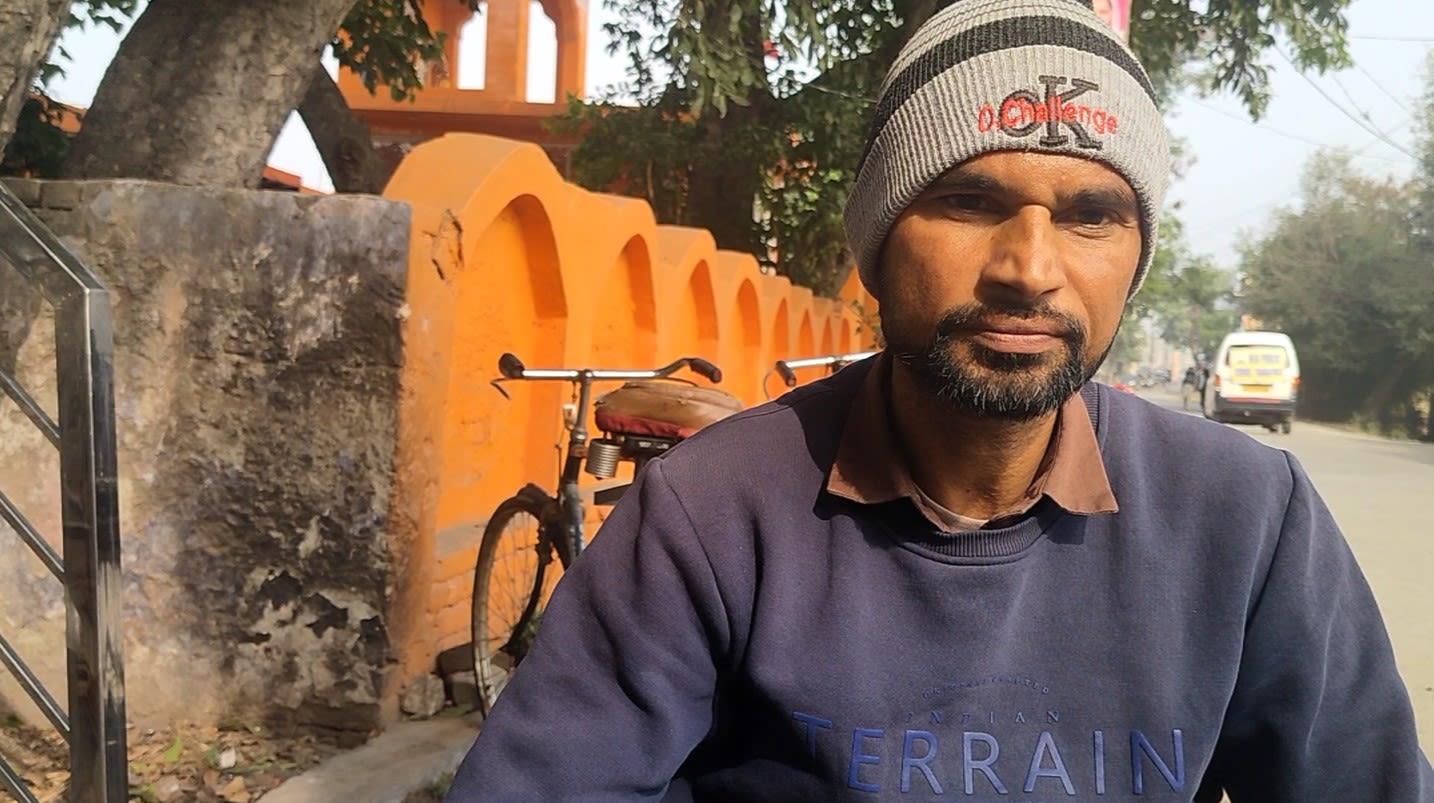
Above: Gul Mohammed, 37, talking about the water crisis in the village. His sister in law is among the cancer patients, and has been struggling with breast cancer for many years.
The high number of deaths is also a result of the villagers not having access to proper healthcare. For treatment of cancer, they often have to travel to hospitals which are far away, such as AIIMS Delhi. “AIIMS does everything, but does not have the time to do it.” says Subodh Kumar, 71, who runs a toffee shop with his wife. “We go today, and they give a date for one and a half months from now. We go then, and find out they’ve called us after another month.” The expenditure of travelling to the hospitals is high, along with the medical bills. “If you take a cab from here, they’ll take Rs 2,500,” says Subodh.
Left: Subodh Kumar and his wife, Kheelwati Kumar (75), next to their shop. Kheelwati had immense back pain and went to the hospital more than a dozen times, but has not gotten any relief.
“There is no government hospital near us, they’re all private. In these hospitals you can be saved only if you have stacks of money,” says Ajay Kumar, 34, Sudesh’s younger brother. A priest who works at the village temple has experienced this. “He has gone to four or five different hospitals, but didn’t find any relief,” says Harinder Singh, 42. The priest has had throat cancer for almost three years, and has been unable to eat anything solid for two and a half years. Despite having gone to several hospitals multiple times, he has not received sufficient treatment.
“The government came to inspect, a medical team also came. They said the water is contaminated, and that we will get work done on this, but nothing happened. The team did tests in a laboratory and said that it is polluted, but then they were fed money,” said Gajjinder.
Adding on to the medical issues, the water has also made people unable to practice agriculture. “Ten to twelve years ago, there weren’t this many houses. Most of the land was for agriculture. Now crops don’t grow here,” says Gajjinder.
Some of the lands are used as wastelands.
While on others, construction work is going on. Some of the villagers' land has also been acquired by the government.
The mill has borewells deep into the ground, which the villagers say is the main reason for the pollution. After the villagers protested, the borewells were deepened. Now, it is unsafe to use the groundwater below 250 feet.
Large amounts of water are used in many stages of rice production to remove contaminants from the grains. These can range from husks and starch to dirt and pesticides. Thus, during rice production, a lot of wastewater is produced, which is filled with contaminants.
Credit: Kumar, S. and Deswal, S., 2021. A review on current techniques used in India for rice mill wastewater treatment and emerging techniques with valuable by-products. Environmental Science and Pollution Research, 28(7), pp.7652-7668.
This is not the only instance where KRBL was accused of spreading illness. In 2019, residents of Babbanpur village in Punjab alleged that a KRBL industrial unit near them had polluted the groundwater, caused cancer, hepatitis, joint pains, and other ailments, and resulted in the deaths of 17 people. Further on, in September 2024, KRBL recalled its 1.1 kg Basmati rice products due to excess levels of Thiamethoxam and Isoproturon, two pesticides which can cause kidney and liver damage.
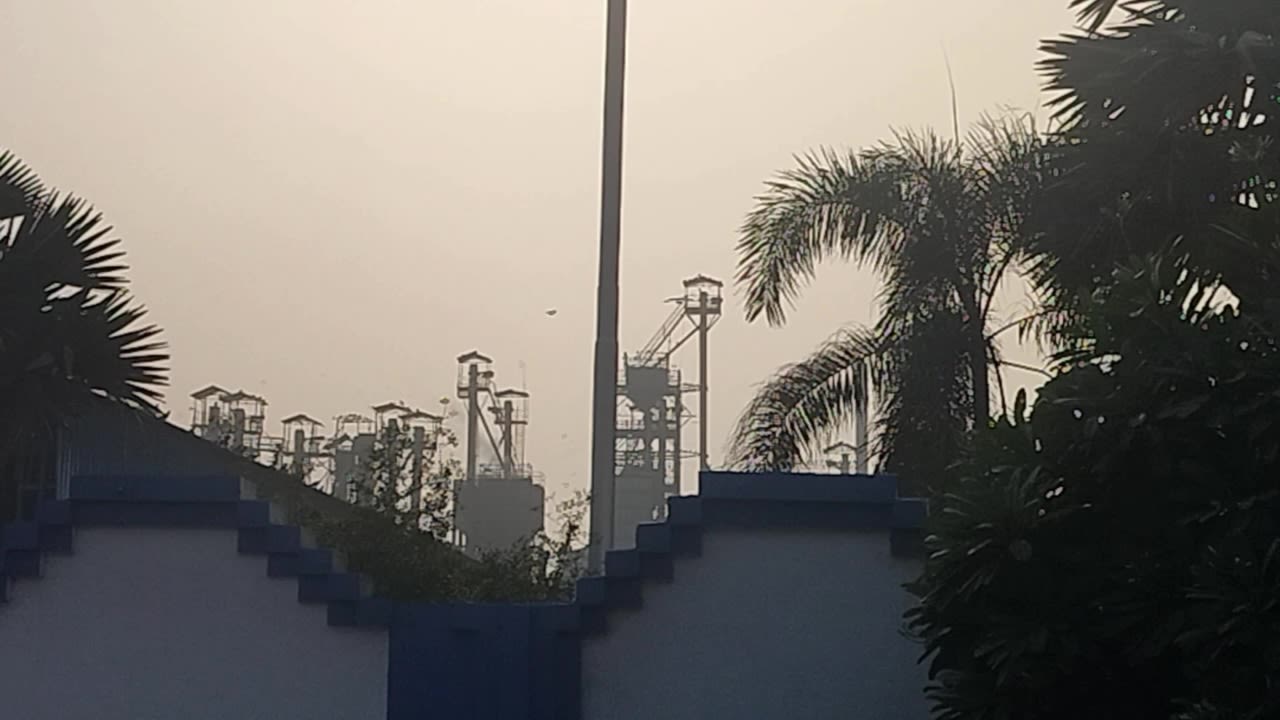
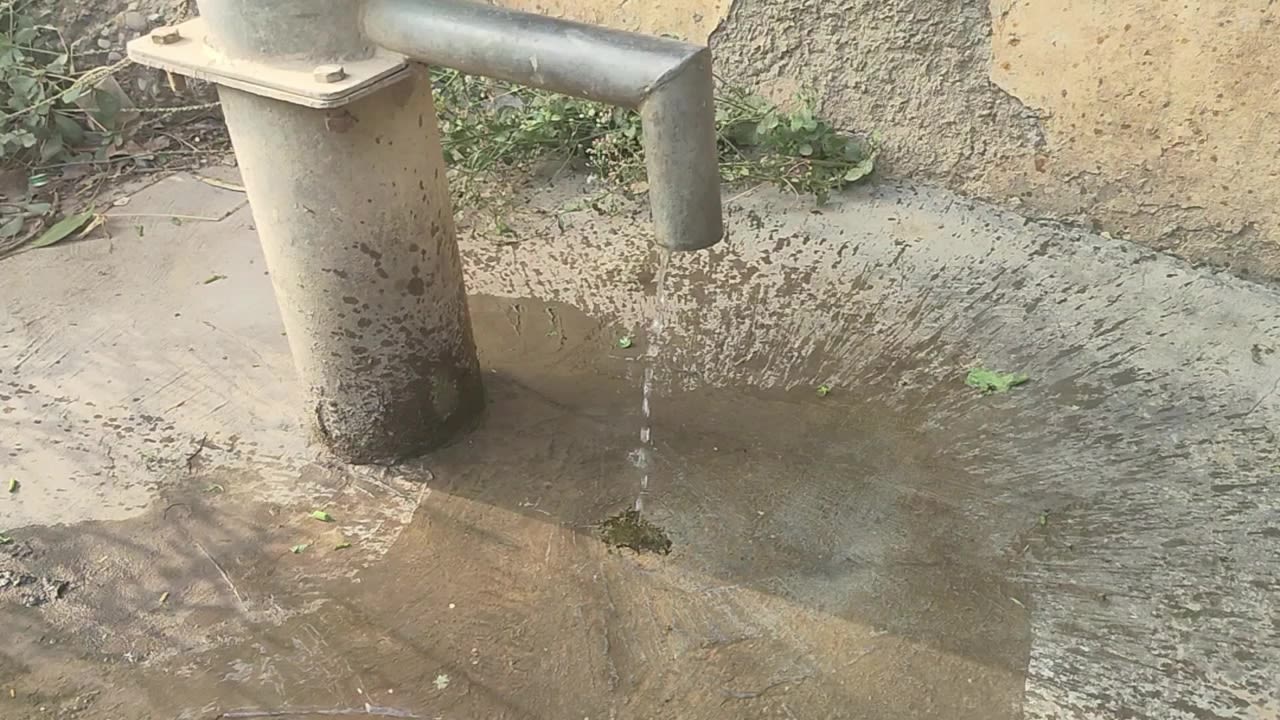
The villagers of Sadopur are no longer strangers to death. Due to the contaminated water, almost all of them have experienced the death of a family member or someone they knew. In recent years, there have been less new or active cancer cases in the village, as most people do not use the groundwater anymore. Many of the villagers have had to either install water purifiers, or spend on packaged water. However, the villagers say that the main reason is that most of the people who had cancer are already dead.
