
The Black Market Thriving Under Our Noses
Australia’s illicit tobacco trade is booming.
Organised crime syndicates are infiltrating the industry, while law enforcement struggles to keep up in the new era of Australia’s war on tobacco.
It’s a typical slow Sunday afternoon in Brisbane. I walk into one of the numerous tobacconist shops scattered throughout the city.
“Hey, what’s the cheapest pack of cigarettes you have?” I ask.
The cashier opens a cabinet covered with “Smoking Kills” warnings and the Quitline phone number. All the cigarette packs feature branded packaging, conspicuously missing the graphic images of decaying teeth and damaged organs that Australians have grown accustomed to.
The cashier mentions they had a busy Saturday, so the selection is limited. I choose the cheapest option available, a 20-pack of Double Happiness.
“That’ll be $20,” the cashier says.
By today’s standards, $20 for a pack of cigarettes is unheard of.
For a typical pack of 20, you’re paying over $24 just in taxes.
It’s clear I’ve been sold an illegal pack of cigarettes.
The tobacco black market is thriving in Australia, with cigarettes, vapes, and loose-leaf tobacco being cheap and readily available in towns and cities across the country.
These aren’t shady back-alley deals paid in cash. They are happening in hundreds of storefronts, leaving Australian law enforcement struggling to keep pace.
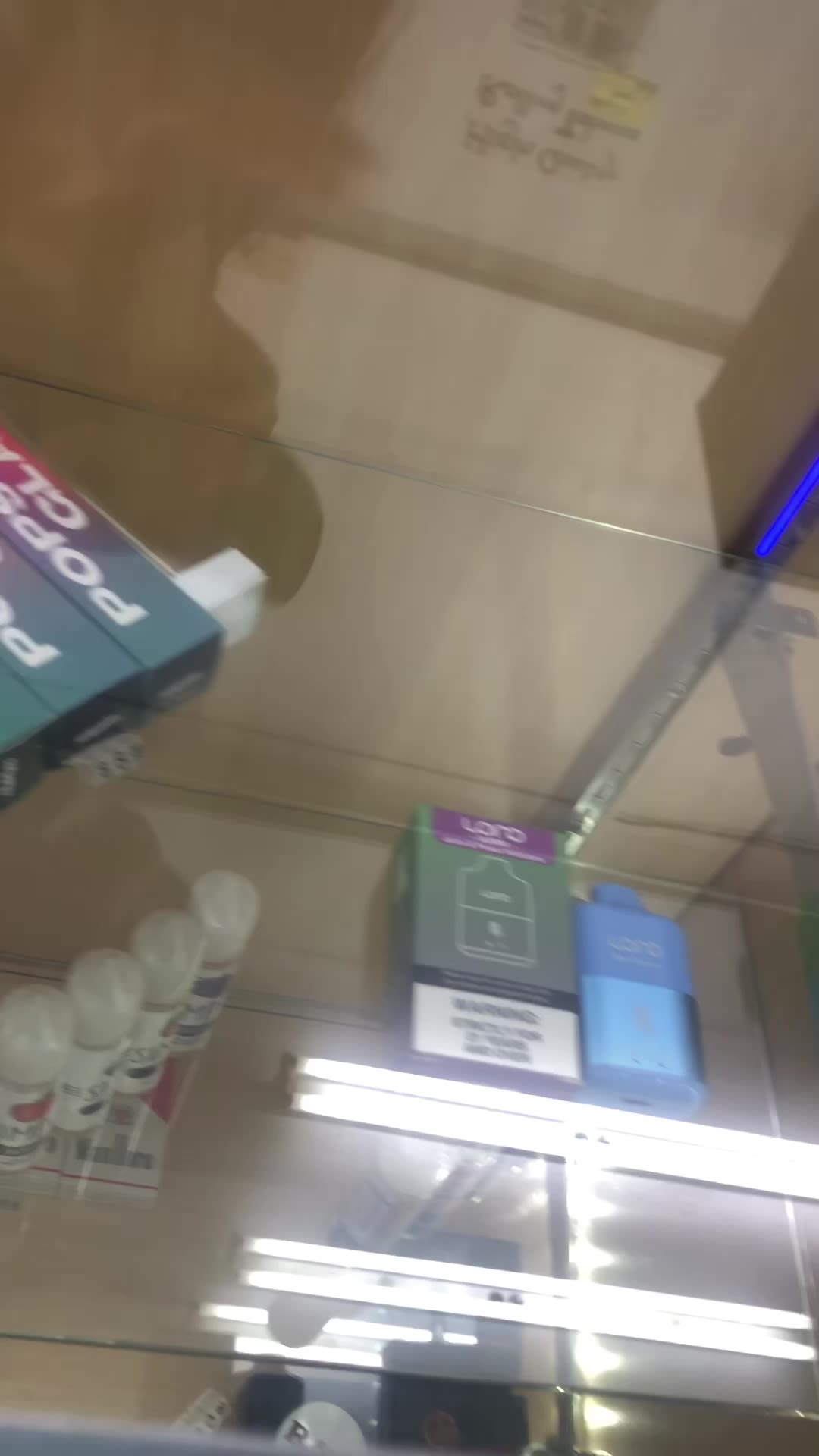
Video of myself covertly recording buying illegal cigarettes. The video is designed to be unidentifiable, no businesses were implicated in making this video. Cigarettes purchased were promptly handed over to law enforcement to be destroyed.
Video of myself covertly recording buying illegal cigarettes. The video is designed to be unidentifiable, no businesses were implicated in making this video. Cigarettes purchased were promptly handed over to law enforcement to be destroyed.
Photo by Kimberly Lambourne. Image of illegal cigarettes purchased in Brisbane
Photo by Kimberly Lambourne. Image of illegal cigarettes purchased in Brisbane
Photo by Kimberly Lambourne. Image of illegal cigarettes purchased in Brisbane.
Photo by Kimberly Lambourne. Image of illegal cigarettes purchased in Brisbane.
Illegal Tobacco is Booming
The Australian Taxation Office (ATO) and Australian Border Force (ABF) are currently experiencing record numbers of illicit tobacco seizures across Australia.
During the 2022-23 period, the agencies seized 2,111.49 tonnes of illicit tobacco – the highest amount ever recorded.
As the graph below illustrates, the number of seizures has increased dramatically over the years.
Note: From 2006-2015, only sea cargo detections were published. From 2015-16 onward, all detections across cargo, mail, and immigration were recorded in the total number of illicit tobacco detections.
Based on the latest 2020-21 estimates, the ATO reports that approximately 1,234 tonnes of illicit tobacco are entering the Australian market undetected.
Since 2016, the volume of illicit tobacco has surged, now comprising almost 15% of the total market.
Rohan Pike, a former officer with the Australian Federal Police and Border Force, notes that despite increased operations and seizures by law enforcement, significant quantities still evade detection.
“The tobacco becomes illicit when it crosses the border without duty being paid or when it doesn’t have the approved Australian health warnings on the packaging,” Pike explains.
“What’s new and driving the problem now is the enormous taxes the Australian government has put on tobacco, which is increasing the prices.
“This has now allowed organised crime groups to capitalise on this. Criminal groups can sell tobacco products significantly cheaper than the legal price and, as a result, make higher profits.”
Hover over the images below to compare legal and black market prices for common tobacco products.
Australia’s Tobacco Wars Set Alight
In 2023, Australia’s “Tobacco Wars” underbelly ignited.
In Victoria, stores across the state selling illicit tobacco were firebombed as rival gangs fought for control of the lucrative black market.
In the space of 12 months, Victoria police launched investigations into over 60 arson attacks related to the illegal tobacco trade.
Australian Border Force Commander Penny Spies, says law-abiding stores are being coerced into selling illegal products, with crime syndicates warning if they don’t, they face being “burned.”
“It’s really concerning seeing this behaviour. People who want to do the right thing shouldn’t be put in the position where they face coercion by criminal groups,” Commander Spies said.
While Victoria is at the epicentre of the tobacco wars, this is a nationwide problem.
In 2023, two tobacco shops were allegedly targeted in Brisbane’s south, and other attacks occurred in Gympie and the Noosa region.
Earlier this year, a tobacconist in Acacia Ridge was attacked, reigniting Brisbane’s turf war.
Where are Australia's Tobacco War Arsons Taking Place?

Along with arson and extortion, alleged murders and assaults have also become part of the growing gang war over tobacco.
Although the next logical step would be to start raiding tobacconists, Commander Spies says it’s not that simple.
“We could go out and start raiding tobacconists, but with the way the industry works, once we raid one, another tobacconist will pop up 24 hours later.
“That kind of approach isn’t a good use of state and territory law enforcement’s time,” Commander Spies said.
Australia's Illegal Tobacco Country of Origin

History of Prohibition Driving Illegal Tobacco
Australia has been a world leader in tobacco control.
With roughly 10.9% of the adult population regular smokers, it’s a testament to the decades-long public health campaign that has fundamentally changed how Australians use and think about tobacco.
The introduction of restrictions on who and where people can smoke, plain packaging legislation, advertising bans, and removing tobacco displays in retail settings have all been credited as successful in reducing the use of tobacco products.
However, the foundation of tobacco control in Australia is the high taxes.
The government imposes a 65% tax on tobacco, making Australia the most expensive place on the planet to buy tobacco.
Under current legislation, the excise duty rate for tobacco, the tax imposed on goods that damage consumer health or pollute the environment, increases in March and September each year.
In addition to ordinary indexation, from September 2023 there will be a 5% increase on the excise each year over the next three years to support the government’s aim to reduce the number of daily smokers to below 10% of the population by 2025 and below 5% by 2030.
Criminologist Dr James Martin from Deakin University, says Australia’s restrictions amount to prohibition, fuelling the black market.
“There’s high demand for tobacco goods in Australia at the moment, especially with the popularity of vaping,” Dr Martin says.
“When the demand for an illicit good is high, and in this case with the expensive price of legal tobacco products in Australia, it creates a breeding ground for the domestic black market to spiral out of control.”
What makes matters worse is the “low risk, high reward” nature of the tobacco market.
Dr Martin states that currently the maximum federal penalty for selling illicit tobacco is “up to 5 years in prison or a maximum fine between $62,000 and $300,000 or a combination of both.”
These penalties for tobacco are considerably lower than other illicit drugs.
“It makes the tobacco trade much more appealing than other drugs like cocaine or methamphetamines where the penalties are much higher,” he said.
Commander Spies outlines that organised crime groups only need 1 out of 30 illegal shipments to successfully cross the border to break even and make a profit.
“We have organised crime groups basically flooding all our borders, whether it be through international mail, air or sea cargo, importing illegal tobacco products and they are getting more sophisticated at evading authorities,” Spies said.
According to Rohan Pike, there are now black-market cigarettes with health warnings on the packaging designed to mislead Australian authorities.
“There’s huge amounts of money to be made here, so of course criminal groups are going to great lengths to get their product past authorities and onto the market,” Pike explains.
Smoking Out The Black Market
Despite consensus among law enforcement and advocates that Australia’s tobacco industry faces a significant problem, there is considerable disagreement on how to address the crisis.
Associate Professor of Public Health at the University of Sydney, Becky Freeman, who has dedicated over 20 years to studying tobacco public health policy, acknowledges that the high cost of legal cigarettes drives consumers to the black market.
However, she firmly opposes lowering the price of legal tobacco as a viable solution.
“The solution is to manage the supply chain,” Freeman says.
“We need to focus on enforcing existing laws and controlling the supply. It’s about making illegal cigarettes harder to access.”
In contrast, Rohan Pike believes this approach is ineffective.
“Reducing the price of the product is the only real way to deter people from purchasing black market tobacco,” he argues.
“Currently, this is far from a measure the government wants to introduce. So, in that case, law enforcement in this space needs to be increased.”
Australia is yet to sign the World Health Organisation (WHO) Protocol to Eliminate Illicit Trade in Tobacco Products.
This international treaty agreement would establish an international track and trace system, placing a unique, secure marking on every tobacco product pack that provides information on the pack's manufacture, shipping, and distribution.
The secure markings would allow tobacco products to be traced and determine their origins, providing a way to discover when exactly products exited the legal supply chain.
The potential benefits of implementing this protocol were outlined in the 2020 Parliamentary Inquiry into illicit tobacco and the National Tobacco Strategy 2023–2030. However, the Department of Health noted that Australia’s tobacco plain packaging regulations prohibited adding track and trace markings.
To date, Australia has not announced any intention to sign the protocol.
“Why wouldn’t I buy cheap?”
With the limited resources available to the Australian Border Force, only 7% of Australia’s imports are thoroughly examined. Furthermore, only containers considered “high risk” are eligible for an extensive examination.
Until this changes, illegal and cheap tobacco products will continue to be readily accessible in communities all around the country.
Photo by Radek Skrzypczak on Unsplash
Photo by Radek Skrzypczak on Unsplash
As I stepped out of that Brisbane tobacco shop, illegal cigarettes in hand, I spoke to Christian*, a security guard who was on his smoke break.
“To me, having a cigarette is part of my day-to-day,” he shares.
“These things are addictive, you know.
“If I’m going to have an addiction, one that’s hard to break… why wouldn’t I buy cheap?
“Yes, they’re illegal, but honestly, they’re the same as all the other [legal] ones.
"Fuck paying $50 for a pack. I can’t afford that shit.”
*Name changed for privacy
