
How nicotine products hijacked a generation
When I was in elementary school, the whole school gathered in our gym for a presentation. It was fairly normal as we had all kinds of people visit our 3rd through 5th-grade school, from jump ropers to the local police and fire departments.
This was like any other school assembly day, or so I thought.
The presenter held up these blackened and enlarged lungs. Fake, of course, but extremely realistic-looking.
“These are what your lungs will look like if you smoke cigarettes,” the presenter said into the microphone.
Their voice boomed through the gym.
Gasps filled the room as eight and nine-year-olds gazed on these seemingly real lungs.
I was so horrified I had to look away.
Next came the rat poison.
“This is rat poison used in rat traps,” the presenter said as he held up a tin can, “it also happens to be a major ingredient in cigarettes.”
Little screams of disgust and horror filled the gym loudly.
This may sound familiar to you; if not, let me explain.
This was my school's D.A.R.E. presentation, where a volunteer came ready to educate, really scare, the young minds of the next generation away from smoking cigarettes and doing drugs.
And for me, it worked. I was frightened so much by the sight of the fake, disgusting lungs that to this day, I’ve steered clear of cigarettes.
I would be considered a success story for the early 2000s war on nicotine, tobacco and youth addiction, a war that, for a moment, seemed like it was being won.
In the 1990s, a new wave of anti-smoking groups joined in a battle against big tobacco. Activists called for boycotts of tobacco companies and their affiliates, specifically those that targeted children.
The ads were everywhere: 'What if cigarette ads told the truth?' Joe Camel in a casket. Truth campaign commercials with the older woman with the tube in her throat.
As funny or as serious as these ads were, they led to huge victories against big tobacco.
The landmark case, United States v. Philip Morris USA et al., proved that the largest tobacco companies violated the Racketeer Influenced and Corrupt Organizations Act (RICO). And one month after the ruling, the Tobacco Control Act (TCA) was signed into law.
Seemingly, the attack on tobacco and nicotine products was not only working but was coming to an end.
Victory was in sight. Then, a counterattack emerged.
The attack is smokeless. It is odorless. And small enough to be concealed within a closed fist. Nicotine pouches.
These are small pouches placed between a person’s lips and gums, similar to dip.
Brands like ZYN, ON! and VELO staged a stunning comeback for the tobacco industry, and a generation quietly became addicted.
A generation that had scare tactics used against them to never smoke tobacco.
However, technically, they haven't broken that promise their 8-year-old self made during the D.A.R.E. presentation. They aren't smoking.
But here's what the American Lung Association says: “The average nicotine pouch user consumes half a can per day, 8 to 12 pouches.” That's equivalent to smoking 1 to 3 packs of cigarettes a day.
They're not smoking. They're just consuming the same amount of nicotine as if they were.
How did this happen?
Through some research, I’ve identified multiple reasons.
First, let's start with the numbers.
From 2016 to 2020, nicotine pouch sales in the United States skyrocketed by 305% according to a study by JAMA.
You didn’t read that wrong, 305% over four years.
In addition to that, researchers at USC’s Keck School of Medicine found that nicotine pouch use among 10th through 12th graders nearly doubled from 3% to 5.4% from 2023 to 2024.
One brand is dominating sales: ZYN. The Swedish brand commands 68.7% of youth nicotine pouch sales, according to the CDC.
Nicotine Pouch Unit Sales in the US by Manufacturer, July 1, 2016–June 13, 2020. (Photo & Data: JAMA, American Medical Association).
Nicotine Pouch Unit Sales in the US by Manufacturer, July 1, 2016–June 13, 2020. (Photo & Data: JAMA, American Medical Association).
But the market growth doesn’t just happen in a vacuum; someone had to give these kids a reason to want the pouches. Or make them cool.
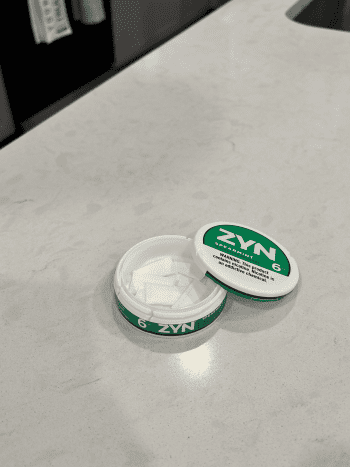
Enter the “zynfluencers.”
NFL quarterback Josh Allen has been open about his use of ZYN pouches, and it went viral after he admitted it on the Green Light with Chris Long podcast. Suddenly, millions of young fans saw their football icon casually using and talking about a product that resembled a can of mints.
The message was clear: elite athletes use ZYNs. Winners use ZYNs.
Suddenly, it's not just a product of the tobacco industry, it's a lifestyle.
Conservative media personalities and podcaster have played a major role in the rise of Zyns, according to Anna North, a senior correspondent for Vox.
North mentions Tucker Carlson, an American conservative political commentator, who famously declared on the Full Send podcast that he uses Zyns “every second I’m awake,” only ever removing the pouch “seconds before I fall asleep.”
The host of the Full Send podcast, The Nelk Boys, is among the most visible promoters of the pouches. Other influencers, including podcaster and celebrity Joe Rogan and comedian Shane Gillis, have also prominently featured the pouches.
Patrick McCaffrey, a junior at Miami University, told The Miami Student, he uses Zyns to fit in socially.
“It feels like I’m a little less with reality and more just in my own little world,” McCaffrey said. “It just makes it a little bit extra, a bit more special.”
That sense of connection and belonging is exactly what influencers have been selling.
Social media then did the rest. USC’s Keck School of Medicine directly linked the surge in young usage to social media marketing.
Platforms like TikTok and Instagram are filled with casual mentions, lifestyle integration, and normalization.
@itzz.andress Champions of the zyn #zyn #champion #championsleague #zynleycup #fyp @Danyal @Ross_Biggerstaff @Brandon Bailey ♬ UEFA Champions League Legacy Anthem (Full Version) - UEFA & Tony Britten
@lift_eat FOUND THE HOLY GRAIL #zyn #zyns #zynpouches #zurich #airport #dutyfree #lifttoeat #liftweightscrushplates #lifttoeatfitness ♬ original sound - TOGI
It makes sense.
Middle schoolers watching Sunday night football see their favorite quarterback put the little pouch in before winning the game. Suddenly, using nicotine is cool or for winners.
College students are trying to collect as many cans as they can to use as decoration. Suddenly, the student is at the nearest gas station purchasing their own can in an effort to be cool or just because it seems normal.
The American Lung Association examined the marketing aspect. Tobacco companies used specific language of harm reduction, such as “smoke-free” or “cleaner alternative.” The association believed the companies were avoiding explicit targeting of youths while still creating marketing that speaks directly to the youth.
Appealing to social acceptance, conveniences, modernity and rebellion without obvious risks.
The strategy is effective.
A Preventive Medicine Reports study found that 16% of adolescents and young adults have tried nicotine pouches at some point in their lives. And of those who had tried them, 73% were actively still using them.
Nearly three out of four people who tried nicotine pouches kept using them.
The retention rate is strikingly high. Compared to the “over two-thirds of people who try one cigarette become, at least temporarily, daily smokers,” according to a Nicotine & Tobacco Research study.
Convenience can play a role in the retention rate of nicotine pouches.
There is no lighter needed, no need to step outside, no smell on your clothes, or any vapor. The pouches can be used almost anywhere, in a classroom, a work office, or an airplane.
The frequency of using them can be more seamless and higher since they’re small and easily concealable.
It would make sense that the occasional pouch could become a daily habit or even an hourly one.
This data proves that with nicotine pouches, trying isn’t just experimenting. It's often the first step towards daily dependence.
Preventive Medicine Reports breaks down how marketing also targets the economics of the users. According to their data, 40% of nicotine pouch users report “just meeting basic expenses,” while 11% reported not meeting expenses at all.
The demographic breakdown is similarly revealing as well. Preventive Medicine Reports data show, Hispanic youth (36%) and Black youth (18%) use pouches at disproportionately high rates compared to white youth. As well as male users (59%) outnumber female users (41%).
The data suggests marketing reaches specific communities and resonates with certain demographics.
A tin of Zyns costs about $7 to $8, depending on where it's purchased, similar to the cost of a pack of cigarettes.
For a college student or even a high schooler with limited income, the pouches are an easy way to socially fit in or get a rush.
Not to mention the flavors.
The CDC found that over 80% of youth e-cigarette users purchase flavored products. The nicotine pouch industry took a page from that playbook.
Flavors range from cool mint, citrus and even coffee. Most recently, ZYN launched a limited-edition ‘ZYN after dark’ line featuring flavors inspired by fan-favorite cocktails, such as mojito, espresso martini, and spiced cider.
Mean Quarterly Unit Sales of Nicotine Pouches in the US by Flavor, 2016-2020. (Photo & Data: JAMA, American Medical Association)
Mean Quarterly Unit Sales of Nicotine Pouches in the US by Flavor, 2016-2020. (Photo & Data: JAMA, American Medical Association)

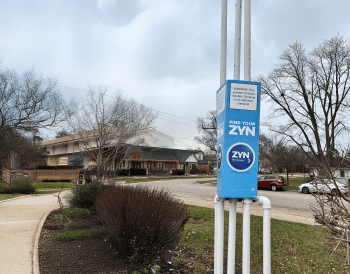

The pattern is predictable: try it once, keep using it.
Ryan Mitchell, a pseudonym used to protect the TCU student's identity, started using Zyns around two years ago. Mitchell explained that Zyns have now become “a part of his daily routine”.
He wakes up, showers, gets ready for the day and sits down at his desk to log in to work. Then, opens the curricular tin of spearmint Zyns and pops one under his upper lip.
As his day continues, Mitchell will have put in around seven to eight Zyns, more if it's a weekend and he’s going out with friends.
Mitchell remembers why he started using Zyns; his two roommates were already using them and would ask if he ever wanted one.
“I always said no,” Mitchell said. I asked him why he finally said yes.
“I just thought ‘well, fuck it.’” Mitchell said with a smile.
He said he first liked the small buzz he got after his first one, saying it felt chill and made him feel a little more focused.
So he started putting a ZYN in before working on important schoolwork, then it was on nights out, then it was before class.
Now, Mitchell says he doesn’t normally even feel a slight buzz when putting one in, even though he now uses six-milligram Zyns. A step up from the three milligrams he started with and the strongest pouches of Zyns in the U.S.
Mitchell tried to quit using Zyns once. His goal: make it seven straight days without the pouches.
"It was hell," Mitchell said.
He was hit with headaches, an increased appetite, unable to concentrate, barely sleeping and constant irritability.
The National Library of Medicine classified these as classic nicotine withdrawal symptoms. They are the same symptoms a ‘pack-a-day’ smoker would experience when quitting.
Mitchell stopped for seven days before returning to the pouches, a timeline where nicotine withdrawal symptoms typically peak.
While Mitchell was proud that he made it the full week, he also recognized that using the pouches was affecting his health.
"I should stop, I know I should," Mitchell admitted. "Since I've started using them, my blood pressure has increased, which isn't good."
According to the American Heart Association, nicotine use can potentially cause increased heart rate, blood pressure, flow of blood to the heart and narrowing of the arteries or vessels that carry blood.
Author's note: The names of all TCU student sources in this work have been changed to protect their identity and ensure their anonymity.

(Photo: DCHHS)
(Photo: DCHHS)


On August 1st of 2017, Texas Christian University became a tobacco-free campus. (Photo: TCU, Campus Recreation & Wellness Promotion)
On August 1st of 2017, Texas Christian University became a tobacco-free campus. (Photo: TCU, Campus Recreation & Wellness Promotion)
On August 1st of 2017, Texas Christian University became a tobacco-free campus. (Photo: TCU, Campus Recreation & Wellness Promotion)
On August 1st of 2017, Texas Christian University became a tobacco-free campus. (Photo: TCU, Campus Recreation & Wellness Promotion)
Mitchell’s story isn't unique to just one college student.
These quiet addictions are happening across Dallas County.
Kelly Wilmore, tobacco control coordinator for Dallas County Health & Human Services, works on three fronts: policy (helping businesses and schools create tobacco-free campuses), education (teaching prevention programs in schools and communities), and cessation (helping people quit).
But she's working without the data she needs, no county-specific tracking of nicotine pouch use, no way to measure the scale of the problem.
“Nobody has mentioned [nicotine pouches] to me,” Wilmore said. “They probably are being used in the county, but I’m not aware of it.”
Fort Worth ISD, however, does track what they see. Disciplinary referrals for vaping have fluctuated, according to Jessica D. Becerra, FWISD’s news and information manager.
The most referrals were handed out in the 2022-23 academic year.
But there's a critical detail in those numbers.
"Most vaping behavior we see has to do with THC rather than nicotine specifically," Becerra said.
Those referrals count vapes, devices that produce clouds, can be smelled, and get spotted by vigilant teachers. Nicotine pouches? They're not in these statistics at all.
A student caught with a vape gets written up.
A student with a tin of Zyns in their backpack goes undetected, uncounted, invisible.
TCU Police Commander Eric C. Gilbert explains that TCU doesn’t track nicotine use either.
TCU is a tobacco-free campus, so when police encounter someone using tobacco, police officers "respectfully remind or inform the individual that TCU is tobacco-free."
Gilbert explains that “violations of the Tobacco Use Policy are not tracked by TCU PD because nicotine is not an illegal substance.”
But what does "tobacco-free campus" specifically mean?
According to the TCU Student Handbook, the following outlines what the policy prohibits.
“Use of tobacco or nicotine products and/or tobacco or nicotine paraphernalia including, but not limited to, e-cigarettes, vapes, and other electronic nicotine delivery system (ENDS) products (e.g., JUULS), dip or pouches (e.g. ZYN products), and pipes, on University premises violates the Tobacco-Free Campus Policy regardless of age, excluding nicotine gum and patches used for cessation purposes.”
Zyns are explicitly named, yet enforcement of them is nonexistent.
When asked about nicotine enforcement, Gilbert said, “If officers encounter a person using tobacco products on campus, they will respectfully remind or inform the individual that TCU is tobacco-free and that the use of tobacco products is prohibited on campus grounds and in campus vehicles.”
There is no record of these reminders from officers, no tracking of how many times a student is told about the policy.
And there is no real enforcement of the Zyn ban.
Students like Mitchell still carry tins in their backpacks and use pouches during class; invisible, uncounted, and largely unbothered.
Author's Note: The TCU Dean of Students' office was contacted for comment. Questions were sent and never answered.
Author's Note: The TCU Substance Use and Recovery Services office was contacted for comment. Questions were sent and never answered.
Prevention Programs
The University of Texas MD Anderson Cancer Center's ASPIRE (A Smoking Prevention Interactive Experience) program. A free online prevention education resource for teens and adolescents.
(Kelly Wilmore, ASPIRE)
(CATCH My Breath)
The American Lung Association's INDEPTH program (Intervention for Nicotine Dependence: Education, Prevention, Tobacco and Health) offers schools an alternative to suspension.
(Kelly Wilmore)
(Texas Health & Human Services)
Cessation Programs
The EX Program (formerly This is Quitting) offers free, anonymous, 24/7 support via text for ages 13-18 and adults
(Texas Health & Human Services)
(Texas Health & Human Services)
Three big nicotine pouch brands
(Photo: ZYN website)
(Photo: ZYN website)
ZYN
Swedish Match, owned by Philip Morris International
Marketed as "smoke-free, spit-free and hands-free and as an alternative to smoking or dipping." source
(Photo: VELO website)
(Photo: VELO website)
VELO
British American Tobacco's (BAT) flagship brand
Marketed as "an alternative to classic nicotine products like cigarettes, hookahs and vapes." source
(Photo: ON! Website)
(Photo: ON! Website)
ON!
Altria, owned by Philip Morris International
Marketed as a "tobacco leaf-free nicotine pouch to offer an alternative to traditional tobacco products." source
Phillip Morris International is the largest tobacco company in the world. On their website, PMI has a section about their vision for the world, saying, “Building our future on smoke-free products that are a better choice than cigarette smoking.”
PMI is the parent company to Zyn and to ON!, two of the most popular nicotine pouch brands.
Their goal can be boiled down to providing a product that centers on “harm reduction,” or the idea that these products are less harmful than smoking and can help someone quit smoking.
Data, however, shows the opposite.
A 2023 Preventive Medicine Reports study found that 73% of current oral nicotine pouch users are also currently smoking cigarettes.
Users are not switching. They're adding on.
- 49% of pouch users also use e-cigarettes
- 29% also use chewing tobacco
This isn’t harm reduction. This is addiction layering.


(Photo: Maeve Molina)
(Photo: Maeve Molina)
Drew Sullivan, a pseudonym used to protect the TCU student's identity, represents the 73% directly.
Sullivan started vaping in college after seeing his whole friend group vaping.
But the effect on his lungs was too great, “I would wake myself up coughing so bad, and in the morning I would throw up because I couldn’t stop coughing.” Sullivan said.
Sullivan switched to Zyns around two and a half years ago, but not to quit nicotine.
“It was an alternative way that I could still get that nicotine rush,” Sullivan said.
Sullivan now Zyns all the time.
His can is always in his work/school bag. Always in his pocket on a night out or when he’s stressed out.
“They don’t make me feel good,” Sullivan said. “I would like to stop using Zyns. The more I use them, the more I dislike them.”
Sullivan switched products but not addictions. Just like the other 73% of users.
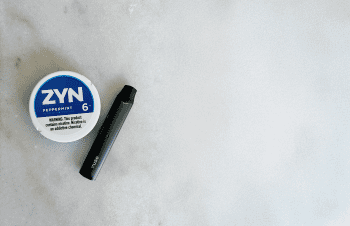
If nicotine pouches feel like they appeared out of nowhere, you’re not alone.
In many ways, they kind of did.
Cigarettes and e-cigarettes have been in the mainstream and the subject of decades worth of regulations, warnings and national initiatives; nicotine pouches slipped into the gray area of federal policy.
The United States Food and Drug Administration is “responsible for protecting the public health by ensuring the safety, efficacy, and security of human and veterinary drugs, biological products, and medical devices.”
Tobacco, nicotine and non-tobacco nicotine products fall under their supervision.
But it wasn’t until January of 2025 that the FDA formally authorized the marketing of 20 Zyn products under the premarket tobacco product application (PMTA) process. This was the first time any authorization was given in the U.S., according to the FDA.
|
What the FDA determined |
||
|
The approved pouches contain “substantially lower levels of harmful constituents than cigarettes or most smokeless tobacco.” Meaning, they pose a lower risk for cancer or other serious diseases |
The application provided data showing that a “significant portion of adult cigarette and smokeless-tobacco users completely switched” to Zyn products This is a key factor in meeting public health standards |
The FDA imposed “stringent market restrictions.” Zyn must limit advertising to 21+ adults, avoid youth-appealing content and ensure models in promotions are 35 or older |
|
(Source: FDA) |
||
However, the FDA emphasized this point specifically.
“While today’s actions permit these specific tobacco products to be legally marketed in the U.S. to adults 21 and older, it does not mean these tobacco products are safe, nor are they “FDA approved.” There is no safe tobacco product; youth should not use tobacco products and adults who do not use tobacco products should not start.”
I think back to that D.A.R.E. presentation more than I expected to as an adult.
The blackened lungs, the rat poisoning, the horrified gasps of third graders confronting disease and mortality in the most shocking way.
It worked for me. I’ve never touched a cigarette.
The scare tactics achieve exactly what they were designed for.
But my class and I didn’t learned that addiction doesn’t always look like something scary.
Sometimes addiction looks like a little tin of mints in someone's back pocket. Sometimes it's watching football on Sunday and seeing a little tin in your favorite quarterback's hands.
It's on social media as a Christmas decoration trend or your favorite podcaster says it's what makes him successful.
Sometimes addiction fits so seamlessly into your routine, before class, during work or on a night out, you don’t have to change anything about your life.
A generation was taught not to smoke. They were shown diseased lungs and the chemicals that made cigarettes repulsive.
But the industry bounced back; they didn’t try to change cigarettes or make them appealing again. They created a modern, clean and sophisticated product that looks harmless.
Youth nicotine pouch use nearly doubled in a single year. Market sales increased 305% in four years. A generation that would never smoke cigarettes is now consuming cigarette-pack levels of nicotine daily through pouches.
And somewhere, in an elementary school gym, a new generation of kids is learning about the dangers of cigarettes, yet never realizing the real threat will come in a package that looks nothing like what they're being warned against.
Author's Note: Full research material, interviews, and resources can be found here in this folder.
Author's Note: The following sources were contacted for comment and did not respond: Dallas ISD, National Institute on Drug Abuse, Cooks Children's Hospital, Zyn, Phillip Morris, TCU Substance Use and Recovery Office, and TCU Dean of Students.
