
Inside the Lines: Analyzing the Challenges of Campus Parking at TCU
Routes the Leap uses to get students from one side of the campus to the other (TCU TripShot)
Routes the Leap uses to get students from one side of the campus to the other (TCU TripShot)
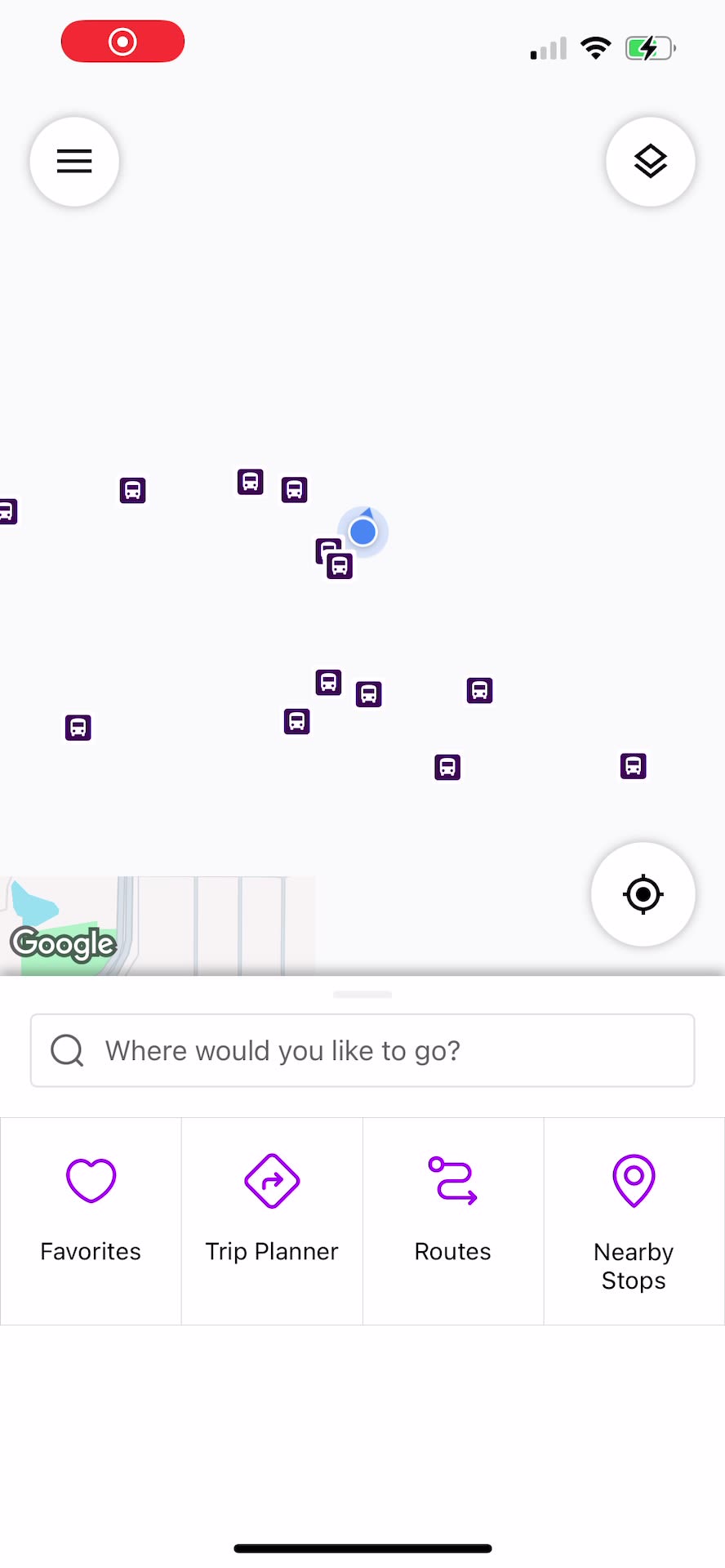
Screen video of TripShot, the app that students can download to keep track of The Leap and when it arrives at each stop. (Taylor Chronert)
Screen video of TripShot, the app that students can download to keep track of The Leap and when it arrives at each stop. (Taylor Chronert)
The Leap transportation system, however, hasn’t attracted a significant number of riders but parking spaces become more scarce as the number of spaces incrementally increases while several hundred more students enroll each year.
The Leap is an on-campus transport system that helps students get to campus quickly and efficiently. It runs throughout the day morning to evening, and it helps get students to class quicker and more efficient, especially with the late-night study sessions. This new reality and the increase in student enrollment has made parking much more strategic.
TCU students are no different than students on other campuses in that they are continuously complaining about the lack of parking; however, that perception may or may not be accurate depending on your class schedule.
Sufficient parking exists but most of us don’t want to trek several hundred yards in the relenting Texas heat. More faculty and students are consciously electing to enroll in early morning classes when parking spaces are more plentiful.
The university may publicly say that enough parking exists, but the university introduced city-sized buses this semester to help students, staff and faculty alike get to class and to work more efficiently.
The administration's view on the new parking garage and police facility
The new building will include:
Vision of what TCU will look like with the Campus Master Plan (TCU Magazine)
Vision of what TCU will look like with the Campus Master Plan (TCU Magazine)
How it all started....
In April, Texas Christian University announced that when school started up again in the fall, over 1,200 parking spots would be eliminated. Currently, in its place is construction and plans for a brand-new parking garage.
The parking garage is set to be ready spring 2027. This brand new parking garage is part of TCU's Master Plan.
“The Master Plan is simply a vision of how the campus will grow, and it thinks through the opportunities before we have a fire drill or have to come up with that solution quickly,” said Jason Soileiou, the vice chancellor of Planning, Design and Construction.
The Master Plan is there to welcome the next generation of Horned Frogs and Lead On to the next 150, administrators told the Star-Telegram. The Master Plan must follow the four pillars: student centered-growth, research, scholarship and creative activities, athletics and community engagement.
"The master plan simply says, 'Okay, that's what the strategic plan wants to achieve. Now, here's a plan. Here's a plan for the physical campus to accommodate that.' The master plan doesn't say we should grow. It's saying if you grow, there's a strategy to accommodate," Soileiou said.
This Master Plan is also being looked at not only for student growth but also for the city of Fort Worth’s growth, now that more people are moving to the DFW area.
“Are we better engaging with the city of Fort Worth? Certainly, we want to provide adequate parking, one, at a micro level. But when you don’t provide adequate parking, many times our students will spill out into the neighborhoods, and that creates unhappy neighbors, and we have to deal with the neighbor relations,’ Soileiou said. “At a broader level, we all love TCU, so it’s important to uphold on both fronts, but Fort Worth is growing, and TCU is growing, so having that seamless parking is very important to us.”
The idea of TCU having parking lots was an idea that came from the first master plan which was looking at how TCU should look in the 21st century.
In the plan was the idea about two parking garages on east campus that would be three levels tall. (TCU Magazine)
Over the years, though, there have been reports from TCU360 about limited parking spots, areas claiming that students can park there but can't, parking tickets, and having to fight for parking spaces as well as risk parking illegally.
In 2005 though, Don Mills, the vice chancellor for student affairs at the time, predicted that parking would improve as more spots opened up that year. according to an article in TCU360. (TCU360)
Mills prediction, however, did not come to fruition as Victor Boschini, TCU's chancellor, had different ideas.
Boschini came previously from Illinois State University. His vision was that, because Illinois State University was a large, walkable campus where everything was so close, he wanted the TCU commute to be walking, too.
“He was very pro to parking on the edges; walk around, we’re not going to put in parking lots,” Katherine Forsythe, communication studies professor, said. "In his ten years, more and more parking lots began to disappear that used to be in the heart of campus, and so I’m curious about what Chancellor Pullin is going to do.”
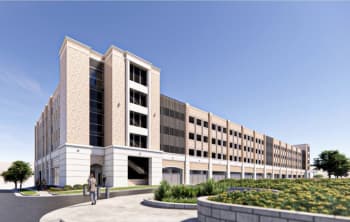
The new parking garage will be located on the east side of campus, where an old parking lot used to be. The garage will be five stories and have 950 spots available for students, faculty, and staff. The police station will also be moving their location and will be occupying the first floor of the parking garage.
“It’s a great opportunity to bring the police onto the ground floor; it’ll create a stronger presence for the police on this side of campus where we are trying to create a housing community on that side,” Soileiou said. “It’ll give our campus police a really nice presence on this side of campus.”
The new parking costed $50,000 to build. Soileiou mentioned that building a new parking garage requires thoughtful planning.
"They're very expensive, and so we certainly have to be thoughtful about when to build a parking garage," Soileiou said. "Not to say we won't build more parking garages. It's gonna be thoughtful, but they're ungodly expensive."
Besides the plan for a new parking garage, there is also a plan to add more residence halls and apartments, so that there is more bed availability and room for students.
"We were about 1,200 beds short of meeting our first and second year," Soileiou said. "So we require first and second years to live on campus, but we didn't have enough beds to meet our own requirements. So this private partnership was a funding strategy to implement a plan that was in the housing plan to get housing on the east side."
The Fort Worth Report cited a university survey in which students expressed interest in living closer to campus.
“I applied for the on-campus housing, but then they put me on the waitlist,” Nicole Zummo, a junior strategic communication major, said. “I was told from an upperclassmen that she was also put on the waitlist the year prior and didn’t get off the waitlist.
"So, I decided to take myself off the waitlist and find off-campus housing. It’s definitely more expensive to live off campus, and it’s not as convenient as living on campus.”
Morado on Barry is the apartment building that TCU is currently constructing. It’s a luxury apartment that will have 780 beds for upperclassmen and graduates. The name Morado means purple in Spanish, a representation towards TCU. (Texas Christian University)
TCU is currently partnering with American Campus Communities to help bring this new campus back to life. OHT Partners is the contractor for Morado on Barry.
“We’re proud to partner with organizations that share our vision for thoughtful, student-centered growth,” Kit Moncrief, chair of the TCU Board of Trustees, said. “This level of outside investment reflects a deep confidence in the strength of our plans and the enduring value of a TCU education.” (Texas Christian University)
With new resident halls, apartments,and parking garages being built, students and faculty don’t have access to parking lots as close as they are used to.
Just recently though, it was announced by TCU Parking and Transportation, that Lot 19, which used to be used a parking lot for both commuters and visitors, is now going to be a parking lot for commuters while Lot 20 is the new parking lot for visitors.
Before TCU eliminated the parking spaces, first-years were allowed to have cars on campus. However, with the limited amount of parking available, first-years were not allowed to have cars on campus as Frog Alley was being used to accomadate commuters and Tier 1 parking for faculty.
Last year, 1,000 first-year students purchased parking passes. This year, only 400 spots were available for first-year students, so TCU held a raffle for parking passes for first-years. Nine hundred students entered the raffle.
“Having my car would kind of allow me to escape college life if I wanted to,” Hana Riley, a first-year nursing student, said to TCU360. "Sometimes I wish I could go for a drive or go places by myself, but I’m just stuck on campus, surrounded by people 24/7.”
TCU isn't the only school that doesn't allow first years to have cars on campus. A Fort Worth Magazine article mentioned that schools like Yale, Georgetown, Princeton, the University of Wisconsin-Madison, and Ohio State do not allow first-year students to have cars on campus, nor do they allow any student who chooses to live on campus to have a car. (Fort Worth Magazine)
This year 2,710 permits were purchased with 7, 465 parking spots available. 3,859 of those spots are reserved for Tier 1 and Tier 2 parking.
"While the available spots may not always align with everyone’s preferred proximity or convenience, they do exist and are accessible within the parameters of our parking policies,” said Adrian Andrews, assistant vice chancellor of public safety.
The University Baptist Church currently shares a parking lot with TCU. To address both the church's needs and the school's needs, an agreement was made on how and when the lots can be used.
“Since many of our church activities happen in the evenings and weekends and TCU has a significant need for parking on weekdays, we arranged a schedule that helps each of us,” Kathy Rhines, minister of administration at the church, said. “Occasionally, we have challenges with TCU cars parked in parts of the lot the church uses, but for the most part, the shared usage works really well.”
When big events at TCU occur(parents weekend, move-in, and graduation) people have had to use Alice Carson Learning Center's parking lot due to the limited amount of parking availability.
With big events at TCU, like parents’ weekend, move-in, and graduation, there have been times when visitors have used the Alice Carson Applied Learning Center’s parking lot, which is considered a challenge for the elementary school. However, the TCU police works with Alice Carson to assit with any parking issues due to those events.
“Officer Robert Rangel, the chief of police at TCU, is in really close contact with myself and my staff at Alice Carson. They notify us if there are any major events and the response protocol they will take, and he will put patrols in our car line to assist with any parking,” said Elizabeth Kelz, the principal of Alice Carson Applied Learning Center.
Right now, TCU is doing its Private Partnership Initiative, where they’re basically redesigning Berry Street.
“The intent is to create that campus edge environment to keep the students close to campus and give them a place for more community and for our alumni to come together,” Solieiou said.
The parking garage and the new residence hall and apartments aren’t the only planned construction projects. Starting next year, Ed Landreth will undergo renovations that won’t be completed until the 2028-2029 school year. In addition, Village East will expand to accommodate more students living on campus for the 2026-2027 school year.
To be able to prioritize on which projects should be started first, The planning, design, and construction team looks at the strategic plan and if it follows on or more of the pillars.
"When a project does come up, we compare, ‘Okay, how does this advance to the strategic plan?’ So, any project that furthers one or more of these pillars (student center growth, athletics, academics and research, community engagement) is going to be higher for the priorities," Solieiou said.
With big projects like this, there are some laws and regulations you have to follow. TCU currently works with Leadership in Energy and Environmental Design (LEED), which rates, assesses, and ensures buildings are resource-efficient for both people and the planet, according to a report in TCU360. Points are awarded to buildings based on location, transportation, water efficiency, energy use, atmosphere, etc. So far, TCU operates 23 LEED Gold buildings.
Many of the buildings on campus were funded by alumni donations through TCU Loyalty Giving; however, there is no designated fund for parking. According to the TCU Loyalty Office, the only parking-related donations come from reserved parking for season ticket holders for various sports.
When asked why donors provided funding in 2012 for the football parking lot, they declined to answer.
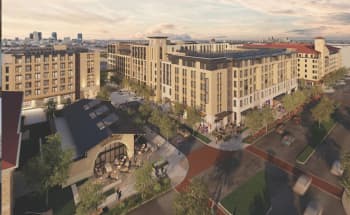
By 2035, TCU aims to reach approximately 14,900 students
TCU will see an increase in population in the coming years. (TCU Campus Master Plan-Executive Summary)
TCU will see an increase in population in the coming years. (TCU Campus Master Plan-Executive Summary)
Due to limited parking availability, TCU students are required to park down by the football stadium. (Josh Willie/TCU360)
Due to limited parking availability, TCU students are required to park down by the football stadium. (Josh Willie/TCU360)
Signs authorized at every lot indicating that students can't park in certain lots after midnight. (Taylor Chronert)
Signs authorized at every lot indicating that students can't park in certain lots after midnight. (Taylor Chronert)
A students car got booted due to parking in the Kroger parking lot. (Taylor Chronert)
A students car got booted due to parking in the Kroger parking lot. (Taylor Chronert)
How students and faculty members are handling parking…
Parking is a negative topic discussed across the TCU campus whether its first-years not being able to have any cars on campus to upperclassmen now struggling to find parking every moment of the day.
"I have to get here thirty to forty-five minutes early just to circle one parking lot to another, and even then, sometimes I don't find parking and have to park in the visitor parking lot,” Raia Raiyyani, senior communication studies major, said.
In a recent student poll about their parking experience, the majority said they usually leave their house 1 to 2 hours early for class, just to find parking. Seventy percent of students say they just won’t even go to class if they can’t find parking or end up being late because they can’t find a spot. With no luck finding spots, 50% of students choose to walk, compared to 40% who decide to drive.
"If I get here at 7:00 a.m. then yeah I will find parking as well as anytime after 6:00 p.m. we're good, but anywhere from 9:00 a.m. to 5:00 p.m., you don't find parking," Raiyyani said.
The students aren't the only ones who's voiced their opinions about parking, it's also the faculty too that has been facing challenges.
Faculty members thoughts on parking
With her years of teaching at TCU, Forsythe knows how to navigate and handle parking.
“I have lots of institutional knowledge from my many years at TCU, so I can navigate better than some,” Forsythe said. “The Cantey lot is where I typically park, which is amazing, to park at Cantey; it’s right here, super low stress, low walk commute.”
Richard Lane, director of the School of Art, commutes every day from Arlington. Sometimes the Arlington traffic can influence the time he gets to campus, as well as the time it takes for him to find a parking spot. He calculates how long it’ll take him to get to campus and find parking to determine when he should leave.
“I’ve got weird traffic I’ve got to get through, but I know if I’m not here at a certain time, I won’t be able to get in that lot that I park at, potentially not even the lot across, so if that’s the case, then I got to go the other direction towards the stadium,” Lane said.
Faculty are continuing to park in the same lots they are required to park in due to their Tier 1 and Tier 2 status. Currently, there are 10 Tier 2 parking lots and 13 Tier 1 lots.
Even with both parking lots at different stages of construction, TCU parking requires faculty to park only in lots where their permits are allowed. Tier 2 permits cost $75 per year and Tier 1 permits cost $275 annually.
Naturally, many of the faculty applied for Tier 1 permits for better parking availability, including Communication Studies professor Melissa Schrader.
“My parking lot should be across UCC(University Christian Church) because that’s close to the Moudy building and there’s another one behind the performance building, so those are the two lots I typically park in,” Schrader said. “So that didn’t necessarily change.”
To help enforce the very limited number of parking lots available for Tier 2 permits, TCU Parking and Transportation chose to designate Grandmark's parking garage, Molly Reid, as Tier 1 parking for faculty.
For people who live at Grandmark and have their cars, the school asks the students park in lots 2, 3, 4,13, and 14 or garage B to help accommodate space for faculty.
Even though there are plenty of parking spaces available for faculty, some still try to get to school early to make sure they get a spot, especially with afternoon classes.
“Because I teach morning classes, I’m here by 9 a.m. most days,” Jessica Humphrey, a theater professor, said. “What is frustrating is that I teach at 11 a.m. Tuesdays and Thursdays, and I love that time because I can go take a 9:30 a.m. workout class, then go teach my 11 a.m. class. But whenever you arrive at 10:30 a.m., you never find parking.”
Being able to successfully find a parking lot is all based on the time you arrive at school everday. If you teach or have morning classes, you will have better luck in finding parking compared to having classes in the afternoon or teaching in the afternoon; it'll be a challenge
For Schroeder, she mostly teaches afternoon classes and has started arriving earlier to campus because she realized that if she arrived later, there would be no parking.
"I have always been able to find off-campus parking pretty easily because I don't mind walking on Waits," Schroeder said. "Today (September 18th) was the first day that there was not a single spot, and I thought 'uh oh what am I going to do now?' so this semester is the first semester I've really had to plan arriving to campus much early than I normally do."
Just like Humphrey and Schroeder, Lane also has his fair share of parking issues. He expressed that TCU's parking policy is a problem for some of his students who showcase their work at The Art Gallery at TCU
“Students have to go there to unload artwork to show in that gallery, and they’ve been getting tickets,” Lane said. “We were told initially that there would be some of the retail space we can use to do that, so we’ve been fortunate in that we’ve been able to go to the police and say this is the situation, and they’ve gotten tickets cancelled.”
Art students, including graduate students, have had to purchase a parking permit just to park in certain spots to unload their work.
“In Molly Reid Hall, if a student doesn’t have a parking permit, they’re not allowed to park in there, period.” Lane said. “Even if it’s for five minutes, to unload the artwork. So the university is forcing them to buy a parking permit they won’t really use.”
Students are very specific when it comes to the times they want to take class: wanting to end before 2 p.m., not starting before 9 a.m., and not having classes on Friday's. This can be challenging for professors who've had to start teaching classes outside the nine-to-two window.
“On us (faculty), each department has put a policy where we are supposed to have 50% of the courses offered as a department, and have to be outside of that nine-to-two window. But your students are only expecting classes in that window, so there’s this very big tension of us having to offer classes later in the afternoon to fully utilize our classrooms," Forsythe said.
Because students don't want to take classes in the afternoon, Forsythe had to drop her 3.
This past semester, Forsythe had to drop her afternoon class and add another morning class to her schedule because only a few students signed up for her 3 p.m. class.
"There weren't students signing up for the Monday Wednesday Friday class at 3 p.m., and so I then had to pick up another speech class at 9 a.m. so it's fine," Forsythe said. "I think that speaks to our upper class students that they don't want to take class at 3 p.m. Faculty, classrooms, parking, and everything are depending on teaching in the afternoon."
Some faculty members, like Schroeder, are currently adjusting their schedules next semester to teach more morning classes, so they can find parking spots more easily and avoid having to arrive at campus much earlier just to get a spot for afternoon classes
“Teaching in the afternoons is hard, and I can’t be here at 8 a.m. if I’m teaching at noon,” Schroeder said. “So I probably will start teaching more early morning classes to make sure that I have a spot.”
The reduced number of parking spaces has also led to an increase in parking tickets. In 2023, the school changed the ticketing system to print tickets electronically rather than by hand.
“Sometimes we would be a little bit behind putting in the tickets because it would take someone four hours to enter all the tickets by hand,” David Corino, manager of parking and transportation, said to TCU360.
When students or faculty do end up getting a parking ticket, they have the right to appeal to a board, which is comprised of students, faculty, and staff. The board discusses when the ticket was enforced, how it happened, if the student feels they don’t deserve the ticket, or just the payment toward the ticket.
The appeal board's decision is based on the rules and regulations provided by the TCU parking department, along with information about what happened, how it happened, and when the ticket was issued.
The tickets weren’t the only thing that changed with parking at TCU; this year, the school also switched to virtual parking passes. Instead of stickers, TCU Parking has access to your car information and knows which lots you should be parking in.
“It hasn't been too bad. We’ve gotten really used to using our IDs to get in rooms in this building, so it’s not that big a deal,” Lane said. "The signage on the parking lot has not been really clear in some cases, so it's hard to know when you first drive up whether you're going to be able to get in a lot or not. I actually accidentally tried to get into a student lot one day, and then I realized I was in the wrong place, but there was a big, long line of students behind me. So, fortunately, a student walked up and just swiped me in. Oh yeah, I felt I was embarrassed."
Before the school was able to make the virtual stickers official, they had to run tests first to see how well it would work and if it’ll be convenient for students, staff, and faculty to use.
“When it was installed and implemented, the system was tested with the company on site to make sure it was picking up the correct plates in the correct areas, according to our geofence maps for the lot enforcement. After confirming that was all correct, we began using the system for enforcement,” Corianao said.
Andrews is aware of the challenges parking causes for students, faculty and staff. He is also well aware of the complaints but he believes the new parking garage will alleviate the pressure.
“‘TCU doesn’t have enough parking for its students, faculty, and staff.' It’s a sentiment I've heard consistently over the past eight years,” Andrews said. “My response remains the same: TCU has sufficient parking for those who are authorized to park on campus. The issue isn’t the quantity of spaces—it’s their location.”
Humphrey has even reported seeing online that students, as they commute to classes every day, should have access to parking lots closer to campus, and that faculty members can just shuttle.
“I understand that it’s hard for a student who maybe lives at home or lives further off campus to try to find a spot, to an extent,” Humphrey said, “Because think about it too, one person being late to class is one thing, but the professor being late to class, that is a really big issue because you’re not inconveniencing one person, you’re inconveniencing seventy other people that are in my Musical Theater class.”
Tammy Evans-Mitchell, TCU’s director of communication, told the Star-Telegram that there is enough parking on campus to accommodate everyone, but students and employees may find it more difficult to find spots close to where they work or attend classes.
Sometimes the faculty, along with the students, feel their voices aren’t heard when it comes to parking. Humphrey wishes to be invited to the parking committee to voice her opinion on the matter.
“I don’t think that there were student or faculty voices in the room when the decisions were being made,” Humphrey said. “I don’t doubt that students and faculty were consulted at some point in the process, I don’t believe that most stakeholders were in the room when the decision was made, and understandably, because I believe a lot of these decisions were made over the summer, but when faculty were not on contract, we’re not being paid and students aren’t here.”
Students thoughts on parking at TCU
Parking has been an issue through the years for TCU students. Students have used online platforms to express their concerns about parking. Here's what students have had to say:
Alternating Options for Transportation
The Leap service includes five buses which travel on and around campus. (Michael Fazen/Staff Writer)
The Leap service includes five buses which travel on and around campus. (Michael Fazen/Staff Writer)
The Leap
The Trinity Metro bikes are also popular with students, especially for students who live farther from school(Taylor Chronert)
The Trinity Metro bikes are also popular with students, especially for students who live farther from school(Taylor Chronert)
Bike
Scooters have started to become a very popular use of transportation for students(Yasmin Lopes)
Scooters have started to become a very popular use of transportation for students(Yasmin Lopes)
Scooter
Students walking from King Family Commons to get to their classes(Esau Rodriguez)
Students walking from King Family Commons to get to their classes(Esau Rodriguez)
Walk
TCU isn't the only school that has challenges when it comes to parking.
Parking at other private schools
One of the parking garages at Baylor University. (Michael Aguilar/Photo Editor)
One of the parking garages at Baylor University. (Michael Aguilar/Photo Editor)
Baylor University
Right now, there are 19,858 students at Baylor with only 11,000 spots available. Parking permits cost $400 with some lots costing $405 dollars. Currently, I-35 is going through construction, which has had an affect on students who live off campus. "I've had to try different streets to be able to beat traffic," Ella Roseblade, a Baylor junior, said.
Binkley Garage, one of the parking garages located on SMU's campus. (The Daily Campus/Creative Commons)
Binkley Garage, one of the parking garages located on SMU's campus. (The Daily Campus/Creative Commons)
SMU
At SMU there are 12,554 students with only 7,361 parking spots available. The cost of a parking permit depends on how many hours you are doing annually. If a student is doing more than nine credit hours, a parking permit will cost $380 compared to a parking permit only being $210 if a student is doing less than nine credit hours. Even though there are seven parking garages, students are only allowed to park in garages that fit their permit, along with being restricted to certain levels. "I think they should definitely open up more garages to commuters," Emma Bates, an SMU senior, said.
The 25th Avenue Parking Garage is one of the parking options available at Vanderbilt University (Hustler Multimedia/Alex Venero)
The 25th Avenue Parking Garage is one of the parking options available at Vanderbilt University (Hustler Multimedia/Alex Venero)
Vanderbilt University
Because Vanderbilt is a small school, the Vanderbilt University Parking and Transportation encourages student to try out different transportation options before getting a parking pass. Parking passes are granted to juniors and seniors with exceptions made to sophomores if there is spots available. Parking permits for undergrad students are $888 for the full academic year while faculty, staff, postdocs, graduate and professional students are eligible for the Daily Parking Program and only have to pay $4.25 to $6.00 per day for parking. Currently there are 13,670 students at Vanderbilt.
A video showcasing the updates to the projects. (Taylor Chronert)
A video showcasing the updates to the projects. (Taylor Chronert)
How is parking a problem again?.....
Video created by: Taylor Chronert
Video created by: Taylor Chronert
