
The Perceptions and Stigma of Autism in African and Caribbean Communities
By Tasmin Fatodu
Autism is a neurodevelopment disorder that affects social interactions, it's usually restrictive or repetitive behaviour.
People's understanding of Autism is different across the world
Studies indicate that autism is not universally perceived positively, and there is a lack of understanding about the condition in many places
People in Greek society may see autism as a personal tragedy or a sign of misfortune (Kossyvaki)
Research conducted in the United Kingdom revealed that a significant number of autistic individuals felt stigmatized, associating autism with violence and viewing it as a negative characteristic (Bortha et al.).
Researchers investigating Mexican institutions discovered that staff members lacked awareness of mental health and behavioral programs for individuals with learning disabilities, leading to the widespread use of physical restraints on autistic patients. These restraints included wrapping children in duct tape and sheets and confining them to a barred bed for extended periods (Ahern et al.).
Autistic traits in China are labelled as '没教养', meaning they see autistic characteristics as a result of bad parenting (Mak and others)
In South Africa, some people believe traits of autism is a 'curse' (Gurler and others).
This view is not unique to South Africa. In Ghana, autism is seen as a curse, sign of witchcraft or as a punishment from God (Nweke).
"The stigma in Ghana is real, it's very painful. I got to a state where I was not ok."
Victoria, a mother of three residing in Ghana with her family, opened up about the challenges she faces while raising her autistic daughter, and the prevailing stigma surrounding the condition in her community.
"Because of the stigma, we don't really go out, we are always indoors," Victoria shared. She expressed that she hasn't attended church in a long time, and she knows other parents with autistic children who also keep their children indoors.
The impact of the stigma has taken a toll on Victoria's emotional well-being. "The stigma of others has made me break down, God knows how many times," she revealed. Seeking support, she resorted to therapy at a clinic to cope with the challenges.
In Victoria's community, there is a lack of understanding about autism, with prevailing beliefs often attributing the condition to spiritual causes rather than medical explanations. "Everyone around me does not know anything about autism. Everybody is saying the cause is spiritual, no one is saying anything medically sensible," Victoria explained.
Even within her family, there have been accusations and blame directed at Victoria for her daughter's autism. She revealed that her family has withdrawn their support since her daughter's birth, and her mother, in particular, holds her responsible for not adhering to certain traditions during childbirth.
"In Ghana, we carry our baby in a wrap on our backs, because it is believed that if any evil sprits come near the child, the mother is strong enough to face it. If the baby is at the front, they are not protected and vulnerable to evil sprits. My mother told me that because I carried my daughter in front of me when she born, she blames me for what has happened."
Victoria's in-laws also hold her accountable, as they deny the existence of "mental illness" on their side of the family.
Given the limited support and understanding in her home country, Victoria has contemplated the possibility of relocating abroad, where she believes her daughter may find a more supportive environment.
"I have said to my husband that perhaps we need to travel outside of Ghana to the US or the UK to be in an environment that supports her," she shared.
In addition to the societal challenges, Victoria pointed out the lack of recognition and support from the government. "The government does not recognise autism in Ghana. The politicians have too much on their mind to care about autism," she stated.
Victoria also highlighted the inadequate support for autistic children in schools. She says the lack of special needs training and the scarcity of special needs teachers in Ghana, making it difficult for children like her daughter to receive the education and assistance they require.
"My daughters deserves to get support and feel loved and welcomed."
My in laws were not supportive. I think they feel that she is not worth spending money or time on, and rather wish she doesn't exist because they don’t see that she has a good future
Seventeen years ago, Mildred gave birth to twin girls. They may have looked like, but how they saw and understood the world, differed.
"It took about 3 to 4 years to accept she had autism," Mildred revealed, reflecting on the early challenges she faced coming to terms with her daughter's diagnosis.
"I cannot explain the feeling at the time of her diagnosis. I was very sad, I was petrified, I was thinking where can I go from here and why did it have to be me? But now I know more than I did before, so I am no longer upset. My husband still believes that a miracle will happen, and everything will be back to normal."
Living in a community with no special needs schools posed significant challenges for Mildred's family. "One teacher told my husband that we are wasting money and we should withdraw her from school," Mildred shared, recounting the hurtful comments from certain educators. Witnessing the negative impact on her daughter's twin, Mildred made the difficult decision to move her to another school to shield her from the stigma.
The ignorance and prejudice faced by Mildred and her daughter in public settings were disheartening. "When we go out, people will say your daughter is strange, she needs prayers" she revealed. Despite the hurtful reactions, Mildred emphasised her resilience in overcoming the stigma and not letting others' perceptions affect her.
Mildred's concern for other families facing similar challenges led her to advocate for the voiceless. "I know a lady who has two autistic boys, they have severe autism, and they are locked up in a room, they don't go out," Mildred disclosed. She was shocked that the parent refused to get support or even let them go outside. "Because there is no cure she does not see the point."
As someone who has navigated the complexities of autism, Mildred actively extends a helping hand to others she believes may be facing similar situations. "When I see people with those sorts of signs, I approach the parents and say I think your child has autism. I am not a doctor, but I think you need to go and seek help."
Mildred's passion for advocacy extended to her church community, where she organised a talk about autism. Though met with mixed reactions, she remained determined in her efforts to educate and create awareness. "Some women afterward told me they appreciated it, and others took it the wrong way. I think the majority were in disbelief, but they approached me after the service to ask more questions," Mildred explained.
I love my daughter and I want what's best for her
In Ghana there are no policies that support people with autism. We have the disability act, or inclusive education act in mainstream schools, but we don’t normally have the resources for them, or have teachers who can look after them.
Clarice is a psychologist and is currently doing research about autism in Ghana at Nottingham Trent University.
In Africa there is big stigma about disability in general. I had a nurse who come to me, who had a son with down syndrome. She quit her job because she thought the other nurses would laugh at her for having a child with down syndrome. This is because she would also laugh at other parents who came in with children with disabilities. The child was only about 6 months when she was actually contemplating suicide or killing her child, because she has been told by other people that the child is not normal.
There is a place in Ghana called Gambaga, a witch camp where anyone that has a disorder is sent there. A lot of autistic children have been sent there, because they have been perceived as a witch or a curse. So the cultural perspective and perception of things are affecting how autism is seen in the black community in the UK.
We always trace our steps back to where we're coming from, even if we are third generation of migration. You will still have that culture influence of where you're coming from. I met with a family that had a child with autism in the UK and the grandmother said to the mother you either have a curse on you or you have done something, so you cannot bring them back home to Africa. So the mother has to think: am I going to view it through that cultural lens and find a way to get rid of the curse? Or accept the that they have neurological disorder and I need to find ways to support my child, so they can have a more and inclusive life.
At one point I was convinced it was a western illness
My family had the same mindset as myself: he is going to grow out of it and why would he have autism if no one is autistic in our family. But after a year or two we all had to come to reality and wake up.
Femi shared his son's journey with autism, recalling, "My son was three and a half when we found out he has autism. Before that, I didn't know much about autism." He mentioned that in the African community, autism is often seen in a negative way. This leads to parents feeling the need to conceal their children due to "the shame and embarrassment" associated with the condition.
Reflecting on his past beliefs, Femi revealed:
"Most of the advice from friends was to take him to Africa, they think there would be some herbs he would benefit from, thinking it would cure autism. That just shows they don’t really have a clue; I was in the same boat as them before."
Femi shared his experience growing up in Nigeria, saying, "When I was younger, any child that is acting abnormal, they will think they are bewitched or crazy." However, he and his wife held different views about their son's condition as she is a nurse experienced in working with autistic children.
Femi believes that because they're raising their son in Europe, he won't face as much stigma as he would in Nigeria. However he won't let the stigma stop them if they can visit one day.
He said, "I've learned a lot about autism, but there's always more to learn as we go along."
Femi talked about the challenges of having an autistic child, especially in public places like church, where people might not understand:
"How can I explain to everyone single person that my son is autistic?"
Having gained a deeper understanding, Femi now perceives others differently, sharing, "Now I can see parents are going through a lot because I know what I’ve been through."
While many parents experience denial, Clarice claims that some parents stay in denial for a very long time.
"In the black community, we view things through the religious and cultural lens, before we view it through the scientific lens."
Clarice has found that if parents don't view it through the cultural lens, they will view it through the practical lens. This means that they may blame it on things such as vaccinations.
According to Clarice, regardless of their cultural background, many parents experience denial during the initial stage of their child's diagnosis. "It's not something people hear and get excited about," she remarks. The realisation that their child may face limitations in leading a 'typical life' can lead to denial for some parents.
Clarice notes that autism is not caused by vaccination, that research has been thrown out. "People will constantly find things to blame so they can feel better about the child's condition."
"There's so many things on the internet meaning parents can get misguided" she says.
Processing was a journey. I was in denial and angry about it. I didn’t know what to do, I went into depression, I couldn't eat. It took me time and months for me to to be in place where I accepted the reality. The more I was in denial, the worse he was becoming.
Dionne's world changed when her son was diagnosed with autism at the age of four. Prior to the diagnosis, she knew little about autism, except that autistic children were sensitive to noise.
“ I think in our community we really need to raise awareness so they can be the best they can be when they grow up”
Denial and self-blame consumed her thoughts initially, wondering if she could have done more for her child. It was a big surprise, as no one in her family had autism before.
Throughout her journey, Dionne grappled with concerns about her son's ability to make friends, be independent, and communicate effectively. The turning point came when a troubling incident occurred at her son's nursery, leaving her feeling broken and spiralling into depression. "Processing was a journey. I was in denial and angry about it. I didn’t know what to do, I went into depression, I couldn't eat." Dionne recalls how it took her "time and months for me to to be in place where I accepted the reality. The more I was in denial, the worse he was becoming."
However, this challenging moment ultimately led Dionne to accept her child's condition and embark on a path of understanding and support.
"we are blessed that the church think about how they can help our son."
In Dionne's view, autism remains a taboo topic within African communities in the UK. Attending virtual coffee mornings with other BAME parents who have autistic children, she has witnessed parents living in denial for years, fearing judgment from others and even concealing their child's condition. “ I think in our community we really need to raise awareness so they can be the best they can be when they grow up” she asserts passionately.
Support from her family was vital for Dionne, who are from Zimbabwe. They initially struggled to grasp the concept of autism; but eventually became strong pillars of encouragement. Inspirational stories and long-distance support became a source of strength for Dionne and her husband, who had been apprehensive about disclosing their son's condition due to potential negative reactions.
Church, though offering spiritual solace, can be overwhelming for autistic children. Fortunately, Dionne found a welcoming church that catered to her child's needs and even involved her in making it more inclusive. However, she acknowledges that this has not always been the case. She argues that many black churches have yet to adapt the same way for the needs of children with special requirements. She says that “we are blessed that the church think about how they can help our son."
Sharing her child's autism with new people in her community, Dionne reveals that their typical response includes comments such as, "Oh, I don't think it's that; he doesn't look like he's on the high-end spectrum. God will do it." She finds this frustrating because she knows her child better than anyone and recognises that, as he is non-verbal, she frequently finds herself making informed assumptions about his needs and desires.
"We have a long way to go”
Participating in parent support morning meetings has been a valuable source of support for Dionne. These gatherings have offered a sense of belonging, especially in an area with few black residents, where she once felt isolated.
Dionne stresses the crucial importance of increasing autism awareness within the black community. “We have a long way to go” she adds. Education and understanding play a vital role in creating a more inclusive and supportive environment. She encourages fellow mothers to continuously read and research, empowering themselves with knowledge to effectively advocate for their children.
At the age of 22, while pursuing his university studies, Tré had an enlightening realisation—he was autistic. As he explored his identity further, he found it surprisingly easier to discuss his autism with white individuals, despite having experienced racism from some of them. “I found that white people were racist but less imposing in terms of being productive and labour and things like that.” Tre expressed his desire for more solidarity from black people on the subject of autism. "Growing up I think black people expect more out of you."
Speaking about his experiences, Tré acknowledged that while there were challenges within white spaces concerning disability and racism, his encounters with white peers regarding his disability were relatively more accepting. Nevertheless, he felt that telling people about his disability wasn't always met with understanding, as some saw it as an excuse to do better. In the black community, “You tell people and it’s not always accepted, they say it’s an excuse or that you should overcome your disability.” Tré strongly emphasised ed that overcoming a disability isn't always a straightforward task, and being disabled should be acknowledged and respected.
In his family, many members worked in healthcare and dealt with patients with autism, but they did not recognise it in Tré. He believed they thought it was in his best interest not to label him. Using a metaphor, Tré described the importance of knowing and embracing one's identity, comparing it to being a zebra among zebras, rather than a misunderstood horse. Tre highlighted the challenges of striving for black excellence, stating that in the black community, there is a constant expectation to be exceptional “without any blemishes."
Moreover, Tré criticised the lack of representation of black autistic adults in the media, which often portrayed them as highly dependent or exceptional child geniuses—usually depicted by white characters. This lack of diverse representation perpetuated misconceptions about autism.
Tré' has excelled in his bachelors, masters, and PhD. However, he faced struggles during his GCSEs. Tre attributed this difficulty to the pressure of education in Caribbean and African cultures. “While my parents were not to this extreme, they did not make it clear to me that failure was an ok thing, there is a sense in black culture that if you fail you’ve brought shame on the family in that sense.” He points out that this is the reason why learning disabilities carry stigma within the black community.
He argued that late diagnosis among black individuals was influenced by parenting styles in African and Caribbean households, where parents' authority is unquestionable, leaving no room for discussion. "Parents think they're always right, what they say is law." This, he believes, “indirectly causes trauma, especially for neurodivergent children.”
Tré recalled experiences of stigma in academic environments. He believes that because of stigma, people in the community, "don't expect someone with a disability to have three degrees." Even though he often speaks at events and conferences, he noticed that some black individuals tend to give him unsolicited advice, possibly because they are unaware of his disability, as he can pass as a non-disabled person. He lamented how this attitude propagated the toxic idea of overcoming disability instead of embracing and accommodating it.
Regarding cultural events, Tré shared how the loud and sensory-rich nature of African and Caribbean gatherings could be challenging for neurodivergent individuals. He emphasized the need for open conversations to address these issues within the community: “I think when it comes to the [cultural and family] events, there’s a lot we could do, but that also comes from having a conversation and acknowledging that this exists.”
Reflecting on his life, Tré expressed gratitude for realizing he was autistic as it allowed him to escape toxic spaces where he pretended to be someone he was not. Embracing his identity, he found the support and community he needed among fellow neurodivergent individuals, advocating for self-acceptance and understanding within the black community.
Tré acknowledged meeting other black individuals who were unaware of their own autism and hoped that they could find spaces to accept and understand their identity. “Because of the sort of deformation that can be given to certain disabilities I wonder if there is self-hatred there as well.” He raised the question of how to bring about cultural changes and acceptance within institutions and society regarding neurodiversity. "You can claim polices to be fairer, but how to do you transition that into culture? How do you change a culture of a society?"
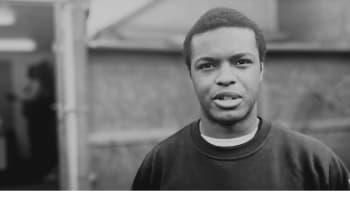
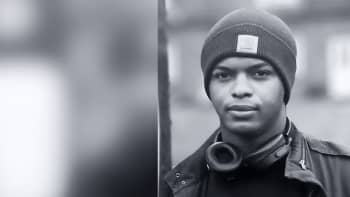
Because of the stigma, most families from ethnic minority backgrounds hide their children.
Barbara is specialist neurodevelopment nurse and runs a weekly morning coffee meetings for parents who are from the BAME community. She says she has worked with a lot of parents from ethnic minority backgrounds that have been in denial about their child's autism because of stigma.
Barbara highlights how having a disability is "associated with either witchcraft or the fact that there's something that the family has done." This could be something in past life, or something that is deemed a"sin".
One solution that family members often suggest is to send the child back to their family's country of origin, Barbara explains. As a result, conflicting ideas emerge within the family about how to handle a child with autism. Some family members may not recognize it as autism and may perceive the child's behavior as misbehaving, leading them to believe that the child needs punishment. Unfortunately, these conflicting ideas can harm the child.
Barbara highlights that many cultures don't even have a word for autism in their own language, further complicating the understanding and acceptance of the condition.
Policy makers need to be on board, and let it be policy makers that are actually from these communities, because we understand ourselves better, we understand where those problems and concerns are coming from
"No one owns autism, it can impact anyone from different races and cultures."
Suzy has a seventeen year old son with autism. Her journey with her son's diagnosis and his time throughout school inspired her books 'SEND in the Clowns' and 'I Can't Go to School', and is founder of the 'Happy in School Project.' Suzy's family is from Jamaica. She didn't experience denial herself and had an idea of what autism was before her son's diagnosis. Her book aims to empower parents from all cultures. "I shared everything I had been through because it's a whole new world of specialism." Thus, "if you're not informed properly, it can completely overwhelm you and derail your sense of confidence as a parent,and your mental health."
Role models are important for greater representation of autistic people from Black African and Caribbean communities, she acknowledges. However, Suzy realises "it’s understandable why some individuals may not wish to be visible." She argues that there is "still considerable stigma and misunderstanding about what being autistic actually means." She adds, "there is also the possibility to being exposed to ableism in addition to racial discrimination." Despite this, Suzy believes this situation is slowly becoming more widely understood in its complexity and power. "I believe there will be many more black people sharing their stories, which eventually will increase the visibility of all shades of autism.”
Suzy believes that we need to recognise that there are "additional issues faced by autistic children that happen to have black or brown skin." These issues need to be acknowledged by the wider autistic community, for "no one owns autism, it can impact anyone from different races and cultures."
Suzy highlights that perhaps traditional parenting style in the black community needs to change in order to accept and support a neurodivergent child.
They're in denial at first that there's anything wrong with their child"
Lyndsey, a Sendco (Special Educational Needs Coordinator) coordinator, has gained considerable experience working with parents and children needing extra support. From her observations, she noticed a common trend among parents from ethnic minority backgrounds when it comes to recognising and accepting their child's condition.
According to Lyndsey, many parents demonstrate a certain level of awareness regarding their child's condition, albeit lacking comprehensive information. "They're quite in denial at first that there's anything wrong with their child" she claims. This initial denial can, at times, pose challenges when attempting to initiate the necessary support for the child's developmental needs.
A notable challenge encountered by Lyndsey is the variability in parents' attitudes. Some parents easily agree with the nursery staff's assessment of their child's needs, while at other times, they insist that their child is completely fine. This shifting perspective can greatly affect the planning of suitable support and interventions.
Recalling a specific incident, Lyndsey highlights a case wherein a child exhibited significant indicators of being on the autism spectrum. However, one of the parents responded with animosity and adamantly declined further intervention. The parent strongly insisted that their daughter was completely healthy and expressed frustration towards the staff. Instances such as these can present significant challenges for staff, who strive to provide optimal support for each child under their care.
When it comes to addressing concerns with parents, Lyndsey emphasizes the need for sensitivity and clarity. It is crucial to ensure that parents fully understand the support their child needs.
Lyndsey highlights the importance of this approach, especially considering the possibility of stigmatization related to certain conditions. Coping difficulties can worsen, especially when the stigma comes from within familial circles.
“ When you are met with resistance, it's really challenging because you think all we want to do is help out the child and start the ball rolling because everything takes forever. If it's all left to last minute right before they start school, there is no plan for them when they transition to school."
Lyndsey emphasises the importance of increasing nursery staff, especially those specialised in SENCO, to reduce delays. She shares an incident where a parent had to travel to their home country for an ear test to diagnose autism due to long waiting lists in the UK. Furthermore, she mentions that even speech groups offering support to families have waiting lists.

I am not afraid to tell people in the black community he is autistic. I don’t stereotype the community to not understand it. People either know or I elaborate. I never explain his behaviour, my focus is his feelings, not others.
Growing up in Senegal, Mahi's oldest brother had a disabilty, but their father's open-mindedness and support helped him thrive, making him the most successful among his siblings.
When Mahi's own son was diagnosed with autism, he was unfamiliar with the condition. However, Mahi harboured no stigma and didn't experience denial.
Mahi describes how in most African societies, "people are usually with learning difficulties they are bit marginalised and considered as ‘mad people.’"
Encountering misunderstanding and discomfort, some friends and community members avoid discussing Mahi's son's condition. Misconceptions like "he will be fine, we're all on the spectrum in some way" or "he will grow out of it" are not uncommon.
"People who would visit us from Africa will say things like “when he heals” he can do this and we had to explain that it is a lifetime condition."
During visits to Senegal, Mahi faces repetitive questioning about his son's communication challenges: "why can't he talk? why does he not reply when I say his name?" While he sometimes explains, there are instances where he doesn't have the time to address every inquiry.
Mahi believes in being transparent about his son's autism within the black community. "I am not afraid to tell people in the black community he is autistic. I don’t stereotype the community to not understand it. People either know or I elaborate. I never explain his behaviour, my focus is his feelings, not others."
Unfazed by judgmental looks and queries, Mahi ensures his son's comfort is a priority. He believes it's not his responsibility to make others comfortable around his child but rather for them to show understanding as adults. Mahi adds "I never hesitate to take him anywhere. People will talk, stare or ask questions."
Advocating for greater accessibility in places of worship, Mahi contemplates taking his son to the mosque. He acknowledges that certain aspects like noise and crowdedness can be overwhelming for autistic individuals."If you go to place of worship you presume that everyone is the same and is equal so they should be able to go.
Drawing attention to the lack of awareness within the African and Asian communities, Mahi emphasises the importance of education to dispel spiritual or religious misconceptions surrounding autism.
Mahi says that we need "more places in the African community that are more accessible for autistic children and should be talking about autism rather than hiding it."
"The African community can be weird sometimes because theres a lot of belief that have no basis, we just need to understand that all kids are born the same but just learn differently. The more people get educated, the more they will understand."
He believes that introducing education about diverse neurodiversity in schools could be a potential solution.
"A lot of people here still don’t understand what autism is."
"Policy making is very important because we want the best for these kids at the end of the day" Clarice asserts.
Clarice concludes that there is a need for more research in developed countries and developing ones. There needs to be "that cross-cultural comparison so we can understand some things are universal and some things are specific to that culture, so there is a need for research to bridge the cultural gap about disorders."
"Cultural sensitivity is an important part of helping autistic children in these communities", Clarice raises. "A lot of parents don't trust professionals."
Local Association and the government Department of Health and Social care were approached for comment, they did not respond.
Additional Sources
1. Autism education in Greece at the beginning of the 21st century: reviewing the literature. Lila Kossyvaki. 07 May 2021. https://doi.org/10.1111/1467-9604.12350
2. Mak, W. W. S. & Chen, SX. Illness behaviors among the Chinese. In Te Oxford Handbook of Chinese Psychology 421–439 (ed. Harris, B. M.) (Oxford University Press, Berlin, 2012).
3. Monique Botha, Bridget Dibb & David M. Frost (2022) "Autism is me": an investigation of how autistic individuals make sense of autism and stigma, Disability & Society, 37:3, 427-453, DOI: 10.1080/09687599.2020.1822782
4. Crimes Against Humanity Decades of Violence and Abuse in Mexican Institutions for Children and Adults with Disabilities: A report by Disability Rights International. Laurie Ahern et al. https://www.driadvocacy.org/wp-content/uploads/Mexico-2020-ENG-web.pdf
5. Guler, J., de Vries, P. J., Seris, N., Shabalala, N., & Franz, L. (2018). The importance of context in early autism intervention: A qualitative South African study. Autism, 22(8), 1005–1017. https://doi.org/10.1177/1362361317716604
6.The Multiple and Intersecting Layers of Experiences of Black African Immigrant Families Living with an Autistic Child in the UK Nweke, Innocent. University of Kent (United Kingdom) ProQuest Dissertations Publishing, 2019. 28357238.
