
The Rebirth of Radio Broadcasting
Radio is a part of everyone's life.
Although statistics show that the number of radio listeners has declined over the years, the radio is not dead, and radio broadcasting is still a popular form of entertainment needed by America.
The radio world boomed in the 1920s and the 1930s. Although World War II contributed to the expansion of television, it also allowed radio listeners to not only be entertained but to be informed on government issues as well as encouraging men to join the war. In the past, radio became the main source of technology that provided value to the public in terms of music, news, talk shows, and advertisements. Although some would beg to differ, not much has changed today. Over the years, other forms of technology, such as the television in the home and the CD player in the car, advanced causing the radio to take a back seat to entertainment. Today, in the music industry, streaming services such as Spotify and Apple Music contribute to the advancements of technology. Has radio really taken a back seat though just because of these technology advancements? Radio broadcasting remains very much alive today despite what some people may think. As an on-air broadcaster and public affairs director for WONC 89.1FM, I took the liberty to research some of the most popular reasons why radio broadcasting is still needed even in today’s technology booming market. I also interviewed random people to gain their perspective.
Peggy Noonan, is a weekly columnist for The Wall Street Journal, and contributor to NBC News and ABC News.
Peggy Noonan, is a weekly columnist for The Wall Street Journal, and contributor to NBC News and ABC News.
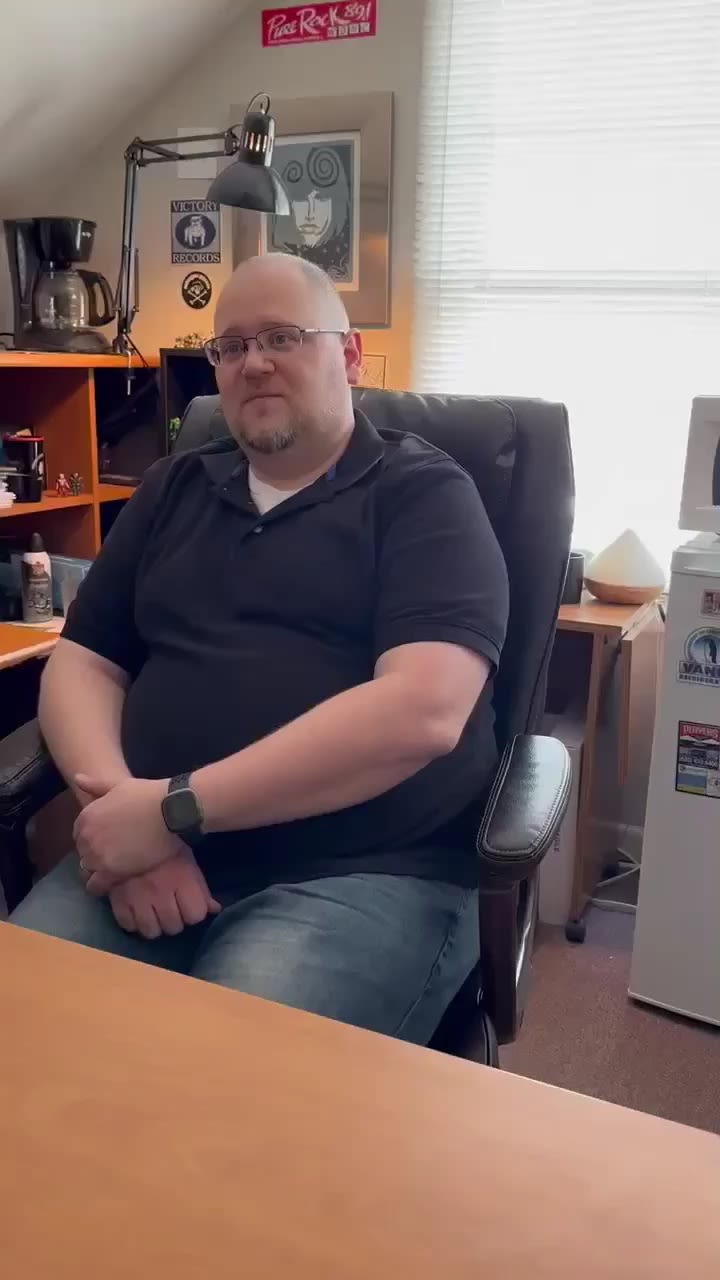
Zach Dewitz, General Manager for WONC 89.1FM,
speaks about what it takes for radio broadcasters to keep their audience engaged and intrigued.
ENGAGEMENT AND INTERACTION
Radio is entertaining and engaging. One of the key benefits that radio continues to provide to today’s population is interaction. Studies have shown that people continue to strive for human interaction and engagement because it benefits their mental health. Radio broadcasters research trending topics that they believe people would be interested in and bring those topics forward through the radio. By doing this, broadcasters make the content about the listeners and not about themselves keeping their audience feeling engaged and important. Bill Kelly is a talk show host with over 40 years of experience. He speaks about the importance of radio in people's lives.
Content doesn’t always have to be serious news. It can be fun and intriguing. Many radio broadcasters will host shows that allow people to call in and express their own opinion or give them an opportunity to provide personal experiences they want to share. Even if the topic is controversial it allows other perspectives to be shared and brings more awareness to the topic. According to Britannica Encyclopedia, the human voice alone makes the radio a uniquely personal medium, invoking a listener’s imagination to fill in mental images around the broadcast sounds. At Disney World, their cartoonists talk about how they get into their artwork as they use their imagination to draw a character. They use various sounds, make exotic facial expressions, and move their bodies around to feel the depth of the character they are creating. They image themselves as that character. Personally, for me, broadcasting is no different. I have passion for what I am speaking about and treat myself as if I am a part of my audience.
It’s not just about the talk shows but also about the music. Even though music can be downloaded on streaming services such as Spotify, anticipating what song will be played next is intriguing. There have been many times I have been driving home from college and heard a song on the radio that I have totally forgotten about. Not only do radio broadcasters keep up with music trends and the new releases, but they also play those hit songs from the past that we love and haven’t heard in awhile. Some may argue that podcasts are easier to listen to. Because they provide pre-recorded content, a person can download and listen to a podcast at whatever time is most convenient for them. In 2022, 62 percent of the population 12 years old or up had listened to a podcast and roughly 79 percent were familiar with the medium. Although studies show that podcasting is a growing industry, live radio is still winning the race as a clear favorite type of audio medium. MIDAS (Measurement of Internet Delivered Audio Services) completed a summer survey last year and found that live radio reached more listeners each week than podcasts. As a broadcaster, I also like to hear from other broadcasters. Sirius XM radio has outstanding broadcasters that provide tidbits of facts about the musicians or songs before or after they play a song. As “Classic Cal” of WONC, I like to do the same thing especially on the Vintage Show where I get an opportunity to speak about classic artists from the 1964 to 1974 era.
I asked a few random people if they listened to the radio today and why. Here’s what they had to say.

Good broadcasters know their listeners.
Good broadcasters know their listeners.

They believe in what they are talking about.
They believe in what they are talking about.

They are specifically talking to you.
They are specifically talking to you.

They relate personally to their topic so you can too.
They relate personally to their topic so you can too.

They show they are trustworthy.
They show they are trustworthy.

They show their enthusiasm and charisma.
They show their enthusiasm and charisma.

They speak about what you want to hear.
They speak about what you want to hear.

They make life interesting and engaging.
They make life interesting and engaging.

They take your feedback seriously.
They take your feedback seriously.

They are there for you.
They are there for you.
Susan Morgenthaler from Red Bud, Illinois, said, “I spend a lot of time on the road, and it keeps me entertained. I would just rather tune in to my favorite station because I know they are going to play a song that I like. I also have my favorite broadcasters that I listen to every morning.”
Charlie Smith from Naperville, Illinois, said, “ I get bored listening to my same playlist over and over again. Plus it's not good for the battery on my phone. A lot of times I will change my playlist based on the songs that are played on the radio.”
Nancy Martin from Spring Hill, Florida, stated, "I have a set routine every morning. I am dedicated to my radio shows. I just love listening to my favorite hosts. They make me laugh every day."

Radio broadcasters do more than talk on-air. As public affairs director for WONC, I reach our local communities by partnering with organizations to expand their reach as well as run various charitable drives.
Radio broadcasters do more than talk on-air. As public affairs director for WONC, I reach our local communities by partnering with organizations to expand their reach as well as run various charitable drives.

Last Fall, I had the opportunity to give the River Woods Elementary School Girls Scout a tour through the radio station.
Last Fall, I had the opportunity to give the River Woods Elementary School Girls Scout a tour through the radio station.

Not only did the girls enjoy the tour as much as I enjoyed giving it, but I also helped advertise the variety of their cookies, including their most newest brand, on air.
Not only did the girls enjoy the tour as much as I enjoyed giving it, but I also helped advertise the variety of their cookies, including their most newest brand, on air.
LOCAL AWARENESS
One of the biggest components of the radio's success is that it provides local information to the communities. Although the number of radio listeners might have decreased compared to 10 years ago, there is still a considerable amount of listeners. There are 15,445 radio stations in the United Stated and a weekly reach of approximately 82.5 percent of adult listeners. Whether or not the radio is serving a small community town of 5,000 people or a large populated city of 200,000, the local radio is still a good source of communication that many people rely on.
Local news and local advertising remains to be a benefit that the radio provides today. On-air broadcasters have a responsibility to build the trust of their listeners. Companies know that one of the most powerful ways to advertise is by utilizing radio broadcasters as endorsers or influencers on their products and services. Radio stations also set up at many local events, charities and fundraisers to help draw in a crowd. Not only can the radio soothe your soul by playing your favorite music, but it can shock you back into reality with important news events and updates. For example, if there is a natural disaster in the area such as a tornado, a good ol’ battery operated radio can provide updates to the community if the power is out. Traffic, sports, weather, and community news are all interesting topics to the local population that people will tune in to. The radio is a sure way for people to get updates on these topics of interest. Another advantage of the radio is that it is timely and can provide breaking news much quicker than other sources of communication. According to an article published by RadioWorld magazine, compared to television, radio is quicker from the event to air, due in part to the reduced production time and quantity of needed equipment.
One of my favorite songs, "Video Didn't Kill the Radio Star," is taken literally. Through research, Data Journalist, Felix Richter, shows how powerful the radio remains today. The data below, taken just last year, shows that 91 percent of adults still listen to the radio in the car on a weekly basis trumping all other media.
Furthermore, Richter shares data provided by Statista Consumer Insights that shows how America views their favorite content while on the road. Even with the fast expansion of technology and digital streaming, the radio is still a favorite medium. Tape cassettes, CDs, and iPods have come and gone, but radio still lives on.
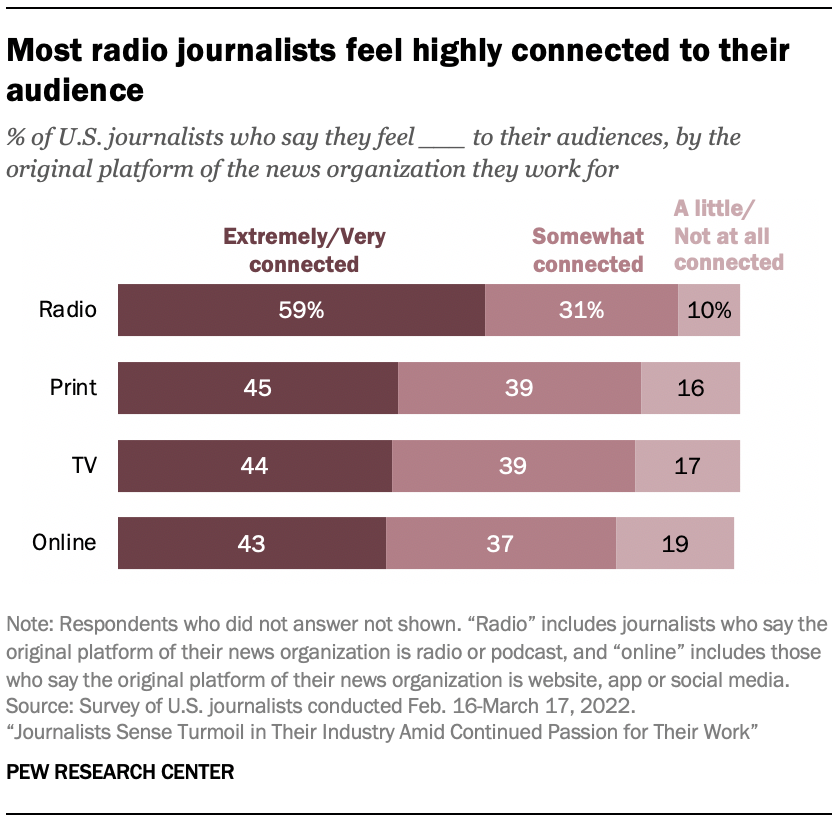
The radio benefits both the listeners and the broadcasters. According to Naomi Forman-Katz, a journalist and researcher for Pew Research Center, radio broadcasters still feel very connected to their audience. Social media in general can also help connect a radio broadcaster to their audience. Posting regularly on Facebook, asking people to tweet you, requesting listeners to text or call in are some ways to open up to your audience. Instagram is also a popular form of media now where pictures and comments can be posted. I personally have a goal to becoming a public figure so my listeners get to know me better. I think it is good for them to follow me on Instagram and see where I am traveling to, what I am celebrating, or how my workout went for the day. When radio broadcasters engage with their audience on a personal level, it helps them feel more connected and also builds a trustworthy relationship.
According to Pew Research Center, 59 percent of radio journalists felt connected to their listeners.
This is significantly higher than those who get utilize print, TV, and online media.
Radio broadcasters still play a crucial role in our lives today.
